
Nigel Farage faces renewed scrutiny after reports linked him to undisclosed gifts from a crypto entrepreneur convicted of fraud in the US. According to The Sunday Times, Farage received staff, security, transport and accommodation from longtime adviser George Cottrell, an aristocrat linked to the crypto gambling platform Tether.bet, but did not publicly disclose those benefits. The support included drivers, security personnel, social media staff, and access to a rented five-story property near Buckingham Palace. Responding on Sunday, Farage said he had 'followed the rules' because the gifts were received before he entered Parliament following the July 2024 general election and dismissed the Times' report as a 'hit job'. The newspaper reported that Farage declared only one benefit connected to Cottrell after becoming an MP, listing travel, accommodation, and security worth less than £9,300 ($12,400) for attending an event in Belgium, with a Reform UK source noting that Farage generally stayed at his own home and did not routinely use the rented property.
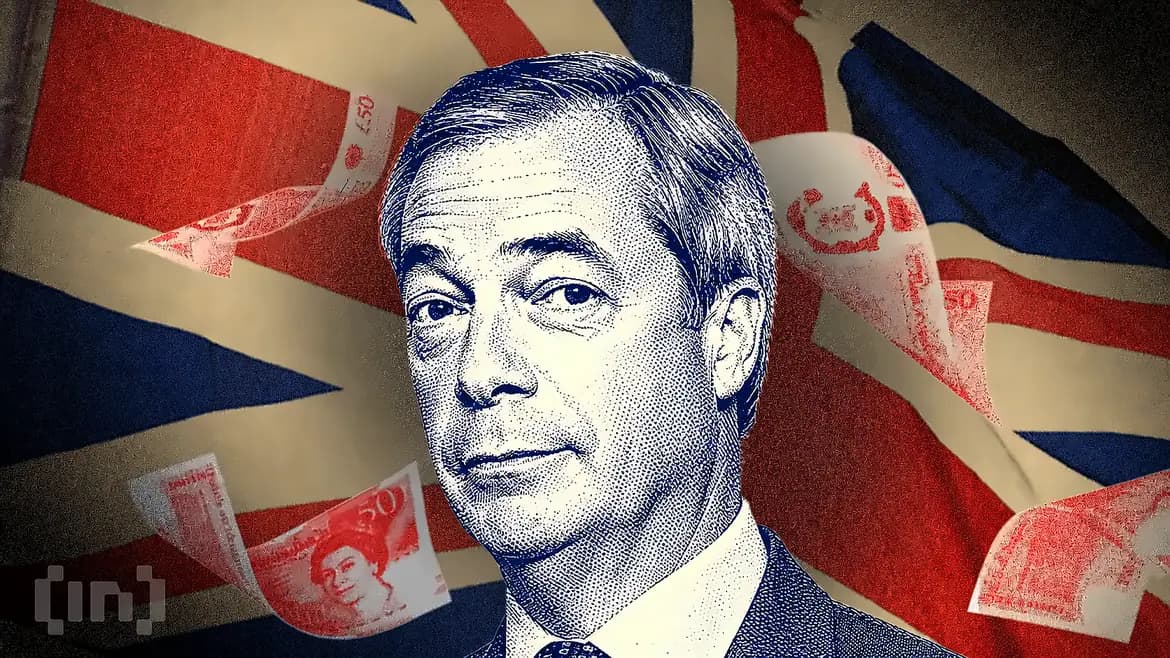
Labour MP Phil Brickell has formally reported Reform UK leader Nigel Farage to Parliament's standards watchdog over allegations of improper lobbying on cryptocurrency policy. According to The Guardian, Brickell, who chairs Parliament's anti-corruption group, asked Commissioner Daniel Greenberg to investigate whether Farage breached parliamentary rules by engaging with the Bank of England after receiving financial support from Christopher Harborne, a British billionaire who owns a 12% stake in Tether. The complaint centers on a private meeting held in September 2025 between Farage and Bank of England Governor Andrew Bailey, where Farage reportedly urged the central bank to abandon plans for a UK central bank digital currency, often referred to as 'Britcoin'. As reported by The Guardian, Brickell claimed Farage later said he had persuaded the central bank to soften its approach, with the Bank of England dropping a £20,000 limit on individual stablecoin holdings soon afterward.
Official UK parliamentary guidance prohibits MPs from approaching ministers or officials on behalf of recent benefactors for 12 months after receipt. According to The Guardian, the restriction states that an MP who has received a benefit such as hospitality, a gift or payment must not for 12 months after receipt engage in any approach that would provide a financial or material benefit for the person or organisation which provided the payment. The British Parliament doubled the ban from 6 to 12 months in March 2023, after Owen Paterson resigned in 2021 for lobbying two firms paying him more than £100,000 ($133,500) annually. Brickell emphasized that 'This is not simply a debate about cryptocurrency. It is about whether an MP who has received millions from one individual should be lobbying for policies that could increase the value and profitability of that donor's investments.'
According to AMBCrypto, Farage appears to have breached MPs' disclosure rules by failing to reveal substantial financial support from George Cottrell. The controversy centers on Cottrell's past conviction for wire fraud in a money-laundering sting and serving eight months in a US prison, followed by his connection to the offshore cryptocurrency gambling platform Tether.bet. UK parliamentary regulations require newly elected Members of Parliament to disclose any benefits exceeding £300 that they received in the year before their election, but only when the benefits are somehow related to their political activities. While Farage reported a £9,253 trip to Belgium and a subsequent £15,276 flight donation paid for by Cottrell, he failed to reveal the wider financial support including private security, drivers, and office operations. Farage's representative has denied the claims, calling the report 'baseless and contrived'.
As reported by The Guardian, nine months later, the Bank dropped stablecoin holding caps in favor of a £40 billion ($53.4 billion) issuance ceiling. Industry voices had warned the £20,000 ($26,700) cap could make businesses unworkable. Farage has since claimed credit for the softer approach, according to the Telegraph. The Bank of England called the September meeting a routine engagement, while Reform UK dismissed the claims entirely. The policy change particularly benefited Harborne, who stands to gain from the weakening of stablecoin restrictions and opposition to a state-backed digital currency that could compete with private stablecoins. Farage's opposition to the 'Britcoin' proposal was so strong that, after the meeting last September, he told the Zebu audience of crypto enthusiasts he would be 'prepared to go to prison' to stop it.
According to The Guardian, Greenberg is separately investigating whether Farage should have declared the £5 million gift and is now conducting a formal probe into the alleged lobbying breach. If a breach were found, sanctions range from an apology to suspension. Another Labour MP, Joe Powell, has written to Bailey requesting details of the meeting with Farage, asking for transparency given the significant public interest. Powell emphasized that 'These allegations are incredibly concerning. If accurate, they raise serious questions about transparency, democracy and the influence of major donors over UK financial policy.' The complaint has broader implications as the UK adapts its political finance rules to crypto. A March 25 government announcement said the UK would cap donations from registered overseas electors and ban cryptocurrency donations until sufficient regulation is in place to prevent the use of untraceable funds in politics. The government linked these restrictions to the Rycroft Review on foreign financial interference, with the remaining Commons stages of the Representation of the People Bill scheduled for July 14, 2026.