The tokenized real-world asset market has reached a significant milestone of $2.3 billion in market capitalization, demonstrating increasing institutional interest in on-chain financial products. According to the latest data, Ethereum leads with $783.2 million, representing 34% of total value, reflecting its role as the primary custody layer. BNB Chain follows with $679.8 million, while Solana holds $535.9 million in tokenized equity market value. However, market value alone tells only part of the story, as Solana processes roughly 95%–97% of tokenized equity trading, indicating that execution is increasingly shifting away from where assets are stored. This divergence suggests that institutions are beginning to separate custody and trade functions, potentially redefining blockchain leadership by emphasizing liquidity, settlement efficiency, and user activity rather than value locked alone.
A new Broadridge survey of 200 North American financial services executives reveals that 84% of financial institutions now consider tokenization a strategic priority, with most expecting it to reshape financial markets within five years. The survey found that 68% of respondents said tokenization will at least partially reshape financial markets within the next three to five years, while nearly one-third plan to increase investment in tokenization projects by 26% to 50% or more over the next two years. Firms are favoring hybrid infrastructure, with 92% expecting digital and traditional assets to coexist and 69% planning to integrate tokenization into existing systems rather than build separate blockchain-native systems. Adoption remains uneven across sectors, with 44% of capital markets firms having tokenization initiatives in production or operating at scale, compared to 20% of asset managers and 9% of wealth managers.
Chain competition in tokenized markets is increasingly defined by execution quality and real economic activity rather than total value locked. Arbitrum leads with roughly 12,500 distinct holder wallets, largely through Theo, while Solana follows with about 8,200 wallets, supported mainly by Ondo Finance and Etherfuse. Sui approaches 6,000 holders, reinforcing Ondo's growing cross-chain footprint, and HyperEVM and Base add nearly 4,000 and 3,200 holders respectively. Notably, Ethereum hosts only around 2,000 holders despite supporting several issuers, suggesting that issuer reputation, rather than chain availability alone, is the key driver of liquidity, user growth, and future competition across tokenized fund markets. This shift reflects an industry-wide change where investors increasingly evaluate execution quality and real economic activity rather than prioritizing TVL alone.
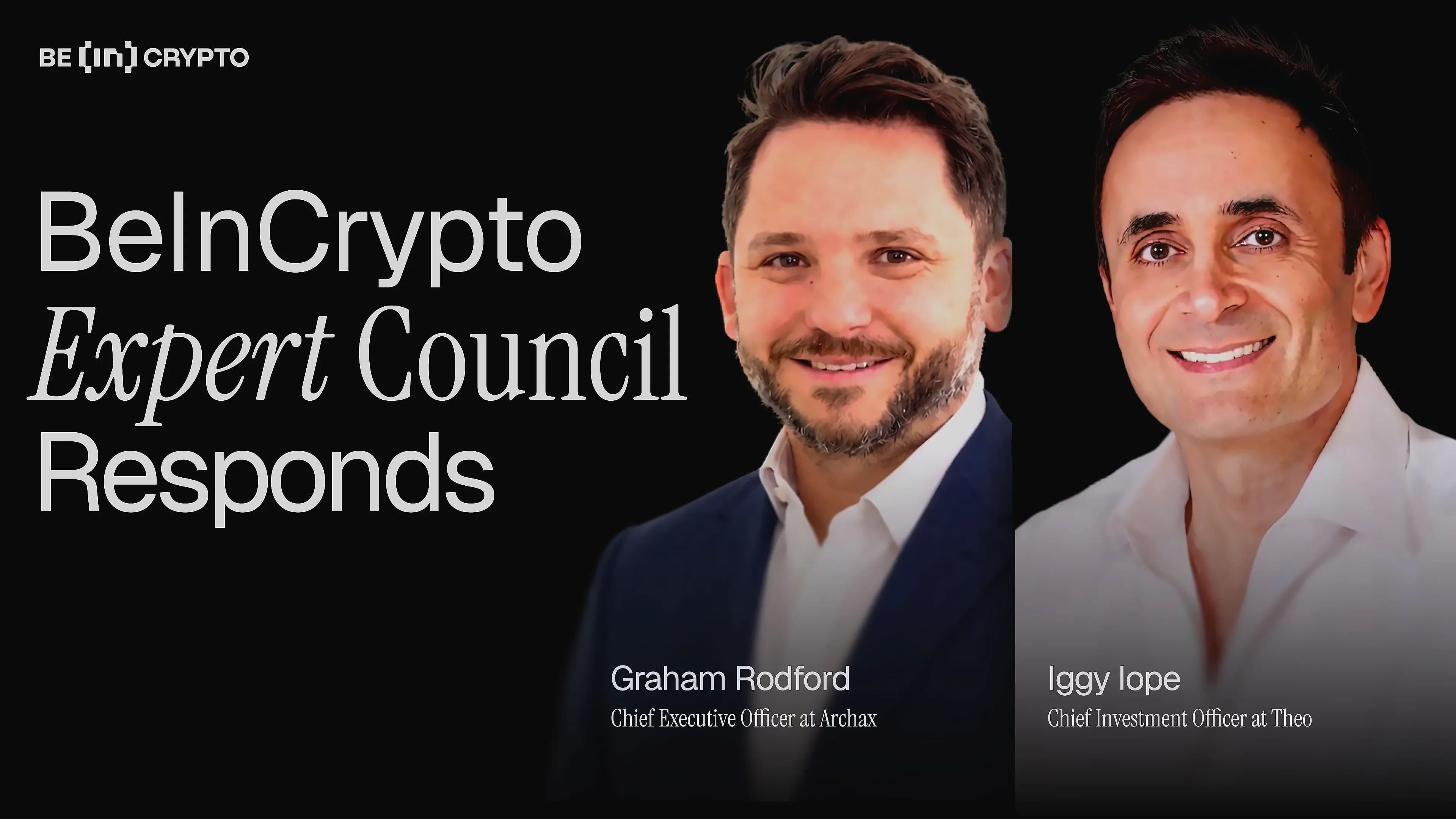
Fabian Dori, CIO of Sygnum Bank, warned that the market risks splitting into isolated pools as jurisdictions develop different rules and standards. The report found that EU-regulated products account for only $3.3 billion, or 6% of the core market. Dori argued that regulated platforms must connect issuers and investors across chains while preserving local legal and compliance requirements. Despite growing enthusiasm, firms continue to face significant obstacles, with regulatory uncertainty ranked as the most commonly cited challenge, followed by the operational complexity of integrating blockchain technology into existing financial systems. The experts also noted that EU-regulated products account for only $3.3 billion, representing a significant regulatory gap in the tokenized asset market.
Aleksandr Cryptoved, Founder of WAODAO, proposed a 'liquidity graph' as the missing infrastructure for tokenized assets. The report's $32.9 billion in assets with zero weekly transfer activity highlights the gap between tokenized existence and tokenized market activity. He suggested that such a structure could generate activity through rebalancing, arbitrage, collateral movements, and institutional portfolio management. The survey points to where firms expect tokenization to gain traction first, with about 80% of respondents believing tokenized mutual funds and money market funds will play a meaningful role within five years, reflecting the rapid growth of tokenized Treasury products. By comparison, only about half expect tokenized equities to achieve similar adoption over that period. The experts' consensus converges on the need for better liquidity connections and functional market infrastructure rather than simply recording assets on-chain.