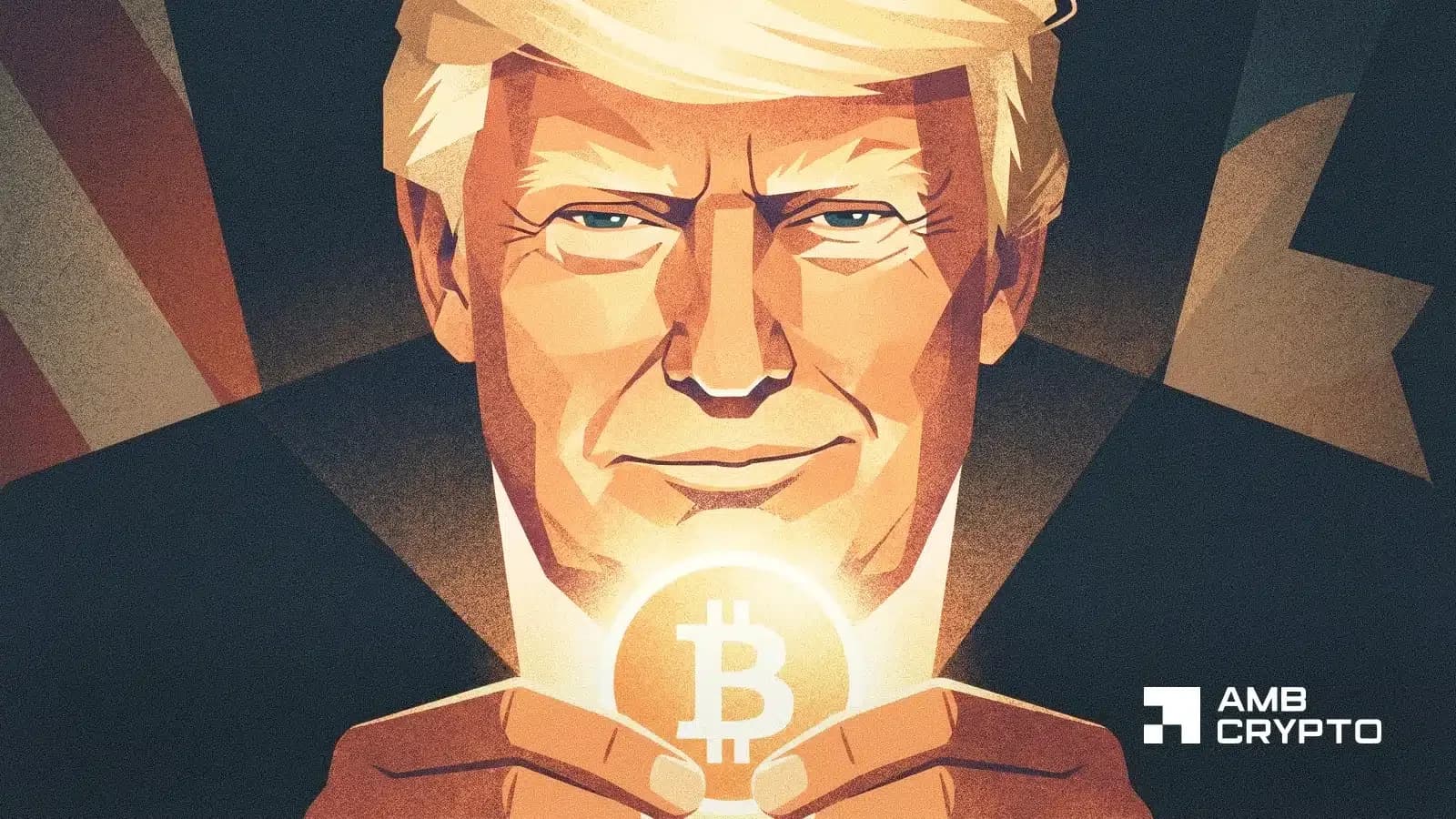
The Trump administration's crypto entanglements have escalated from controversy to potential institutional crisis, with explosive new reporting from the New York Times alleging systematic suppression of regulatory enforcement. According to the Times investigation, when three Trump-connected companies applied to operate prediction market businesses at the CFTC, two employees who raised compliance concerns were suspended and banned from the workplace. Three more staff members enforcing cryptocurrency laws received similar treatment, with a subsequent investigative report summarizing the findings: "Don't cause trouble for these industries." Acting CFTC Chair Caroline Pham and senior advisor Bridget Wales allegedly intervened directly in individual cases, providing preferential treatment to firms with which they had prior connections.
The enforcement collapse is measurable through stark statistical differences in regulatory activity. The CFTC announced only two digital asset cases during Trump's second term — both targeting individual business owners — compared to more than 80 under Biden and over 20 during Trump's first term. At least five active crypto investigations were halted, including a final-stage probe into a major exchange. The scale of that pullback points to something more systematic than routine policy shift, with related regulatory pressure points continuing to build across the sector as the administration's posture becomes clearer.
The capital-rotation theory suggests that Bitcoin's drop below $62,000 in June 2026 was not caused by problems with Bitcoin itself, but by a shift in speculative capital toward alternative investments. According to reports from the analysis, the theory centers on capital rotation, the notion that speculative investment money is finite and mobile, flowing toward whatever offers the most exciting risk-adjusted upside at any given moment. The theory argues that crypto, which has spent years as the premier destination for speculative capital, is no longer the preferred choice as new equity opportunities emerge, with speculative investors increasingly answering 'AI stocks and the SpaceX IPO' over 'Bitcoin' when asked where to place risk capital.

The political dimension has created measurable market volatility, with the TRUMP memecoin trading with extreme volatility tied almost entirely to political news flow rather than fundamentals. The White House response was characteristically blunt: "President Trump has always acted in the best interests of the American people. There are no conflicts of interest whatsoever." However, ethics experts and Democratic lawmakers have characterized the situation as textbook self-dealing, with estimates of the Trump family's total crypto empire now reaching $7 billion, spanning memecoins, DeFi ventures, and prediction markets. Markets are pricing in uncertainty differently, with traders watching politically exposed crypto names wobble under regulatory scrutiny.
The analysis suggests that crypto has lost its monopoly on speculative excitement, with the IPO wave and AI-stock boom offering the kind of explosive opportunities that used to be crypto's exclusive domain. According to the report, this represents a more profound challenge than any single crash, as it attacks the structural reason capital flowed to crypto in the first place. The theory emphasizes that while SpaceX IPO fever is a symptom of the same force that pressured crypto, it was not the cause of the crash itself, which was triggered by acute events amplified by leverage on a structurally weakened market. The conclusion is that while crypto really is losing speculative-capital competition to AI and IPOs, the June crash was actually triggered by acute catalysts on a leveraged market rather than IPO fever alone.