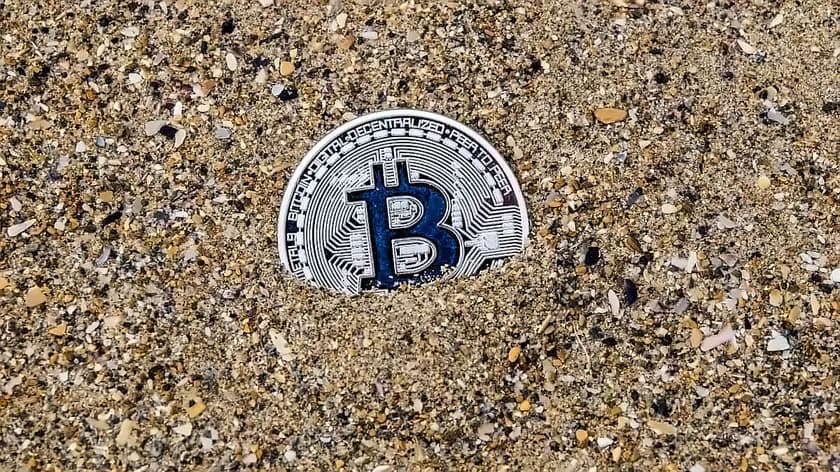
Shinhan Securities has proposed an ETF-based portfolio allocation of 60% stocks, 30% bonds, 8% gold and 2% bitcoin for volatile market conditions, marking a significant shift from the traditional 60/40 stock-bond split. According to Yonhap News Agency, senior researcher Park Woo-yeol outlined this strategy at a press briefing hosted by the Korea Exchange on September 8, arguing that the conventional approach no longer works effectively. The recommendation follows an analysis that found an 8 to 2 split between gold and Bitcoin produced relatively favorable risk-adjusted results when gold and Bitcoin were divided at an 8-to-2 ratio, with Bitcoin accounting for 2% of the overall portfolio.

The conventional 60/40 portfolio relies partly on bonds cushioning losses when equities decline, but Park said that relationship has become less reliable. As reported by Yonhap News Agency, the securities firm began recommending a 2% digital asset weighting this year after examining the risk-adjusted performance of portfolios that divided a 10% alternative allocation between gold and Bitcoin. The analysis produced relatively favorable results when gold and Bitcoin were divided at an 8-to-2 ratio, with Bitcoin accounting for 2% of the overall portfolio. Park noted that there is now a prolonged period where stocks and bonds decline together, making it essential to hold assets with low correlation to stocks and bonds.

The recommendation comes as South Korea works on rules that could give digital assets a larger role within its regulated financial system. According to crypto.news, in July, the government had renewed plans for crypto ETFs, alongside legislation covering stablecoins, tokenized government bonds and other blockchain initiatives. Authorities are preparing the Digital Asset Basic Act and a framework for cross-border stablecoin transactions. The Ministry of Economy and Finance disclosed plans in July to include digital assets under a new state asset management framework that would replace rules centered largely on conventional property.
While trading platforms are adding new products, Park said one source of recent market volatility has lost much of its influence. According to the researcher, daily trading volume in single-stock leveraged ETFs averaged roughly ₹15 trillion won during June and July, but recent turnover has fallen to between one-tenth and one-twentieth of those levels. Park noted that individual investors accounted for much of the net buying in those products and appeared to be holding positions while waiting for prices to rebound. For the South Korean market, he pointed to a wide gap between fundamentals and fund flows, with earnings estimates remaining strong while share prices have fallen, creating attractive valuations on a price-to-earnings basis.
Despite current market challenges, Park advises pairing dividend-style investing with asset allocation to prepare for potential greater volatility. He named the Schwab U.S. Dividend Equity ETF (SCHD.US) as his preferred ETF for this month, noting that U.S. high-dividend stocks carry larger weightings in energy, healthcare and consumer staples compared to South Korean dividend stocks. The analyst emphasized that dividend ETFs represent companies with strong cash flow, making them particularly attractive in the current geopolitical environment. He also highlighted that the ETF market is growing more complex with Bitcoin and altcoin ETFs proliferating, and crypto exchanges beginning to trade stock- and ETF-based products, blurring the line between traditional and digital assets.