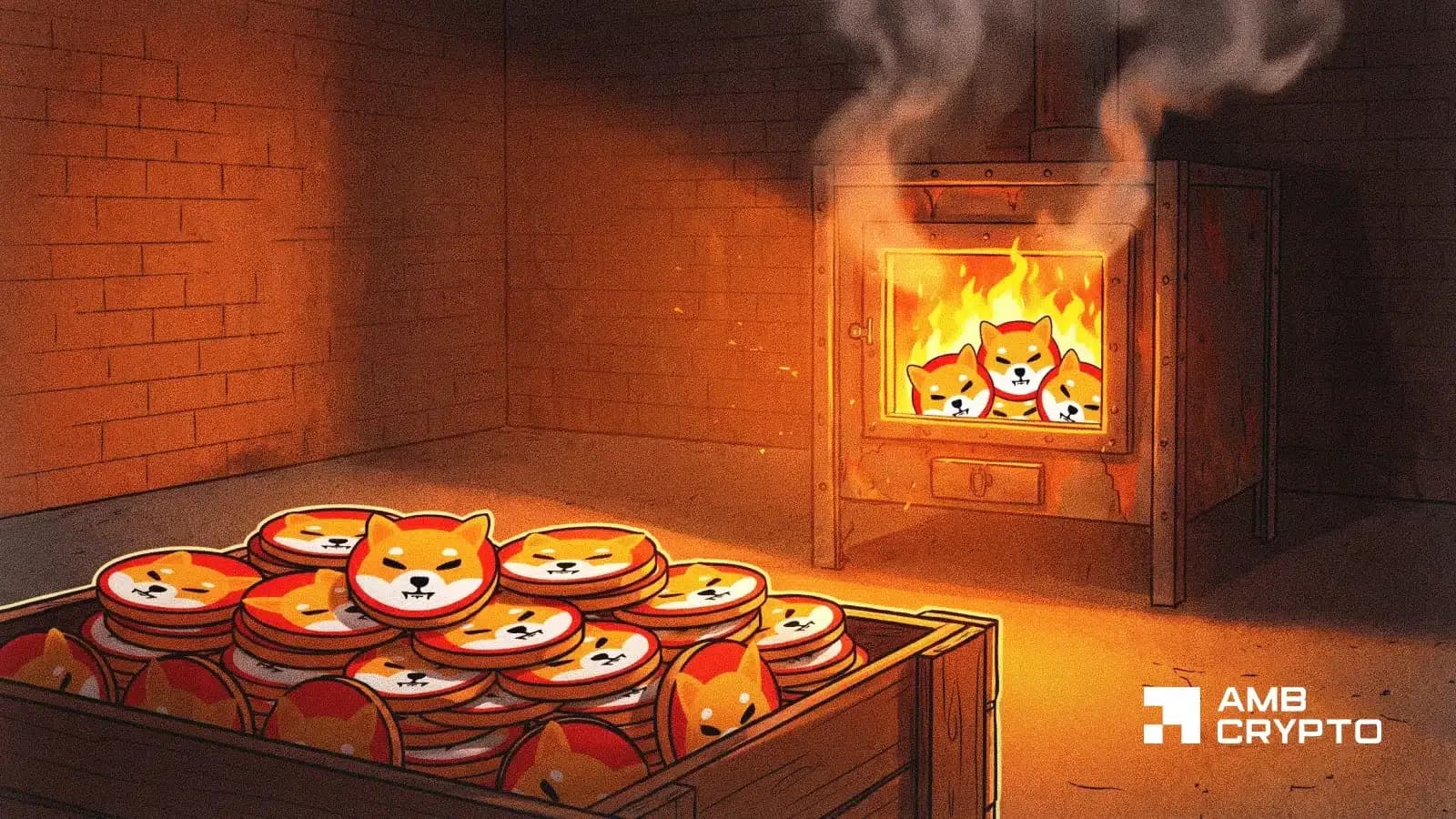
According to reports from BeInCrypto and AMBCrypto, Shiba Inu's community destroyed more than 117 million SHIB tokens on July 8, marking the largest single-day burn in six months. The deflationary spike, tracked by Shibburn, sent the tokens to a dead wallet, permanently removing them from circulation. A wallet linked to Robinhood led the day's burn activity, torching over 109 million SHIB tokens in a single transaction, with several smaller wallets contributing the remainder throughout the day. Despite this significant deflationary event, the token's price remained largely unaffected, holding near $0.0000043 during the burn period. Recent data shows the burn rate is accelerating, with the community burning 152 million+ SHIB over the past week, representing a 55.77% increase in weekly burn activity.
As reported by BeInCrypto and AMBCrypto, the token has slipped nearly 9% over the past month and is down 5%+ over the past week despite the recent burn activity. Shiba Inu currently holds a market capitalization near $2.52 billion, ranking 36th among all cryptocurrencies. The token's price has remained confined to a narrow trading range, showing little sign of a breakout in either direction. This price stagnation occurred even as burn headlines circulated across social media, highlighting the market's reluctance to reward deflationary activity by itself. The memecoin market weakness is particularly evident, with memecoins' share of total altcoin market cap dropping from more than 10% during Q4 2024 to just 3.7% at press time, according to AMBCrypto data.
According to BeInCrypto data, Shiba Inu's total supply destroyed since 2021 stands at roughly 410.84 trillion tokens, with that figure barely growing beyond one historic single-day event nearly five years ago. Ethereum co-founder Vitalik Buterin burned 410.24 trillion SHIB tokens worth $6.7 billion in May 2021, after receiving half the token's supply as an unsolicited gift. Even matching July 8's pace for a full year would only trim a small fraction of the current supply, explaining why traders largely shrugged off the news. The token's circulating supply still exceeds 585 trillion tokens, dwarfing any single burn event. As AMBCrypto reports, since launch, the SHIB community has burned more than 410 trillion SHIB, yet roughly 585.6 trillion tokens still circulate in the market, meaning recent burn activity removes only a tiny fraction of total supply.
As reported by BeInCrypto and AMBCrypto, SHIB's stagnant price mirrors broader weakness across meme coins this year, with Dogecoin recently facing heavy retail selling. Overall meme coin dominance has sunk to its lowest level in two years. Sentiment around SHIB itself has soured further, with trader James Wynn recently calling SHIB dead, even as whales dumped over a trillion tokens on exchanges in a single day. Unlike SHIB, a SpaceX-themed parody token built around a Shiba Inu mascot has rallied sharply in recent weeks, highlighting the divergent performance within the meme coin segment. According to AMBCrypto, the ongoing outflow of capital from memecoins has more than offset the effect of reduced supply, with demand remaining the limiting factor for price appreciation.
According to BeInCrypto and AMBCrypto, historically, meme coin rallies have tracked renewed retail interest rather than supply mechanics alone. Analysts have repeatedly flagged utility, not deflation, as the token's core challenge. Recent market coverage suggests SHIB's fundamentals hinge more on Shibarium adoption than on burn rates. Community burns may still build slowly over time, but whether Shibarium activity finally picks up may matter more for SHIB's next move than any single burn event. The ongoing market weakness in crypto and meme-coin markets, evidenced by whale selling behavior, suggests that deflationary headlines alone are insufficient to drive meaningful price appreciation. As AMBCrypto notes, token burns continue to reduce supply at the margin, but until liquidity returns to the sector, demand (not deflationary tokenomics) is likely to remain the primary driver of SHIB's price.