The U.S. Securities and Exchange Commission has unveiled an expansive crypto regulatory agenda for 2026, outlining plans to formalize oversight of digital assets through new rules governing token offerings, custody, trading platforms and broker-dealer operations. According to the latest SEC announcement, the centerpiece of this agenda is the Crypto Assets rulemaking, which has been designated as economically significant and is scheduled for a Notice of Proposed Rulemaking (NPRM) this month. The proposals are expected to complement broader efforts by Congress to establish a comprehensive regulatory framework for digital assets, with the SEC's Division of Corporation Finance considering rules governing the offer and sale of crypto assets that include potential exemptions and safe harbors intended to clarify regulatory obligations for issuers while providing greater certainty to market participants. As reported by AMBCrypto, SEC Chairman Paul Atkins noted that rather than devoting most of its efforts to enforcement, the SEC plans to develop a safe harbor regulation framework for public comment to create clear rules of the road while maintaining investor protection.
The SEC has formally placed three crypto rulemaking items on its 2026 regulatory agenda, according to the Agency Rule List, covering the offer and sale of crypto assets, broker-dealer financial responsibility rules, and Exchange Act amendments for crypto trading on alternative venues. As reported by CoinDesk, this signals a Commission that is building a structured exemptive regime in parallel with Congress, rather than waiting for legislation to force its hand. The first item addresses how crypto assets are offered and sold, explicitly contemplates certain exemptions and safe harbor provisions, and is likely to include guidance on tokenized U.S. stocks under the innovation exemption framework. The second item targets broker-dealer financial responsibility rules, specifically Rules 15c3-1, 15c3-3, 17a-3, and 17a-4, with amendments proposed to address how these apply to crypto assets. The third item covers Exchange Act amendments covering crypto trading on ATSs and national securities exchanges, governing how venues operate and treating order flow in crypto-asset securities relative to traditional equities.
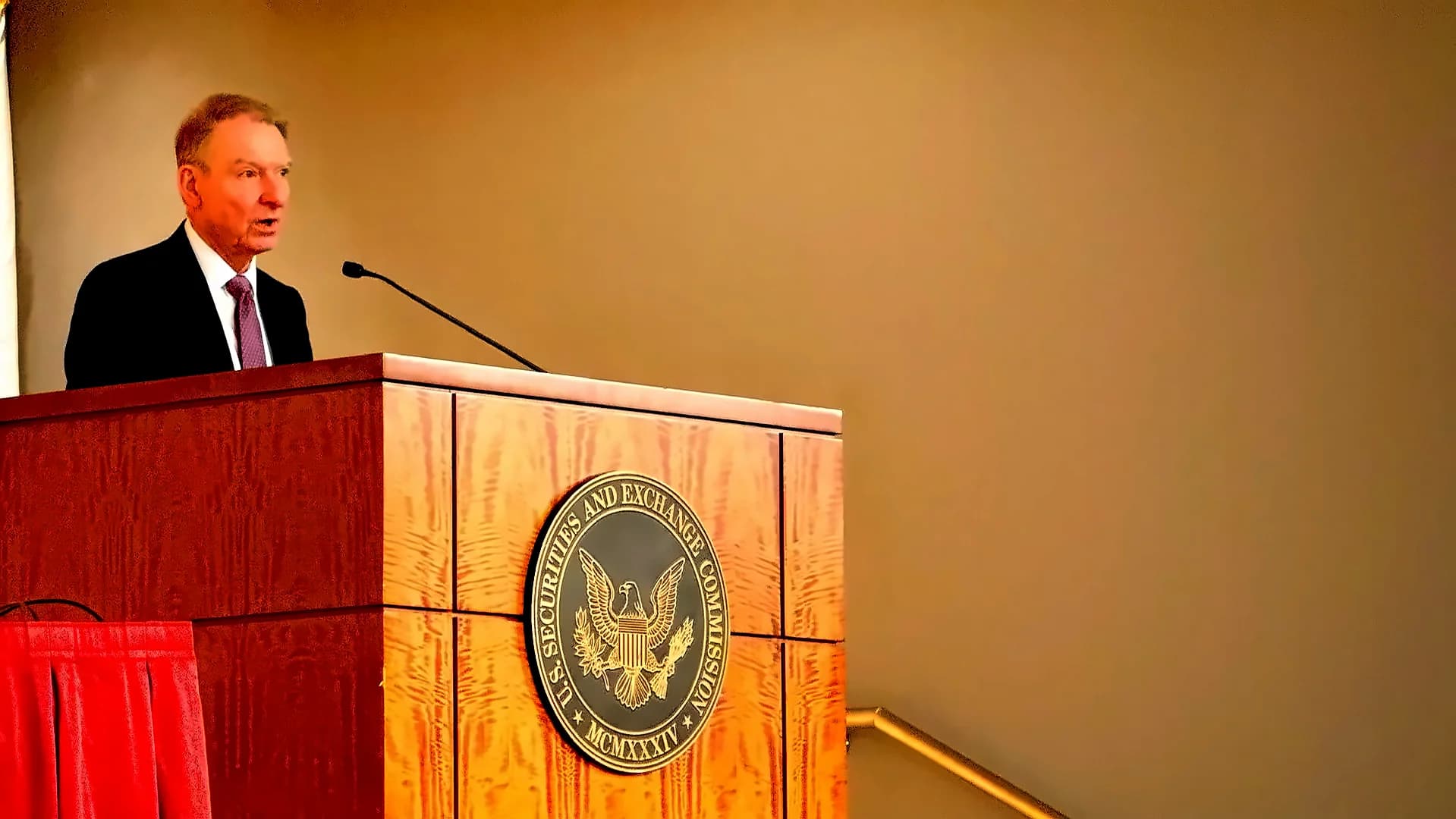
Beyond token issuance, the SEC is advancing several additional rulemakings targeting key areas of the digital asset industry. The agency is proposing amendments to broker-dealer financial responsibility and recordkeeping requirements for crypto assets, as well as revisions to custody rules governing how broker-dealers and investment advisers safeguard digital assets on behalf of clients. According to the SEC, these initiatives are intended to address longstanding regulatory uncertainty surrounding crypto issuance, custody, trading, and market intermediaries while establishing clearer compliance pathways for legitimate market participants. The proposals form part of the SEC's broader Crypto Task Force and Project Crypto, an agency-wide effort to modernize securities regulations for blockchain-based financial markets that focuses on developing tailored disclosure requirements, practical registration pathways, and greater coordination with the CFTC.
A third proposal listed in the regulatory agenda concerns crypto market structure, with the Division considering amendments to Exchange Act rules governing the trading of crypto assets on alternative trading systems (ATSs) and national securities exchanges. The SEC is also separately seeking public comments on several novel exchange-traded fund proposals, including prediction market ETFs. Earlier this year, the SEC outlined conditions under which certain decentralized finance platforms could operate without registering as broker-dealers. These initiatives represent the agency's comprehensive approach to addressing regulatory gaps in digital asset trading infrastructure and providing new guidance in areas that have long lacked clear federal rules. An ATS operating in crypto currently sits in a compliance gray zone, with amended Exchange Act rules expected to clarify whether existing ATS registration frameworks apply as-is or require a parallel crypto-specific track.
The proposal aims to deliver innovation by bringing more crypto products onshore, creating clear rules for capital raising with crypto assets, and providing clarity for market participants regarding custody and trading of tokenized securities onchain. According to AMBCrypto, clearer custody and trading guidelines could strengthen institutional confidence in digital assets, encouraging more firms to accelerate tokenization initiatives and regulated blockchain-based financial services. 73% of institutions now plan to increase crypto allocations, while 66% already access the market through regulated ETFs and ETPs, with crypto ETF assets having exceeded $65 billion. However, adoption remains measured, with allocations still below 0.5% of advised wealth according to Grayscale Research, suggesting institutions continue testing infrastructure before committing larger allocations. The rulemaking comes as the process to advance a crypto market structure bill has languished in Congress, making the SEC a bright spot for the industry's regulatory hopes.
The SEC's Regulation Crypto proposal is directly connected to the fate of the Clarity Act in Congress, which has been moving through legislative channels for over a year. According to SEC Chairman Paul Atkins, the bill's uncertain status has influenced how the agency timed and shaped its own crypto rules. If the Clarity Act does not pass by August 7, it is unlikely to become law in 2026 due to approaching midterm elections, which would leave the SEC's rulemaking as the primary framework governing US crypto markets. The SEC plans to introduce the rule as soon as July 2026, followed by a public comment period before any final version is adopted. If the Clarity Act fails, the SEC's Regulation Crypto proposal becomes the primary — and possibly only — meaningful regulatory framework for US crypto markets in the near term, making the July proposal potentially decisive for the entire industry's legal standing heading into 2027.