SBI Group has established itself as a founding validator for Circle's Arc blockchain while maintaining its position as Ripple's largest external shareholder with approximately 9% stake valued at $4 billion. According to reports from 99Bitcoins, SBI CEO Yoshitaka Kitao has positioned the company as a dual-rail participant rather than choosing between competing settlement networks. This strategic approach allows SBI to participate in both ecosystems simultaneously, creating what industry observers describe as hedging behavior rather than a definitive shift in institutional allegiance. The latest developments show Japan already holds approximately ₹4,500 crore ($59 billion) in XRP through SBI Holdings alone, representing over 450 times more than the country's ₹131 crore ($131 million) pension fund allocation currently under consideration.
Circle opened the public mainnet for Arc, its USDC-centered Layer 1 blockchain, on September 16, 2026, with 11 founding validators drawn almost entirely from traditional finance. As reported by 99Bitcoins, the validator cohort lacks crypto-native firms and consists mainly of banks and financial institutions including BlackRock, DTCC, Galaxy, Visa, and others. The mainnet launch includes a day-one application set spanning decentralized finance protocols like Aave and Uniswap, payments firms including Rain and Wirex, and wallets and exchanges such as Kraken, MetaMask and Upbit. Circle describes Arc as purpose-built for stablecoin finance, featuring transaction costs quoted in dollars rather than volatile network tokens, sub-second settlement finality, and opt-in privacy controls. Circle co-founder and CEO Jeremy Allaire stated, "Arc is built on a simple premise: that the global financial system deserves a blockchain network it can trust."
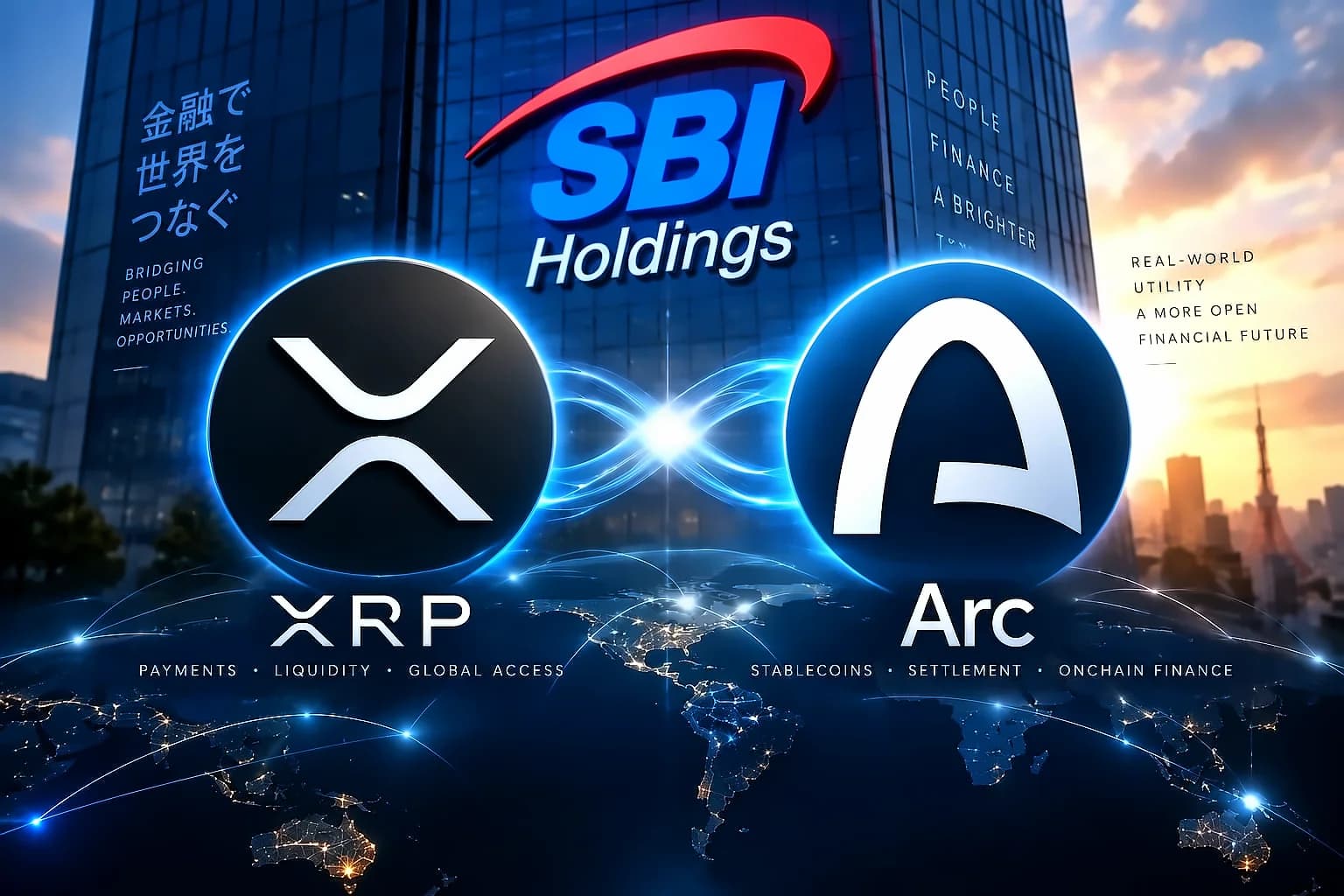
SBI's involvement with Ripple extends beyond equity ownership, as SBI Ripple Asia operates Japan's only live XRP remittance corridor. According to 99Bitcoins reporting, in March 2026, SBI became Asia's first regulated RLUSD distributor and a founding validator for a competing stablecoin network. The company's commitment to Ripple infrastructure is evidenced by its $2.442 billion RLUSD supply and $3 billion Circle USYC supply, highlighting significant tokenization market participation across both ecosystems. Similarly, Mastercard has expanded its settlement framework to include RLUSD across eight blockchain networks, including the XRP Ledger, demonstrating broader institutional adoption of XRP-based solutions.
The strategic positioning reflects broader market uncertainties, with XRP falling 10% when the US Senate blocked the CLARITY Act, highlighting ongoing regulatory uncertainties in Ripple's home market. As reported by 99Bitcoins, both SBI and Mastercard are hedging their bets across different settlement networks rather than favoring one. The variable that will ultimately decide institutional settlement preferences remains unresolved, with the outcome dependent on whether institutional capital settles around USDC-based infrastructure, XRP liquidity, or a durable multi-rail arrangement where firms maintain positions across multiple networks. Understanding Ripple's supply mechanics and scheduled escrow releases is essential to tracking XRP liquidity relative to institutional deals, with RLUSD's supply reaching $2.442 billion this month and Circle's USYC exceeding $3 billion, while BlackRock's BUIDL around $2.4 billion highlights the significant tokenization market Arc is entering.