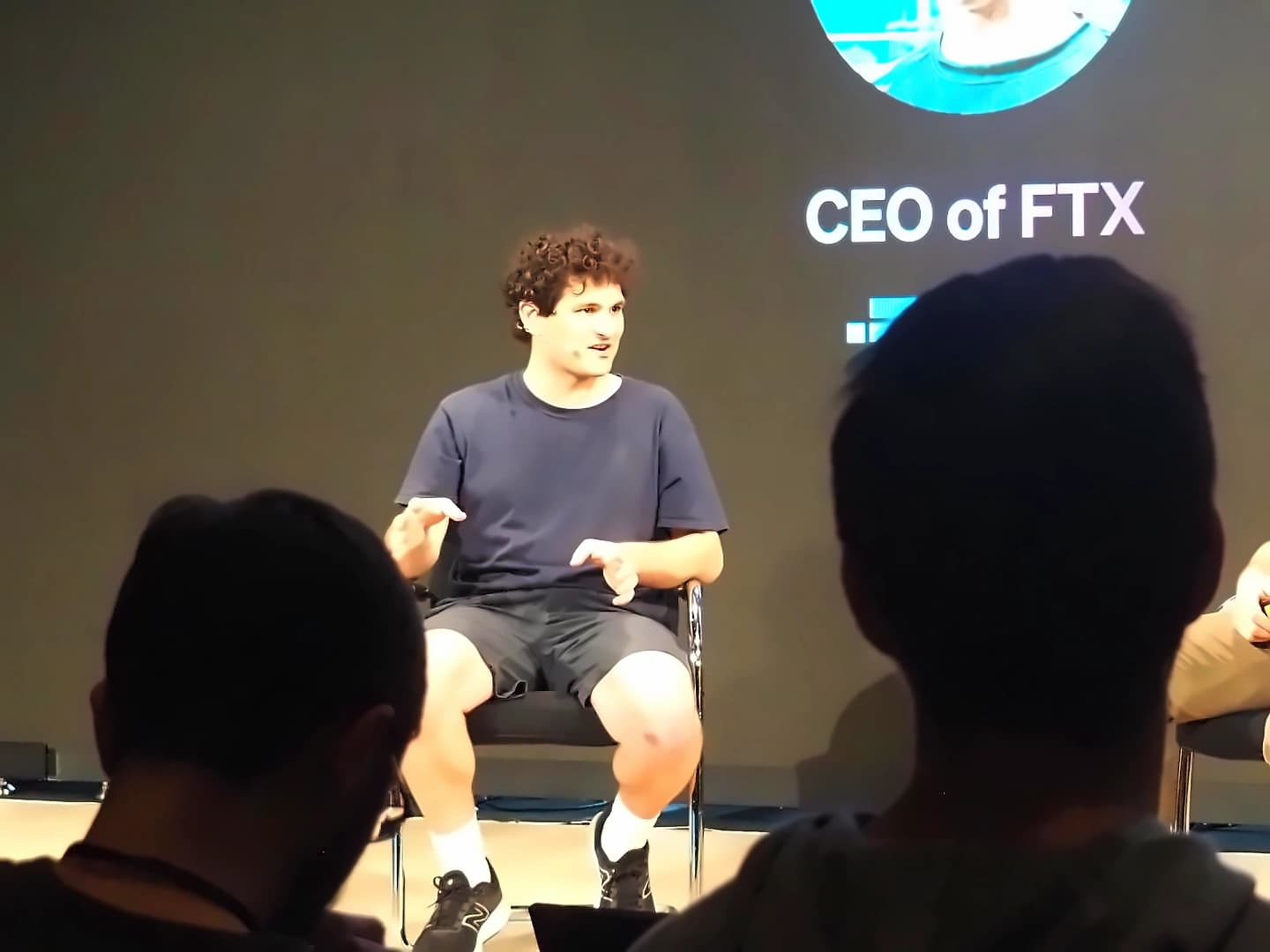
Michael Avenatti, Sam Bankman-Fried's former prison bunkmate, has publicly slammed the FTX founder's pardon bid, posting hours after Bankman-Fried's formal application became public. As a fellow convicted fraudster who shared a cell with Bankman-Fried, Avenatti's statement carries unusual credibility from direct personal observation rather than outside commentary. According to The Block, Business Standard, and NDTV, Avenatti wrote that the two argued repeatedly inside prison about Bankman-Fried's refusal to acknowledge his crimes, stating that SBF never once admitted he had done anything wrong. Avenatti argued that without that acknowledgment, Bankman-Fried could not legitimately earn a pardon, escalating his long-shot campaign for early release that caps months of pro-Trump social media posts and prison interviews.
Sam Bankman-Fried has officially filed for a presidential pardon through the U.S. Department of Justice's Office of the Pardon Attorney website, according to The Block, Business Standard, and NDTV. The filing requests a "pardon after completion of sentence" for the former FTX CEO, who is currently serving a 25-year federal prison sentence at a low-security facility in Santa Barbara, California. Bankman-Fried was convicted in 2024 during the Biden administration on seven fraud and conspiracy charges after federal prosecutors argued he orchestrated a fraud at FTX that cost lenders, customers and investors $10 billion. The DOJ listing shows the case under clemency case number P338490 with the status marked as "Pending." The filing comes after a series of unsuccessful legal efforts to overturn the conviction, with recent court records showing Bankman-Fried remains housed at the Santa Barbara facility.
The clemency request arrives after a series of unsuccessful legal efforts to overturn the conviction. Earlier this year, Bankman-Fried filed a Rule 33 motion seeking a new trial, arguing that later evidence and testimony challenged key parts of the government's case. However, Judge Lewis Kaplan formally rejected the retrial request in April, writing that the witnesses cited by Bankman-Fried were not newly discovered and could have been called during the original proceedings. The judge also dismissed allegations that prosecutors pressured witnesses, describing those claims as unsupported by the trial record. Federal prosecutors similarly argued that the defense had failed to show any genuinely new evidence, with court filings challenging claims that FTX was solvent before its collapse, stating the exchange held only 105 Bitcoin against customer claims approaching 100,000 Bitcoin. While the retrial effort has been closed at the district court level, Bankman-Fried's appeal before the U.S. Court of Appeals for the Second Circuit remains active, with a decision potentially coming at any time.
President Trump has maintained his opposition to granting clemency to Bankman-Fried, telling The New York Times in January that he has no plans to pardon the former FTX CEO. When asked about the renewed application this week, a White House spokesperson referred to Trump's earlier remarks, signaling no change in the administration's position. The president has grouped Bankman-Fried with figures he has no plans to help, despite the former exec's active efforts to curry favor with Trump. Over the past year, Bankman-Fried has been active on his X account, praising some of Trump's actions, including the pardon of ex-Honduran President Juan Orlando Hernández, but this wooing does not seem to be having an effect on the president's position. In a recent phone interview with Fox Business, Bankman-Fried confirmed his interest in clemency, stating "Absolutely, it would be obviously, you know, ultimately up to the president, not up to me."

Alongside the legal challenge, members of Bankman-Fried's family have publicly defended him and questioned the government's case. During a CNN interview in May, his parents, Stanford law professors Joseph Bankman and Barbara Fried, argued that the judgment against their son was wrong and disputed the characterization of FTX's conduct. Barbara Fried also argued that the prosecution was politically motivated, while Joseph Bankman maintained that customer assets were ultimately available through the bankruptcy estate. However, data from prediction markets cited in May showed traders assigning only a low probability to a presidential pardon, with Polymarket placing the odds at 11% and Kalshi showing 9%. Political support has also remained limited, with U.S. Senator Cynthia Lummis telling Politico in May that she hoped Trump would not pardon Bankman-Fried, saying the former executive had harmed many people. Bankman-Fried's parents have previously reached out to individuals in Trump's orbit to explore a possible presidential pardon for their son, though it's not clear whether any direct discussions with White House officials took place.
FTX's bankruptcy estate has distributed billions, with many customer classes recovering 100-120% of allowed claims valued at the November 2022 petition date. According to The Times of India, a fourth distribution in March 2026 delivered $2.2 billion, pushing U.S. customer claims to full recovery in key buckets. This contrasts sharply with the fraud's initial $8+ billion hole and underscores why SBF's case remains toxic even as Trump has pardoned other crypto figures like Ross Ulbricht and Binance's CZ. The filing comes at a politically sensitive moment for the crypto industry, particularly after recent controversy surrounding the pardon of Binance founder Changpeng Zhao. Bankman-Fried appears to be following a playbook he wrote to try and ingratiate himself with Republicans after being seen as a Democratic mega-donor during the 2020 election, including appearing on Tucker Carlson's show and praising Trump's decisions on Iran strikes and SEC leadership changes. Bankman-Fried is also awaiting a decision from New York's federal appeals court, which is considering the former billionaire's bid to have his conviction and sentence thrown out, with a decision potentially coming at any time.