Bitcoin futures carry has reached levels above U.S. Treasury yields, creating a significant shift in market dynamics. According to CoinDesk and Woofun Research, Bitcoin futures carry is currently at 5.69%-7.89%, above the 4.19% Treasury yield as of August 7. Analyst Marc Baumann's analysis shows that the August contract produced the highest gross annualized basis at 7.89%, followed by September at 6.25% and December at 5.69%. This development undercuts the comparison that has been circulating across crypto markets, as the crypto spread had trailed the government benchmark for 157 consecutive days before this observation. The official Treasury curve recorded the two-year par yield at 4.19% on August 7 and 4.25% on August 10, making this a significant market shift. The trade itself involves buying spot Bitcoin and shorting CME futures contracts, with the gap between the two prices becoming the return as they converge at expiry. Measured against the $64,880 CME New York spot benchmark, the August contract settled at $65,175, delivering a 7.89% annualized return. Recent market volatility, including the fallout from this year's war with Iran and corresponding sharp increase in inflation expectations, has helped drive up yields on longer-term U.S. Treasury securities.
Financial markets' risk-free rate, the yield on U.S. Treasury securities, is rising again, creating competitive pressure for capital allocation. According to reports from CoinDesk and Woofun Research, crypto maximalists often dismiss this as background noise, but when rates rise sharply, they often compete for capital with stocks and other assets. Jurrien Timmer, director of global macro at Fidelity Investments, highlighted this dynamic in an X post, noting that rising Treasury yields from the 1960s through the mid-1990s made government bonds competitive with equities. The 30-year yield touched 5.27% on Tuesday, its highest since 2007, with the long end already breaking ranks from the shorter-duration securities. A Reuters poll shows the 10-year yield is forecasted at 4.50% in three months and 4.34% in a year, though eighteen of 22 strategists said the 10-year is more likely to overshoot those forecasts than undershoot them. The fallout from this year's war with Iran and the corresponding sharp increase in inflation expectations have helped to drive up yields on longer-term U.S. Treasury securities, with real yields doing the damage rather than inflation bets as investors want more compensation for U.S. deficits and heavy debt sales.
Despite rising interest rates, strong earnings growth this year has helped stocks navigate elevated long-term interest rates. According to recent market analysis, earnings growth has been outstanding this year, with the story being a positive one by most measures. The combination of buybacks and dividend growth represents two complementary expressions of shareholder-focused capital allocation, with investors increasingly rewarding management teams that demonstrate this discipline. As reported by FactSet, Amazon and Alphabet's results were aided by hefty one-time investment gains, with earnings releases this quarter producing some outsized individual stock moves. While technology and momentum stocks have wavered, broadening market performance and strong earnings growth through July seem to reflect a bull market that is fundamentally well supported. Market breadth also continued to improve throughout the month, with more stocks participating in the advance, as energy and health care stocks contributed the most to S&P 500 returns for July, helping to offset weakness in semiconductor and AI-related stocks. Farside data shows US spot Bitcoin ETFs pulled in $865 million in the week ended August 7, with BlackRock's IBIT taking roughly $694 million of that, about 80%. However, the flows cannot show motive as no public dataset links an ETF purchase to a futures hedge, with CFTC reports only showing aggregate positions by trader type.
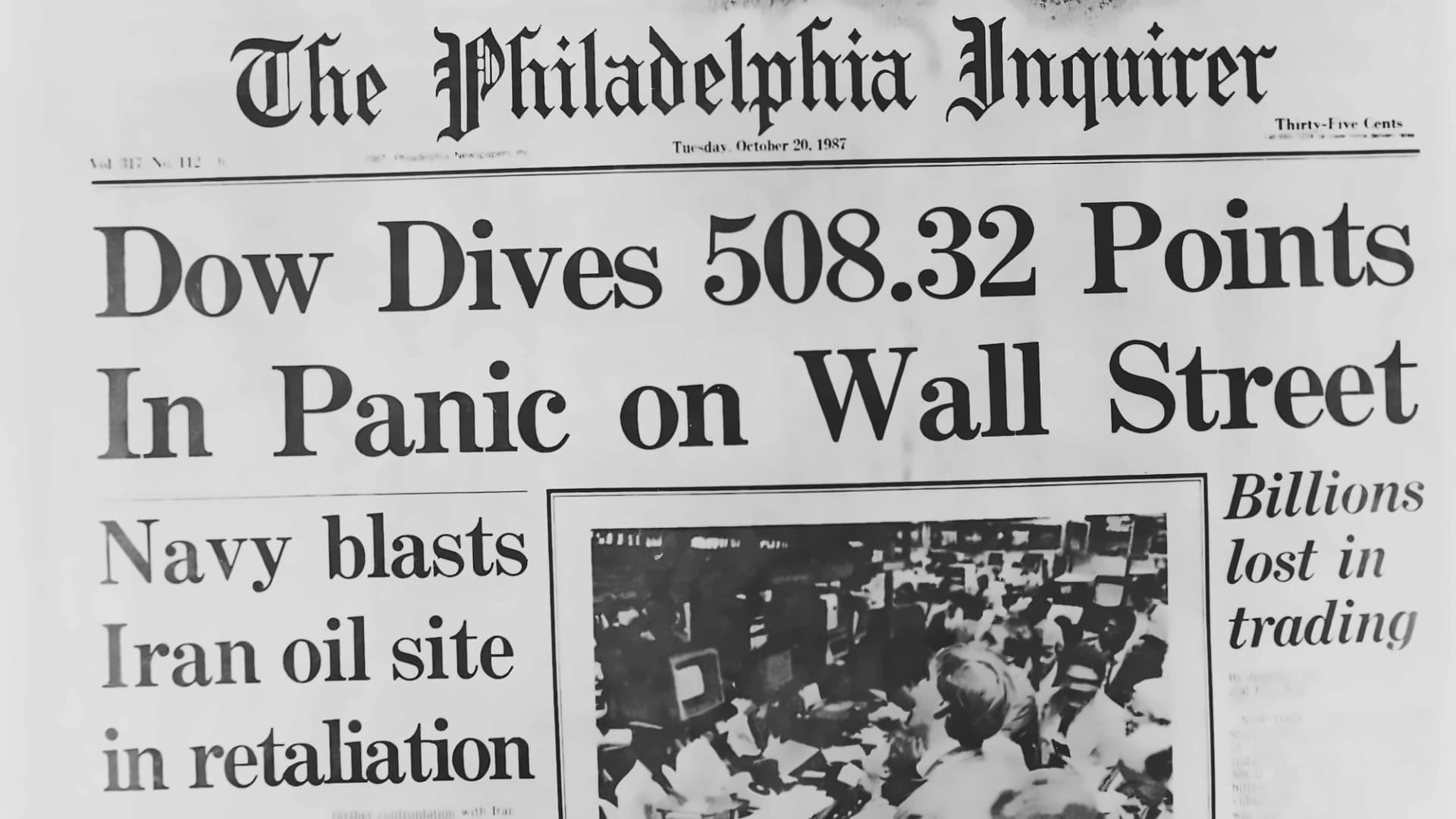
Investors who ignored the higher opportunity cost of capital during the 1960s-1990s period learned the hard way from the 1987 crash, known as Black Monday. As reported by CoinDesk and Woofun Research, the October 19 crash sent the Dow Jones Industrial Average plunging by 508.32 points, or 22.6%, in a single day. This remains the largest one-day percentage drop in history. Timmer's reminder is particularly timely as yields have generally been rising since the Covid market crash in 2020, echoing the beginning of the multi-decade uptrend that started in the late 1950s. The current market environment demonstrates how quickly bond markets can shift, with shorter-duration strategies generally outperforming early in 2025, again from May through September, and once more near the end of the year, while longer-duration strategies had the upper hand from February through April and from September through early December. The potential silver lining is that the magnitude of market movements has remained contained, with the Fed still exerting control over the front end of the yield curve.
Against the backdrop of rising yields, capital that was once abundant and chased narrative and momentum now has a safer alternative. As reported by CoinDesk, there's no denying that capital that was once abundant and chased narrative and momentum now has a safer alternative. Market sentiment indicators reflect this tension, with the BVIV, a 30-day implied volatility index derived from options prices, rebounding from support near 36%. This rise coincides with renewed weakness in bitcoin's spot price, maintaining their historical inverse correlation. However, recent data shows U.S. spot Bitcoin ETFs recorded $865 million of net inflows in the week ended August 7, with positive flows in every session. The total crypto market is valued at $2.18T with $53.94B in 24-hour volume, while Bitcoin dominance sits at 58.71%. On-chain data shows some positive developments, with the number of wallets holding at least 10,000 BTC climbing back to 90, a six-month high. CME data showed hedge funds turned bullish on Bitcoin this month for the first time in years, with positioning suggesting the shift has teeth as those funds historically ran net short futures. The gross spread also flatters the trade, with financing, margin, and fees all taking cuts before a desk keeps anything, and a Bank for International Settlements study found crypto carry can top 40% a year during booms, though margin frictions stop arbitrage capital from fully closing the gap.