Real Vision CEO Raoul Pal has made a bold prediction about the cryptocurrency market's potential growth. According to reports from Real Vision, Pal forecasts that the crypto market could grow from roughly $2.7 trillion today to $100 trillion within a decade. This dramatic expansion is driven by his belief that AI and blockchain are converging into a single new infrastructure layer for the global economy. The forecast suggests that AI and crypto could add $100T to global GDP within a decade, representing a fundamental shift in how value is created and stored in the digital economy. Pal has emphasized that 'Nothing stops this train' when asked about potential obstacles to crypto adoption, reflecting his view that AI agent demand for on-chain rails is now structural, not cyclical.
Pal argues that the current moment represents a historic acceleration point, comparing AI adoption to 'Metcalfe's law squared'. As reported by Real Vision, he cited data showing that AI now produces more words annually than humans, suggesting humanity is approaching a point where AI systems become 'apex intelligence'. This fundamental shift is expected to reshape labour, finance and daily life across the global economy, with Pal describing the current moment as equivalent to 'Metcalfe's law squared' - a mathematical concept that describes exponential growth in network value as adoption increases. Pal noted that 'Since COVID, we've hyperaccelerated everything' and highlighted rapid adoption of GLP-1 weight-loss drugs as another example of exponential technological change. He uses AI tools like Claude, ChatGPT and Grok daily as 'thought partners' for research, writing and idea generation, with AI reducing tasks that once took days into workflows lasting only hours.
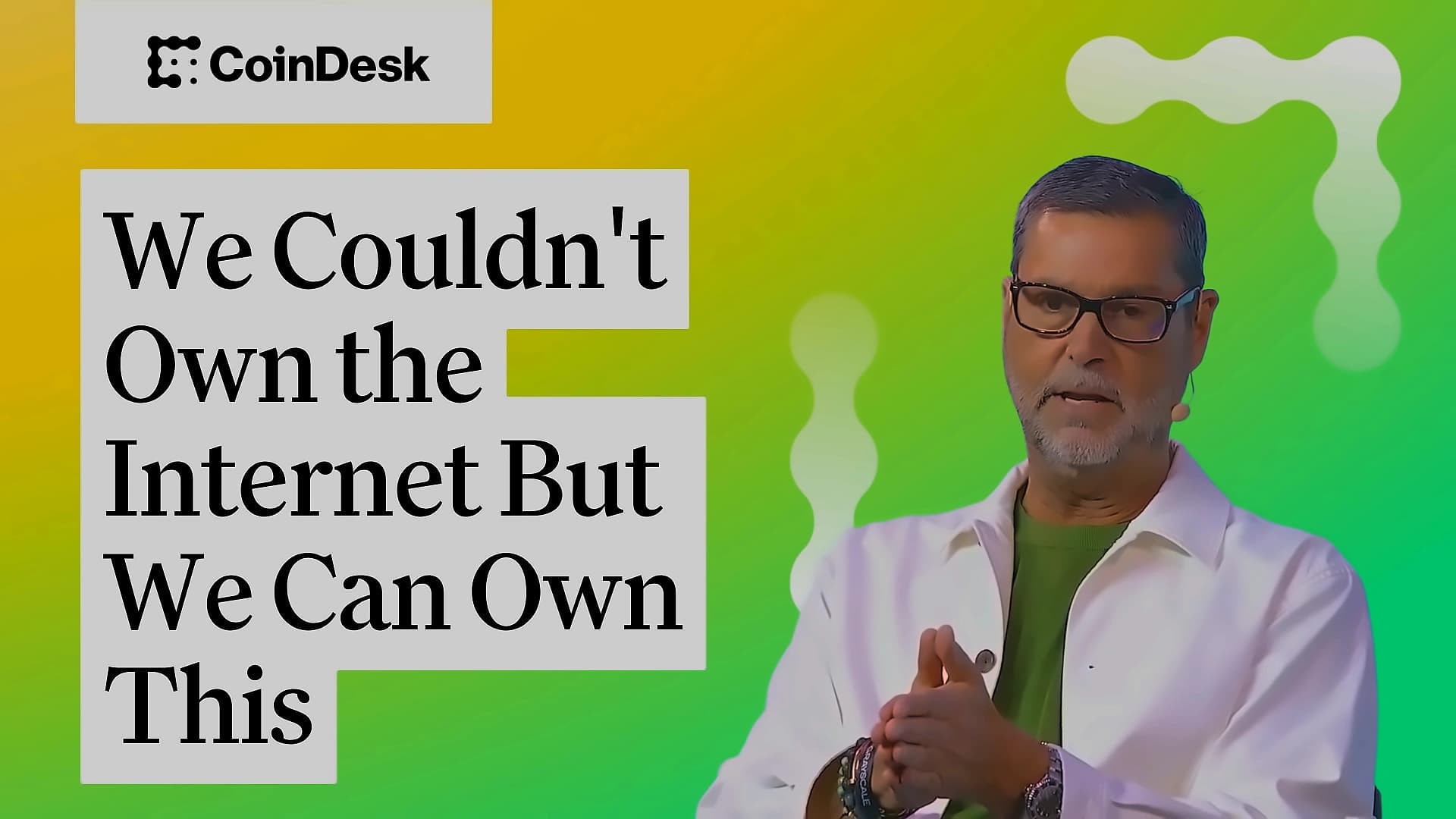
Pal described the current moment as a unique opportunity for individual ownership of economic infrastructure. According to Real Vision, he stated that 'We can own the infrastructure layer for the first time in history'. He positioned crypto as a 'permissionless equity system', allowing anyone with a phone to own exposure to blockchain infrastructure without KYC restrictions, effectively allowing individuals to 'front-run Wall Street' by owning blockchain infrastructure now. This ownership model represents a fundamental shift from traditional financial systems, where access to economic infrastructure was controlled by institutions and required extensive regulatory compliance. Pal highlighted that tokenization and blockchain rails expand access to financial markets for people globally who were previously excluded, with everybody on the same equal footing regardless of geographic location.
Pal's thesis has evolved to include AI as a structural demand driver beyond his earlier macro predictions. As reported by Real Vision, he previously argued that a debt-driven liquidity cycle would push crypto higher through 2026, but his newer position adds AI convergence as a fundamental demand driver. He predicted that NFTs eventually become foundational digital contracts underpinning parts of the future economy, with wealth creation from crypto increasingly flowing into digital culture, including $NFT-based art. He cited digital artist XCOPY as an example of crypto-native culture gaining value alongside traditional art markets. Pal argued that meme coins and NFTs served as stress tests for broader technological ideas, with meme coins demonstrating how online attention can rapidly form capital. He noted that stablecoins, tokenization and blockchain-based finance represent 'a better system for everybody' compared to traditional financial systems.
When asked about potential obstacles to crypto adoption, Pal responded 'Nothing stops this train' in his interview. According to Real Vision, this reflects his view that AI agent demand for on-chain rails is now structural, not cyclical. However, macro strategist David Hunter from Contrarian Macro Advisors presents a contrasting view, warning of a severe financial crisis that could impact crypto markets. Hunter projects an 80% deflationary wipeout following a parabolic melt-up that could peak as early as Labor Day. Unlike the 2008 financial crisis, Hunter does not believe the upcoming catalyst will originate in the United States, pointing to hidden leverage overseas, particularly in Japan. His warning arrives as Japanese markets face historic pressure, with the Bank of Japan's interest rate at 0.75% and 10-year government bond yield pushing to 2.79% - the highest level since 1996. Hunter estimates that global central banks could inject up to $50 trillion to prevent banking sector collapse, creating conditions that could challenge Pal's long-term crypto forecast.