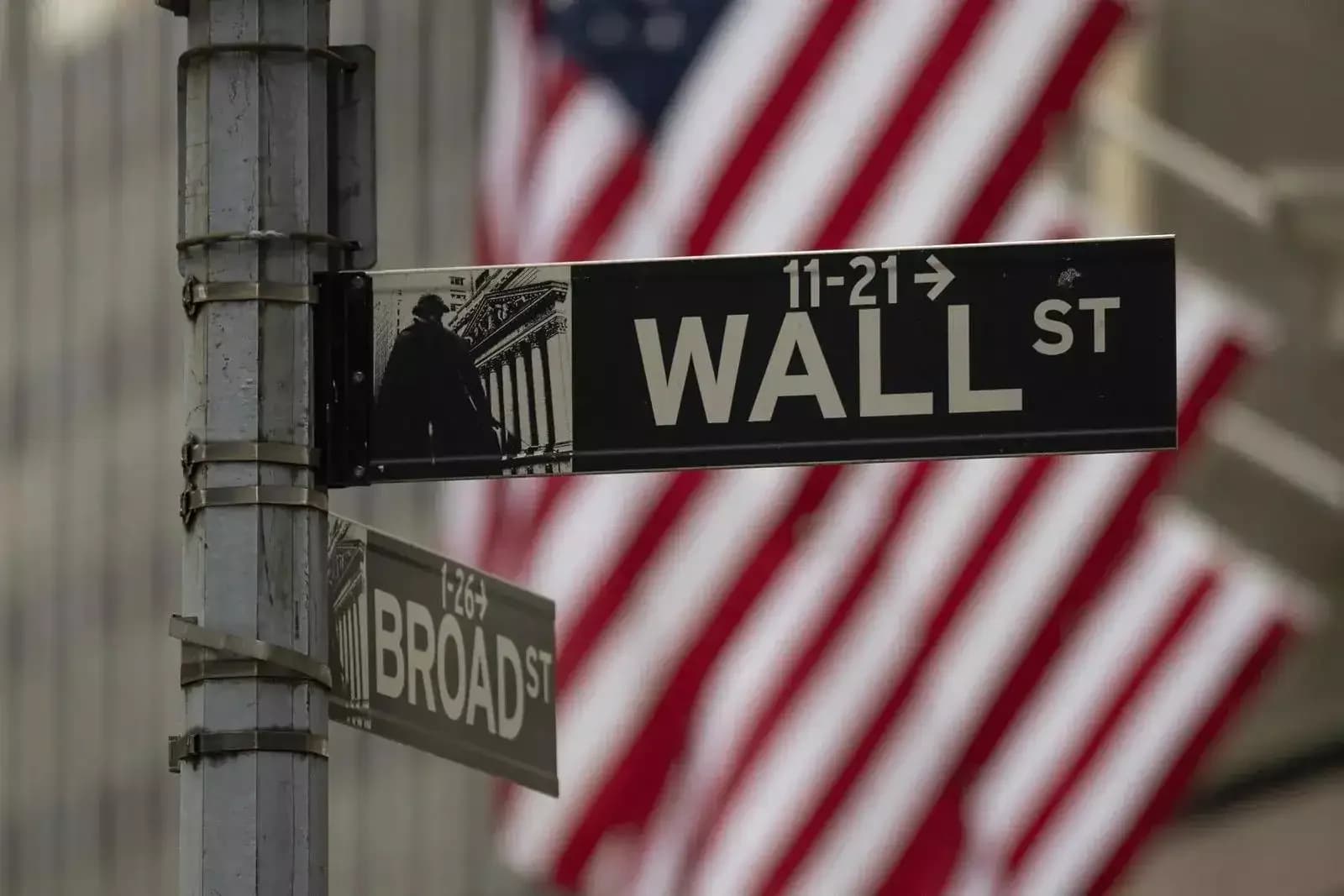
The Nasdaq surged 400 points (1.5%) to 26,270 as Wall Street rebounded ahead of Nvidia's first-quarter earnings report, with investors welcoming falling Treasury yields and a sharp drop in oil prices. The Dow Jones gained 645 points (1.3%) to close at 50,009 while the S&P 500 rose 79 points (1.1%) to 7,433. Nvidia shares were up more than 3.7% in afternoon trading as analysts broadly expect another beat, with Wedbush forecasting accelerating cloud and neocloud spending should drive results above $80 billion and UBS raising its target to $275, forecasting $81 billion in first-quarter revenue. The market bounce followed a weaker session the previous day when the Nasdaq fell 0.8% and both the Dow and S&P dropped 0.7% as technology shares weighed on sentiment.
Nvidia delivered exceptional first-quarter results that exceeded Wall Street expectations, with record revenue of $68.1 billion for fiscal Q1 2026, representing a 73% year-over-year increase driven almost entirely by insatiable demand for AI compute. According to reports from FactSet, the company's adjusted earnings of $1.87 per share beat expectations of $1.76 per share, demonstrating robust demand for AI infrastructure. Despite the strong performance, Nvidia shares were down approximately 1.5% at publication time as investors focused on potential growth challenges amid intensifying competition for AI chips. The results came with guidance that suggests the AI infrastructure party isn't slowing down anytime soon, but a disappointment could give credence to fears that the group has gotten overextended.
The company's Data Center business now represents more than 90% of Nvidia's total revenue, prompting management to reorganize reporting into two segments: Data Center and Edge Computing. As reported by Nvidia, hyperscalers generated more than half of the $75 billion in Data Center revenue, reaching roughly $38 billion and rising 12% from the previous quarter. The remaining $37 billion came from the ACIE segment, which includes AI cloud providers, industrial customers, and enterprise markets. CEO Jensen Huang emphasized that "the buildout of AI factories — the largest infrastructure expansion in human history — is accelerating at extraordinary speed." The expected market for AI infrastructure is projected to reach $3-4 trillion by the end of the decade, with a 50-60% compound annual growth rate.
Nvidia announced significant shareholder-friendly initiatives alongside its earnings beat. The company's board authorized an additional $80 billion in stock buybacks and raised the quarterly dividend to 25 cents per share from 1 cent previously. According to Nvidia, the company forecasts roughly $91 billion in revenue for the current quarter and expects to generate $20 billion in CPU revenue this year. The outlook excludes any Data Center compute revenue from China due to U.S. export restrictions on advanced AI chips. Despite its relatively underwhelming performance in 2026, Nvidia remains the biggest stock in the market, accounting for almost a fifth of the S&P 500 Index's more than seven percent advance this year.
Bitcoin miners with exposure to AI and high-performance computing infrastructure experienced modest gains following Nvidia's earnings announcement, but the real story lies in their strategic transformation. Companies like Core Scientific and Hut 8 have recognized the overlap between traditional mining and AI infrastructure, increasingly leasing GPU infrastructure to AI laboratories and hyperscalers. The margins on AI hosting tend to be more favorable than traditional mining, making the economics compelling even when Bitcoin is cooperating. Core Scientific emerged from bankruptcy and has repositioned itself as a provider of high-performance compute, with significant contracts tied to AI workloads, while Hut 8 has pursued a similar strategy leveraging its energy assets and data center expertise to attract non-mining clients.
Despite Nvidia's strong earnings, several mining stocks actually dropped in the immediate aftermath due to broader market dynamics. Investor sentiment has been whipsawed by macroeconomic concerns, and a rotation out of tech-adjacent equities hit mining stocks even as Nvidia's results validated their strategic direction. The Philadelphia Stock Exchange Semiconductor Index has soared more than 60 percent this year, but it tumbled 6.4 percent over Friday and Monday as inflation concerns weighed on the stocks. Bitcoin itself hasn't been immune to the choppiness, with prices trading in a range between $77K and $94K and slowing ETF inflows adding uncertainty. The risk for miners lies in execution, as building out GPU infrastructure requires capital and faces competition from well-funded hyperscalers like Amazon, Microsoft, and Google.