Norway's $2.3 trillion sovereign wealth fund delivered its record ₹1.75 trillion ($184.9 billion) investment returns for the first half of 2026, surpassing the previous first-half record of ₹1.5 trillion set in 2023. The fund posted its best quarterly return since 2020, achieving an 11.5% gain in the second quarter, as reported by The Wall Street Journal. Alongside the record profit, the fund disclosed its first SpaceX stake worth $1.22 billion as of June 30, representing 0.05% ownership in Elon Musk's aerospace company. According to Norges Bank Investment Management (NBIM), the fund received net inflows of ₹89 billion during the first half after expenses, with its market value increasing from ₹19.998 trillion at the end of March to ₹22.683 trillion as of June 30. Despite this positive performance, fund CEO Nicolai Tangen remains cautious, stating in a CNBC TV18 news conference that "the worst part is that in the world we live in today, it is fairly likely" the fund could disappear. Tangen further warned that "there is no country in the world that has managed to hold on to a large financial fortune over a period of time. Fortunes are always lost in the end."
Asian technology stocks helped lift the first-half profit to the record ₹1.75 trillion, with equity investments driving a 13% return while fixed income contributed 0.9% and unlisted real estate and infrastructure investments both returned 1.8% in the quarter. According to The Wall Street Journal, the fund's first-half return of 9.4% beat its benchmark index by 22 basis points, marking an all-time high for a six-month period when measured in kroner. The performance was driven by telecommunications, technology and energy sectors, with tech stocks, led by AI-related companies, being the biggest driver of the full-year return of 15.1% in 2025. Nvidia Corp. remained the fund's biggest holding as of the end of the first half, valued at approximately $61.8 billion, followed by Apple Corp. worth around $52 billion and Alphabet accounting for about $50 billion. Tangen noted that 'chips drive fund's value on a scale not seen before' and that the fund is "one of the world's biggest investors in artificial intelligence-linked companies."
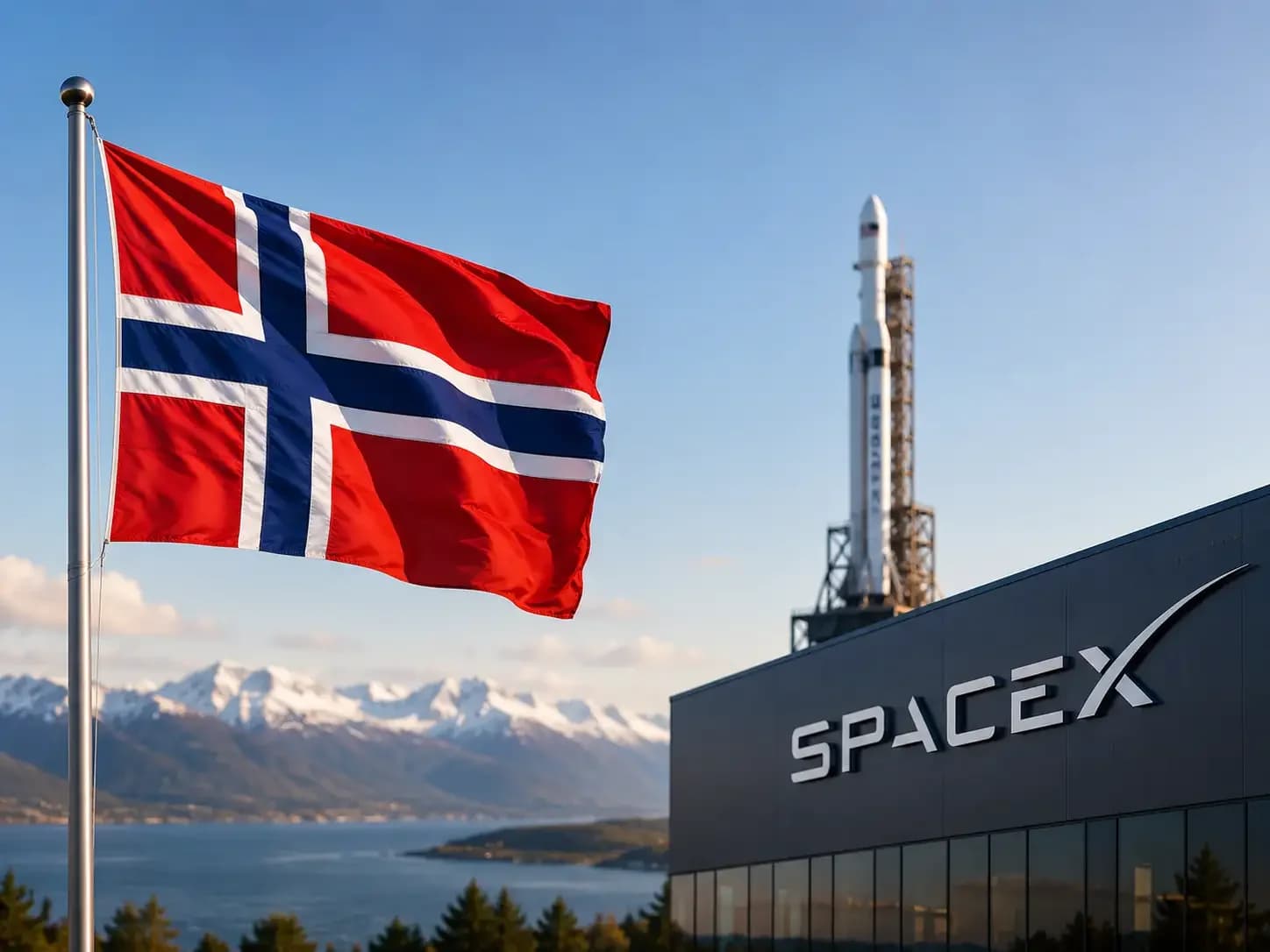
The fund's SpaceX stake of 7.3 million Class A shares represents 0.05% ownership in Elon Musk's aerospace company, valued at approximately $1.22 billion as of June 30. According to The Wall Street Journal, NBIM had not previously reported an investment in SpaceX, with Deputy CEO Trond Grande confirming in April that the fund was discussing a possible investment before SpaceX completed its U.S. listing in June. SpaceX sold 555.6 million shares for $135 each on June 12, raising about $75 billion at a valuation near $1.75 trillion, making it the largest initial public offering in U.S. history. The company disclosed 18,712 Bitcoin on its balance sheet following its IPO, valued at about $1.2 billion around the time of listing. Under U.S. accounting rules, this Bitcoin position represents about 0.076% of SpaceX when the company was valued near $1.56 trillion, providing the Norwegian fund with indirect Bitcoin exposure through its SpaceX holding. The fund's 1.3% stake in Nvidia alone is worth $61.8 billion, highlighting the chipmaker's outsized influence on the fund's performance. Despite the fund's 1% stake in Tesla worth nearly $16 billion, Tangen noted that "there is no love lost" between the fund and Tesla CEO Elon Musk, who declined an invitation from Tangen to a private dinner and conference in Oslo after the fund voted against his $56 billion pay package in 2024.

The fund's top 10 holdings now account for approximately 20% of its total value, with U.S. investments accounting for 40% of the portfolio. As reported by The Wall Street Journal, Tangen acknowledged that as a broad-based index fund, the options to mitigate concentration risks remain limited, noting he has "never seen the fund so heavily concentrated in a few stocks." The fund represents Norway's national nest egg, investing the country's oil and gas income in stocks, bonds, and property abroad, owning 1.5% of every listed company on Earth and covering about a quarter of Norway's public spending. Stocks comprise more than two-thirds of the fund, with the remaining assets mainly in fixed-income securities, along with smaller allocations to unlisted real estate and renewable energy infrastructure. The fund was established in 1996 to invest the country's oil and gas revenues for future generations, with transfers from the fund contributing about a fourth of Norway's budget spending. Tangen called the fund "a piggy bank for the whole of Norway" and warned that the country must be prepared for the value to "go up and down," emphasizing that "there is no country in the world that has managed to hold on to a large financial fortune over a period of time."
The fund's recovery from a 2.6% decline in the first quarter to record half-year performance demonstrates resilience in volatile markets. Currency movements had reduced the fund's value by ₹427 billion during the first quarter, but the fund's market value increased significantly following the strong technology sector performance. The fund's 10 largest holdings now represent roughly 20% of its total value, highlighting growing concentration risks as technology companies occupy several of the largest positions. Tangen identified this growing concentration as a risk for a portfolio designed to spread investments across thousands of businesses and several asset classes. The fund's performance reflects the broader trend of AI-linked companies driving returns, though Tangen continues to express caution about AI valuations and geopolitical risks that could impact future performance. Despite the fund's record performance, Tangen warned that the fund could lose its entire value and called that outcome "fairly likely" in current conditions, while noting the fund owns 7,000 companies that move in both directions daily. The fund's 1.3% stake in Nvidia alone is worth $61.8 billion, highlighting the chipmaker's outsized influence on the fund's performance, with Samsung, SK Hynix, TSMC, ASML, Intel and Nvidia all featuring among the fund's best performers.