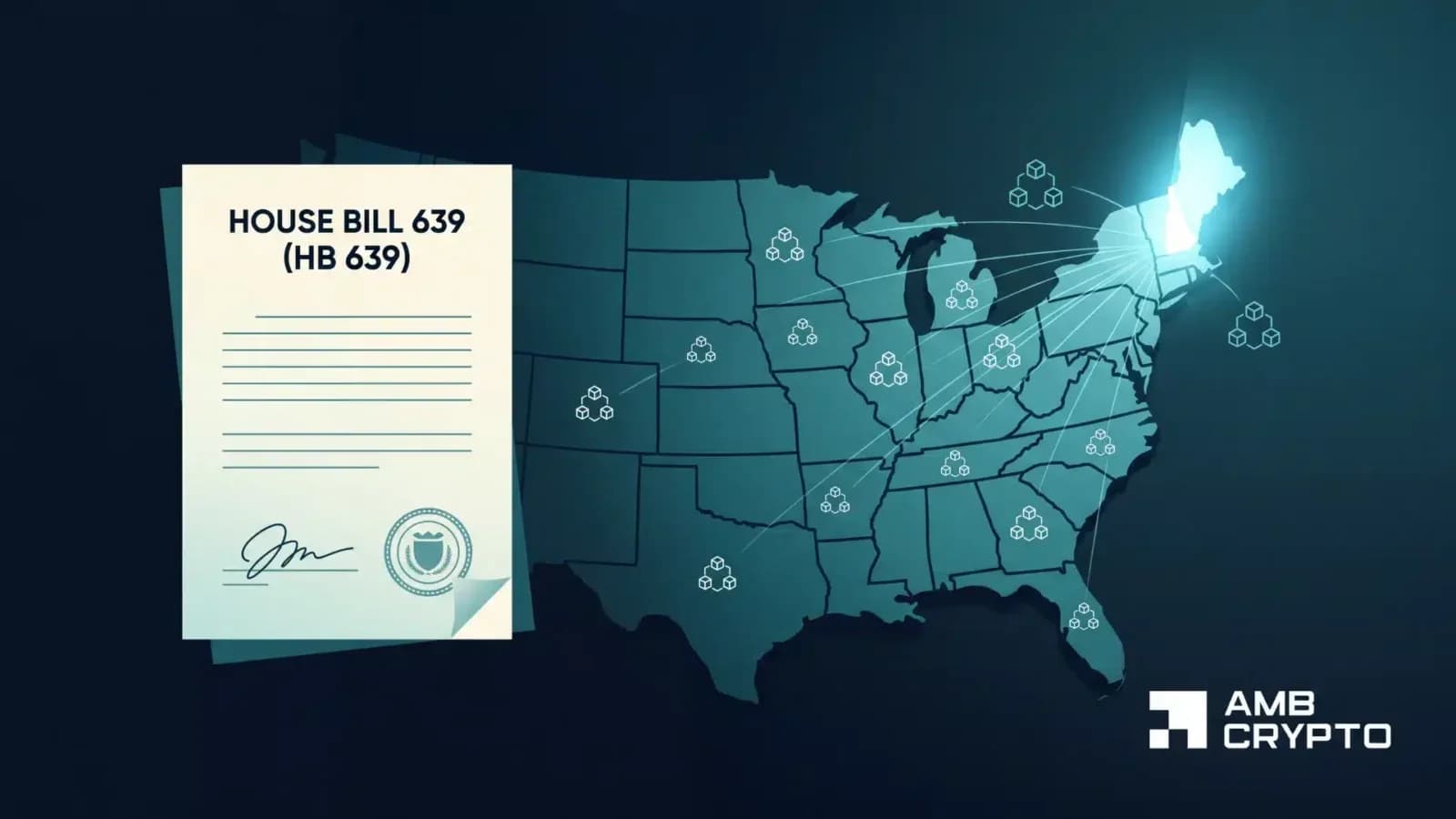
New Hampshire Governor Kelly Ayotte has signed the 'Blockchain Basic Laws' known as HB 639, marking a significant development in the state's cryptocurrency regulatory framework. According to reports from Decrypt and Odaily, this legislation comes one year after Ayotte signed the Strategic Bitcoin Reserve Bill in May 2025 (HB 302), establishing the state's first Bitcoin reserve program. The new law is now being actively promoted by the New Hampshire Blockchain Council, with the organization describing 'Today is another historic day for New Hampshire' following the signing. As per the NH Blockchain Council, the legislation makes New Hampshire home to one of the nation's strongest legal frameworks protecting blockchain innovation and digital asset rights. New Hampshire Representative Keith Ammon, the bill's primary sponsor, emphasized that 'With Governor Ayotte's signature on HB 639, New Hampshire has once again demonstrated that it intends to lead the nation in blockchain innovation.'
HB 639 establishes fundamental rights for cryptocurrency users, allowing individuals to own cryptocurrency in their own wallets instead of relying on banks or exchanges. As reported by Decrypt, Ammon stated that 'The Blockchain Basic Laws protect one of the most fundamental rights in the digital economy—the right of individuals to control their own digital assets through self-custody.' The law safeguards citizens'' freedom to pay for legitimate goods and services with cryptocurrency without intervention from federal, state, or local governments. This provision represents a significant step toward decentralized financial infrastructure within the state, with the legislation codifying rights to self-custody digital assets and establishing clear guardrails for individuals and companies operating in the sector. The Blockchain Basic Laws Act provides explicit protection of self-custody, ensuring residents maintain the right to control and manage their own digital assets without relying on third-party custodians.
The legislation shields those managing blockchain infrastructure from being unjustly categorized as money transmission or securities activities, including operating nodes, mining, or staking operations. According to Decrypt, Ammon noted that 'They also provide clear legal protections for blockchain developers, miners, validators, entrepreneurs, and businesses building the next generation of financial technology.' The law explicitly addresses operations such as running a node, mining, and staking, seeking to avoid automatically treating these activities as 'money transmission' or 'securities' activity. The legislation also creates a 'Blockchain Dispute Docket' - a specialized court procedure within New Hampshire's superior court system, allowing judges with relevant blockchain expertise to handle cryptocurrency-related lawsuits more efficiently than general courts. This specialized docket provides legal protections for blockchain developers, Bitcoin miners, staking validators, entrepreneurs, and companies building blockchain-based financial technologies within the state.
The new blockchain laws build upon HB 302, which permitted the state treasurer to invest up to 5% of public funds in Bitcoin. As reported by Decrypt, Ammon explained at the time of the Bitcoin reserve bill's passage that 'It's one little way our state could hedge against inflation in the future.' The measure made New Hampshire one of the first U.S. states to officially authorize public investment in Bitcoin reserves, alongside traditional reserve assets such as gold and silver. With both laws now in place, New Hampshire has established one of the most comprehensive state-level legal frameworks supporting cryptocurrency ownership, blockchain development, and institutional adoption.
Keith Ammon, President of the New Hampshire Blockchain Council and prime sponsor of the legislation, emphasized that 'Today, with the signing of HB 639, we have taken another major step by enacting one of the most comprehensive blockchain rights laws in the country.' According to Decrypt, Ammon stated that 'Entrepreneurs, investors, developers, and innovators across America should know that New Hampshire is open for blockchain business.' The legislative push comes as New Hampshire has also been debating a separate plan that would allow up to $100 million in taxable revenue bonds to finance a borrower's purchase of Bitcoin tied to CleanSpark, demonstrating the state's continued commitment to Bitcoin treasury strategies. However, the state's Executive Council recently rejected a proposal that would have allowed the New Hampshire Business Finance Authority to facilitate a Bitcoin-backed municipal bond, highlighting the ongoing willingness to explore innovative uses of digital assets within public finance while reinforcing New Hampshire's long-term strategy of creating a favorable legal environment for blockchain businesses, investors, and technology developers.