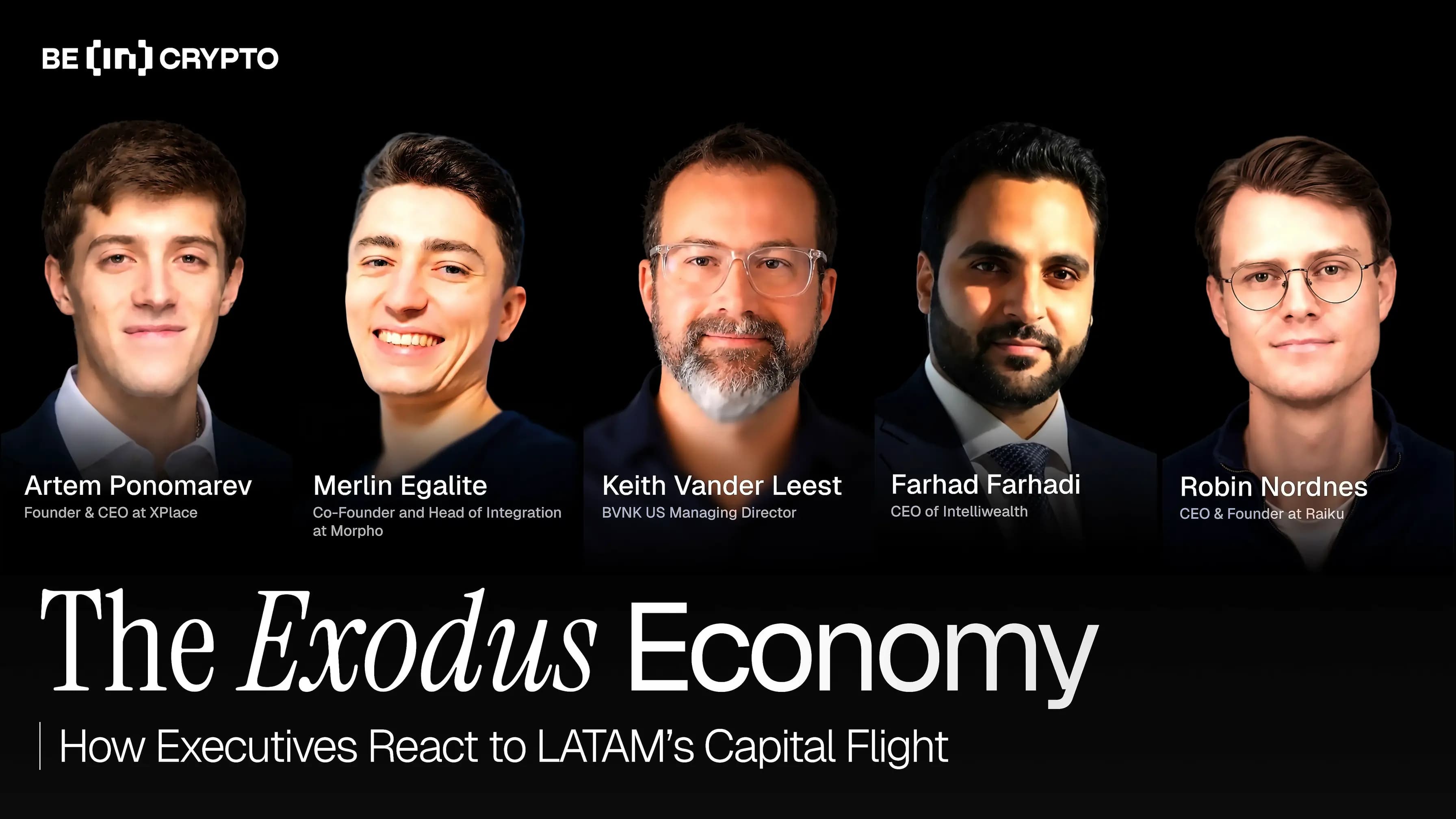
According to BeInCrypto Intelligence's comprehensive report, the average withdrawal on Argentine retail crypto rails such as Lemon Wallet reaches ₹544, with median transfers between ₹150-270 - amounts closer to rent money than portfolio shifts. This represents a fundamental shift from traditional capital flight methods, as workers and small businesses across Latin America can now move money offshore from their phones rather than through private bankers and complex accounts. The report, titled The Exodus Economy, traced six routes money takes out of the region and audited 12 products marketed as dollar accounts.
Despite Brazil's benchmark CDI rate growing to approximately ₹150 over the past decade while dollars held without yield ended at ₹99, Brazilians' declared offshore wealth reached an estimated ₹654 billion in 2024. As reported by BeInCrypto Intelligence, this demonstrates that returns alone cannot explain the movement, with savers purchasing convertibility and jurisdictional optionality rather than yield. Farhad Farhadi, CEO of Intelliwealth, described this as an "insurance premium rather than a fear premium," noting that nobody in 2016 knew which country would deliver which outcome.
According to the BeInCrypto audit, only two of the 12 dollar-account products placed customer balances in insured US bank deposits, while five relied directly on stablecoins and 10 failed the report's basic self-verification test. The report found that more than 99% of withdrawn volume moved onward within 30 days, with digital dollars functioning as rails rather than vaults. This leaves savers exchanging familiar domestic risks for less visible questions about issuer, custodian, legal claims, and reserves, as a dollar sign inside an app does not answer these fundamental questions.
As reported by Keith Vander Leest, US managing director at BVNK, the velocity of on-chain dollars is around 100 times faster than traditional fiat money, when compared to global GDP and M1 money supply. Businesses face additional challenges, as most on-chain credit pays variable rates, making cash flow planning difficult. Merlin Egalite, co-founder at Morpho, noted that "the missing piece for institutions to fully adopt on-chain infrastructure was predictability, because credit markets ran almost entirely on variable rates." Households face liquidity problems with protection held in dollars while rent and groceries remain payable in local currency.
Robin Nordnes, founder and CEO of Raiku, argues that economic stabilization does not immediately reverse habits formed through repeated crises, noting that "friction used to do a lot of quiet retention work." The report identifies that lower inflation can repair a currency faster than it repairs public trust, while mobile access makes old memories easier to act on. Artem Ponomarev, founder and CEO of XPlace, warns that badly designed loans could erase savings meant to preserve essential living expenses, emphasizing the need for clear LTV limits, real-time collateral monitoring, and conservative liquidation terms.