The crypto market is witnessing significant institutional activity as BlackRock executed a notable $230 million Bitcoin sale and $17.7 million Ethereum purchase in a strategic on-chain rebalancing move. The fund sold 3,671 BTC and bought 10,566 ETH during one of the most volatile periods of 2026 for both digital assets. This transaction comes amid heavy ETF outflows hitting BlackRock's flagship products, demonstrating the fund's active management approach rather than passive holding strategy. The move reflects ongoing institutional appetite for Ethereum exposure while Bitcoin remains the dominant headline story across the broader crypto market.
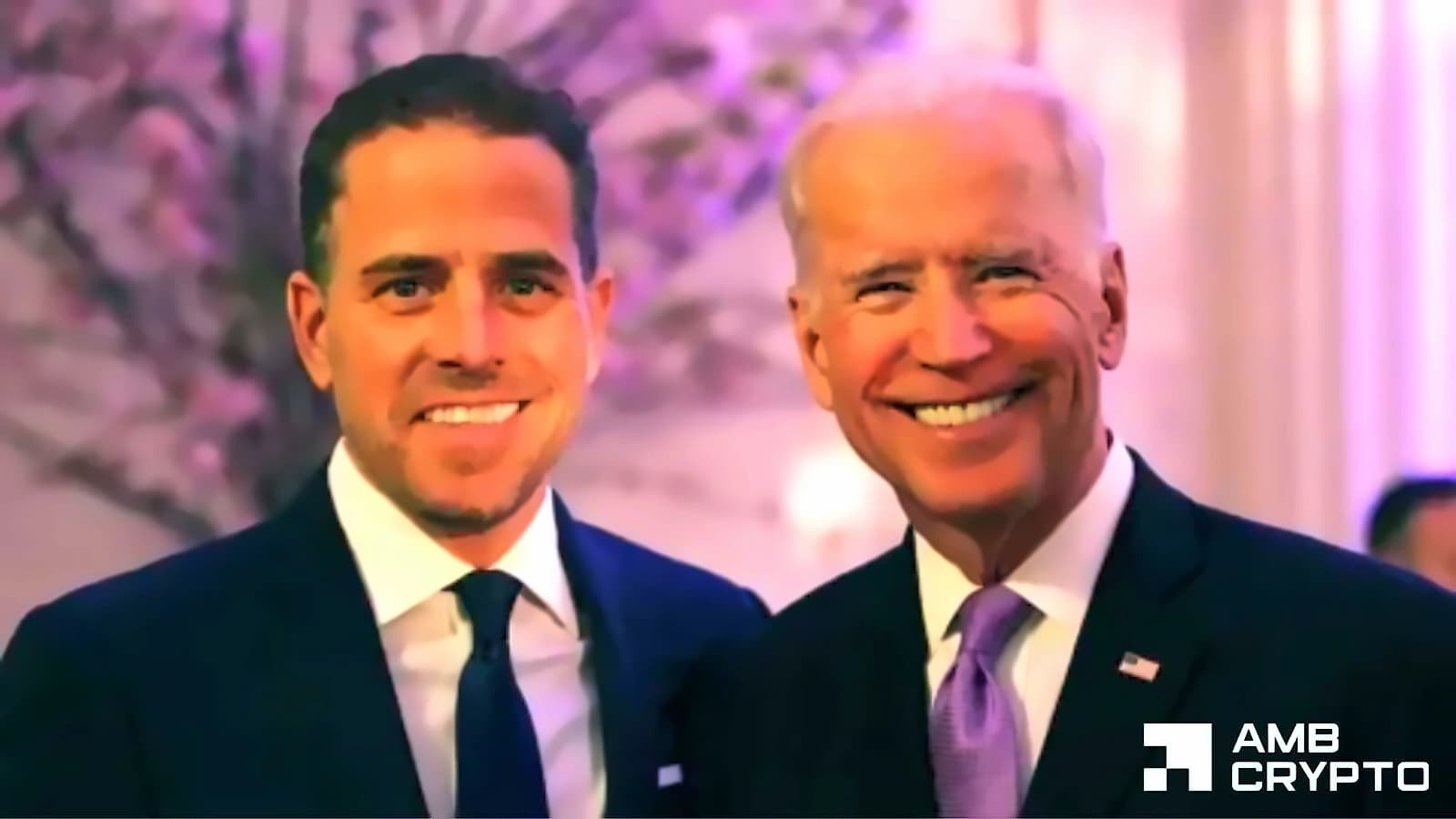
Hunter Biden has revealed that he learned about Bitcoin from Andreas Antonopoulos, according to comments from Caitlin Long, founder and CEO of Avanti Bank & Trust at Custodia Bank. Long noted that Hunter Biden's approach represents an early adopter perspective on Bitcoin rather than a traditional or mainstream stance. She also referenced Hunter Biden's academic background at Yale Law, suggesting that stereotypes about him may be misplaced. This revelation adds context to his earlier support for Bitcoin and blockchains as an 'inevitable future' for the financial system.
US Treasury Secretary Scott Bessent has confirmed that the Treasury has seized $1 billion in Iranian crypto assets, marking a significant milestone in digital asset enforcement capabilities. As reported by CoinDesk, Bessent made this announcement during a recent policy briefing, though he did not provide detailed breakdowns of specific cases or timelines. The seizure demonstrates the government's growing proficiency in tracing and freezing cryptocurrency held by sanctioned entities. The $1 billion figure includes both direct seizures and assets that have been rendered unusable due to sanctions designations, highlighting the Treasury's sophisticated blockchain analytics capabilities.
The Treasury's crypto seizure capabilities represent a significant evolution from traditional asset seizures, which relied heavily on physical bank accounts and wire transfers. According to CoinDesk, the US government has developed sophisticated blockchain analytics over the past decade, using specialized software from firms like Chainalysis and TRM Labs to trace transactions across public ledgers including Bitcoin, Ethereum, and stablecoins. When wallets are linked to sanctioned individuals or entities, OFAC can add them to the Specially Designated Nationals (SDN) list, effectively freezing their assets if held on US-regulated platforms. In some cases, the government has obtained court orders to seize private keys or compel exchanges to freeze accounts.
The Treasury's crypto seizure activities reinforce that cryptocurrency is not a law-free zone, with compliance with OFAC sanctions being non-negotiable for exchanges, wallet providers, and decentralized finance platforms. As reported by CoinDesk, failure to implement adequate know-your-customer (KYC) and anti-money laundering (AML) controls can result in severe penalties, including being added to the SDN list themselves. For everyday users, the seizure highlights the importance of using compliant platforms and understanding that blockchain transactions are often more traceable than cash. The recent BlackRock Bitcoin ETF sale, while not automatically indicating a bearish outlook, represents a significant transaction that naturally attracts market attention. Large ETF transactions often influence market expectations, with many investors viewing ETF flows as a measure of demand from traditional finance, though the $230 million Bitcoin sale and $17.7 million Ethereum purchase reflect active portfolio management rather than passive holding.