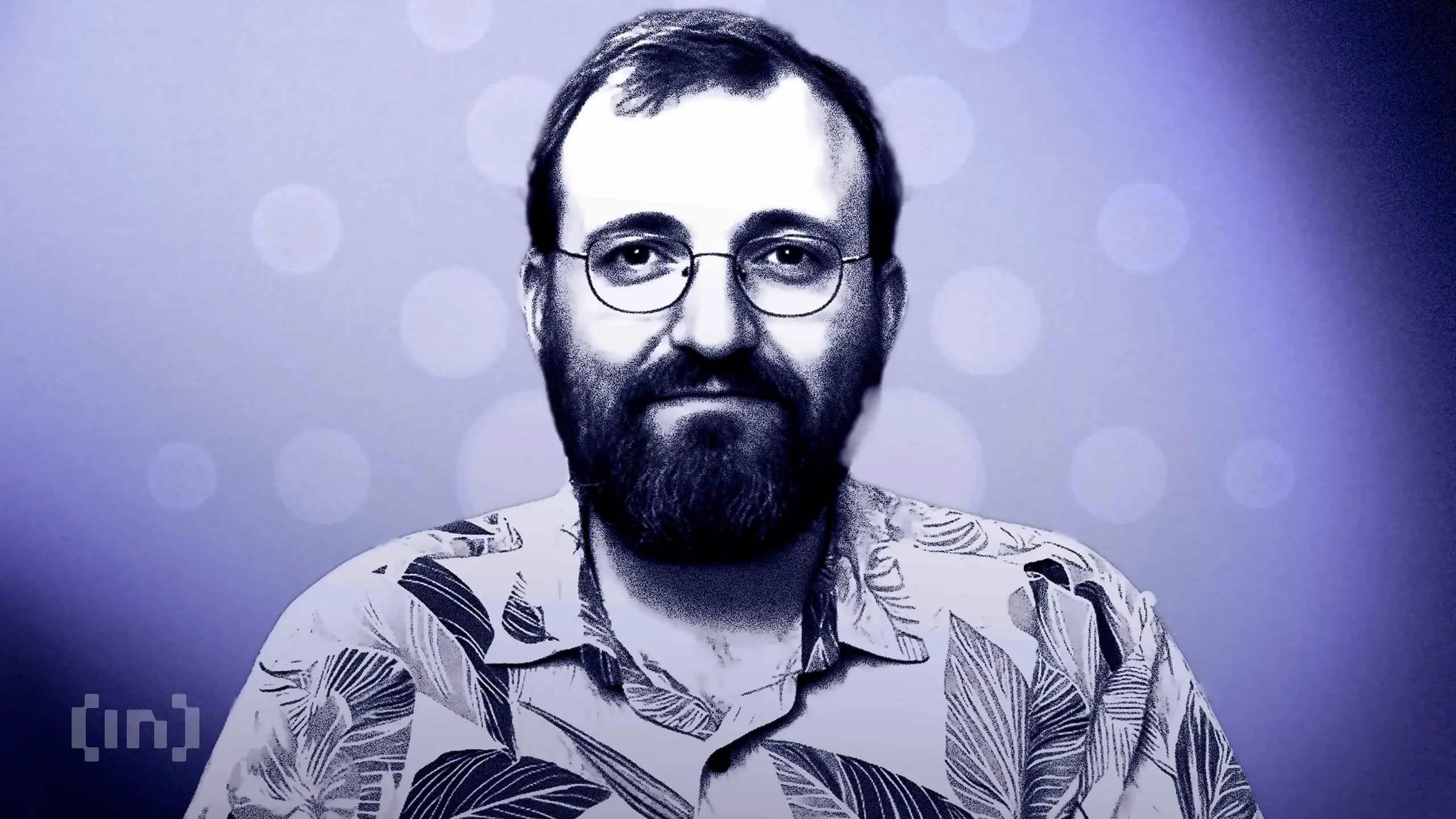
Cardano founder Charles Hoskinson has challenged Ethereum co-founder Vitalik Buterin over his warning that advances in artificial intelligence could weaken quantum-resistant cryptography. According to reports from CoinDesk, Hoskinson responded on October 9 to Buterin's concerns about lattice-based cryptography, arguing that the Ethereum founder had not identified a credible new attack that would justify abandoning those methods. The dispute centers on how major blockchains plan to protect wallets from future quantum computers, with both founders taking opposing stances on encryption methodologies.
The controversy intensified when Buterin warned that rapid advances in AI-assisted mathematics could challenge assumptions behind cryptographic systems currently considered secure. As reported by CoinDesk, Buterin identified lattice-based cryptography as a particular concern, arguing that increasingly capable AI systems might discover more efficient ways to solve mathematical problems used to protect digital information. He compared the possible development to advances in integer factorization, where researchers discovered methods that made certain calculations much easier than earlier estimates suggested. Buterin suggested that future AI advances could justify increasing the size of lattice-based keys substantially, potentially by a factor of 10 times.
A central part of Hoskinson's defense concerns ML-KEM and ML-DSA, two cryptographic systems standardized by the U.S. National Institute of Standards and Technology (NIST) in August 2024 under FIPS 203 and FIPS 204. According to CoinDesk, Hoskinson argued that these systems were selected after researchers examined different methods of attacking lattice-based mathematical problems. He pointed to research dating back to the introduction of the Lenstra–Lenstra–Lovász lattice reduction algorithm in 1982, citing subsequent improvements in lattice sieving and other attack methods as examples of decades of testing. Hoskinson rejected Buterin's call for 10 times bigger keys as "numerology" because the suggested increase was not supported by a specific algorithm or calculation.
Buterin's concerns are connected to Ethereum's work on cryptographic systems designed to resist future quantum computing attacks, with the network's Lean Ethereum research increasingly favoring hash-based signatures, including WOTS and SPHINCS-based constructions. However, Hoskinson challenged the suggestion that hash functions are automatically safer, pointing to historical weaknesses in MD5, SHA-1, and even SHA-256 where researchers successfully attacked through internal design weaknesses. He questioned Ethereum's previous research into Poseidon and Poseidon2 hash functions, noting that Ethereum researchers have already moved away from Poseidon in their layer-1 roadmap, favoring established alternatives such as SHA-2 and BLAKE2s. According to CoinDesk, Hoskinson argued that hash-based signatures remain useful where their limitations are acceptable, but they cannot replace every function performed by public-key cryptography.
The debate extends to institutional custody systems, with BitGo testing quantum-resistant wallet signing using ML-DSA technology in May, examining whether post-quantum signatures could operate within existing institutional wallet procedures. Other blockchain networks are working on similar protections, with Sui's post-quantum security roadmap including both lattice-based and hash-based signature options for future account authentication. Buterin has advised users to consider keeping cryptocurrency in addresses whose public keys have not been exposed through outgoing transactions, while emphasizing that recommendations do not justify hurried wallet migrations. Hoskinson maintains that research into lattice-based methods should continue alongside work on hash-based alternatives, calling for any newly discovered attack to undergo testing, cost analysis and review before developers revise security parameters or abandon established algorithms.