The European Central Bank has strongly opposed a Bruegel proposal to ease liquidity requirements for euro stablecoin issuers and potentially grant them access to ECB funding. According to Reuters, ECB President Christine Lagarde and several other central bankers pushed back on the proposal in closed-door discussions at a two-day informal meeting in Nicosia, Cyprus. The Bruegel proposal, authored by Lucrezia Reichlin, Bo Sangers, and Jeromin Zettelmeyer, argued that more permissive rules and ECB backing are needed to grow a euro stablecoin market that remains a rounding error in a sector dominated by dollar tokens. However, central bankers warned that letting stablecoin issuers pull deposits out of European banks at scale would raise lenders' funding costs and curb their capacity to extend credit. The ECB has now warned EU finance ministers that euro stablecoin expansion carries serious risks to banks, with officials stating that wider issuance could reduce lending capacity and weaken the effectiveness of ECB interest rate decisions. The ECB's central concern is that a larger stablecoin market would draw retail savings away from commercial banks, with fewer deposits leaving lenders with less capacity to extend credit and tightening borrowing conditions across the eurozone.
Stablecoins have achieved unprecedented market penetration, with real-world stablecoin payments doubling to $400 billion in 2025 and transaction volume reaching levels comparable to Visa. According to recent reports, stablecoins processed roughly twenty times the volume PayPal did in 2025, with total settlement volume hitting $33 trillion last year. Major payment giants have integrated stablecoin rails into existing products, with Visa's stablecoin settlement program hitting a $7 billion annualized run rate in late April 2026, up fifty percent from the previous quarter. Companies like Mastercard, Stripe, PayPal, Western Union, Klarna, Cloudflare, Meta, Intuit, Fiserv, and Zelle have all either launched or announced integration plans, fundamentally upgrading the infrastructure behind global payments without disrupting user experience. The global supply of fiat-backed stablecoins crossed $319 billion in April 2026, representing a forty-fold expansion from roughly $7 billion six years earlier.
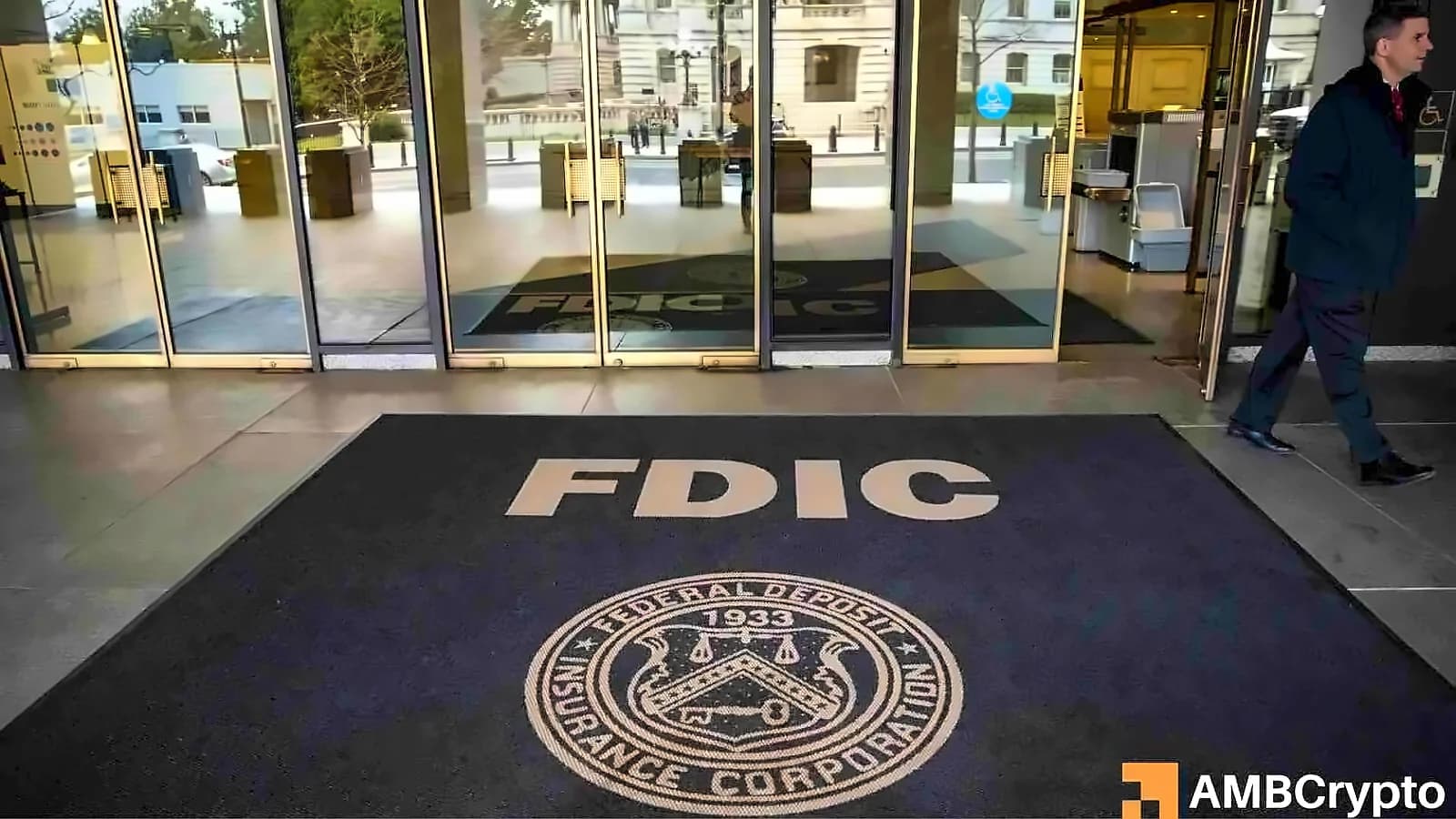
The FDIC Board of Directors approved a proposed rule on Friday (May 22) establishing a Bank Secrecy Act and sanctions compliance framework for stablecoin issuers. The board approved the notice of proposed rulemaking (NPRM) by a vote of 3-0, with the FDIC accepting comments for 60 days after publication in the Federal Register. This approval represents significant progress in implementing the GENIUS Act, which became the country's first-ever cryptocurrency legislation when signed into law by President Trump in July. The FDIC has now issued three rules under the GENIUS Act - the latest sanctions proposal, December's license application criteria, and April's prudential framework rules, with the July 18th deadline approaching for comprehensive implementation. The FDIC has estimated that between five and 30 banks would apply for and receive approval to issue stablecoins in the first few years after the GENIUS Act goes into effect, expected around mid-January 2027.
The proposal seeks to formalize the use of backdoor freezing features that players like Tether have already demonstrated. As reported by AMBCrypto, Tether recently helped the U.S. Treasury freeze ₹2,800 crore ($344 million) of crypto funds allegedly linked to Iran's government. Since both USDT and USDC have backdoor freezing features, the new proposal aims to formalize their use as economic sanction tools, particularly for U.S.-based issuers. The framework will provide clear regulatory pathways for coordinated enforcement between the FDIC and Treasury Department's illicit finance regulators, with provisions by FinCEN and OFAC covering senders' and receivers' IDs of stablecoin transfers. The FDIC will establish and align supervision and enforcement provisions for these AML/CFT programs with FinCEN requirements, ensuring comprehensive compliance across all aspects of stablecoin operations.
As authorized by the GENIUS Act, the FDIC is the primary Federal regulator of Payment Stablecoin Issuers (PPSIs) that are subsidiaries of insured state nonmember banks and state savings associations approved by the FDIC to issue payment stablecoins. The proposed rule requires these PPSIs to comply with applicable regulations regarding anti-money laundering/countering the financing of terrorism (AML/CFT) and economic sanctions programs, along with reporting requirements established by the Financial Crimes Enforcement Network (FinCEN) and the Office of Foreign Assets Control. The FDIC's regulatory framework builds upon previous actions, including December's NPRM for stablecoin issuance procedures and April's prudential framework rules. According to BlockBeats News, the FDIC has previously proposed two rules involving the process for bank subsidiaries to apply to become stablecoin issuers and requirements for capital, liquidity, and risk management, establishing a comprehensive approach to stablecoin oversight under the GENIUS Act. The EU has separately warned that the growth of dollar stablecoin could erode the euro's role in cross-border transactions, with the ECB's preferred counter being a central bank alternative rather than private issuance.
Despite regulatory uncertainties, key players are actively positioning themselves to benefit from upcoming clear rules for the segment. According to AMBCrypto, Fidelity, JPMorgan, U.S. Bancorp, and others are rolling out tokenized money funds specifically targeting stablecoin reserves to ensure instant liquidity while earning yield on the balance. The GENIUS Act provided a long-awaited policy framework and could signal a brand-new era for crypto in the U.S., particularly for stablecoins, which it was written to regulate. Nine lenders are preparing to launch a MiCAR euro stablecoin in 2026, and EU policymakers have debated easing MiCA to improve the standing of European issuers. However, the standoff between financial stability concerns and competitive pressure from dollar tokens has no clear resolution, with how ministers ultimately decide likely defining the trajectory of European digital asset regulation. President Christine Lagarde has described the digital euro as a strategic priority for European financial infrastructure, with the mid-January 2027 implementation deadline approaching for comprehensive implementation.