Ethiopia's state utility has slashed electricity supply to Bitcoin mining companies by approximately 75%, leaving them with only 23% of their contracted power allocation. According to reports from Bloomberg, this dramatic reduction is primarily attributed to El Niño intensifying dry conditions across the East African country, forcing state-owned Ethiopian Electric Power to reduce electricity supplied to mining operations while prioritizing households and manufacturers. CEO Ashebir Balcha described the cut as a pre-emptive measure ahead of a dry period, with incoming water levels tracking at least 20% below expectations. The utility initially lowered electricity deliveries to miners to 75% of their contracted amounts before reducing them to 50% and eventually 23%.
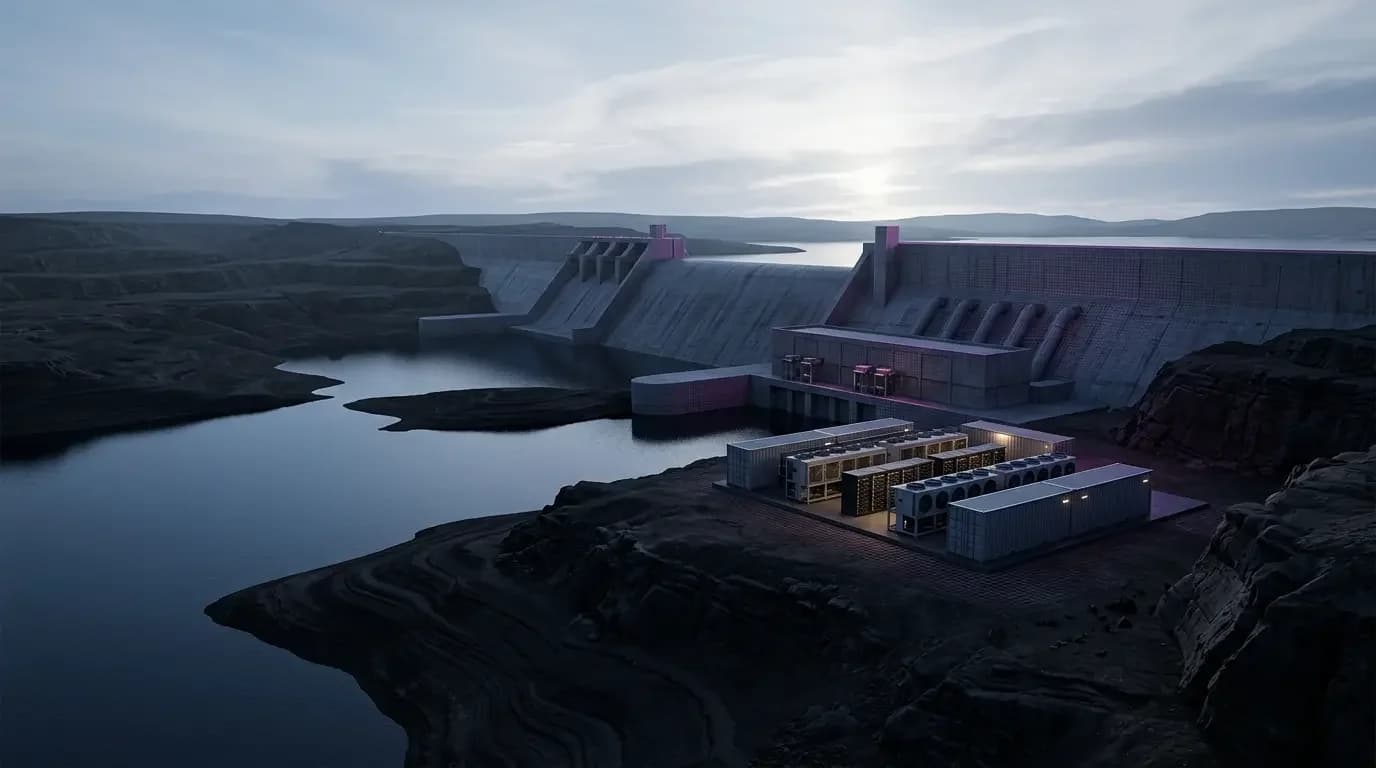
Bitcoin mining companies represent a significant portion of Ethiopian Electric Power Corp.'s (EEP) revenue, accounting for 35% of the utility's revenue in the past financial year. As reported by Bloomberg, these companies consumed almost a third of Ethiopia's total electricity production of 9,730 megawatts. The mining sector generated 50.37 billion birr in the last fiscal year, making it the largest customer category by revenue. Despite the power cuts, mining operations continue to consume a material portion of the country's total electricity output. Ethiopia's mining expansion has been built largely around its hydroelectric resources, with miners already consuming roughly 600 megawatts of electricity in October 2024 when the country had around 5,200 MW of installed generation capacity.
The power supply disruption comes as Bitcoin has lost more than 35% over the past 12 months, according to Yahoo Finance data. Saifedean Ammous, economist and author of The Bitcoin Standard, said in a Tuesday X post that worldwide Bitcoin mining electricity consumption and capital expenditure may have reached their peak during 2024 and 2025. Under Bitcoin's halving system, the block subsidy awarded to miners was reduced by half from 6.25 BTC to 3.125 BTC per block in April 2024. Ammous calculated that Bitcoin's price would need to increase by more than 18.92% annually simply to keep the dollar value of newly mined Bitcoin increasing, before accounting for depreciation in the value of the dollar.
EEP plans to reassess reservoir and electricity conditions in October, with further mining cuts or restrictions possible if water levels do not improve. The company has adjusted its revenue and supply forecasts and reported losses of up to 50 megawatts per generating unit as reservoir levels declined. Ethiopia could also restrict electricity exports to neighboring countries if domestic supply comes under more pressure. Meanwhile, mining operators are pivoting to AI and high-performance computing revenue, with public Bitcoin miners securing more than $70 billion in AI contracts by June 2026. Nine public Bitcoin miners spent $5.11 billion on capital assets during the first half of 2026 while reporting $341.2 million in AI and HPC revenue.