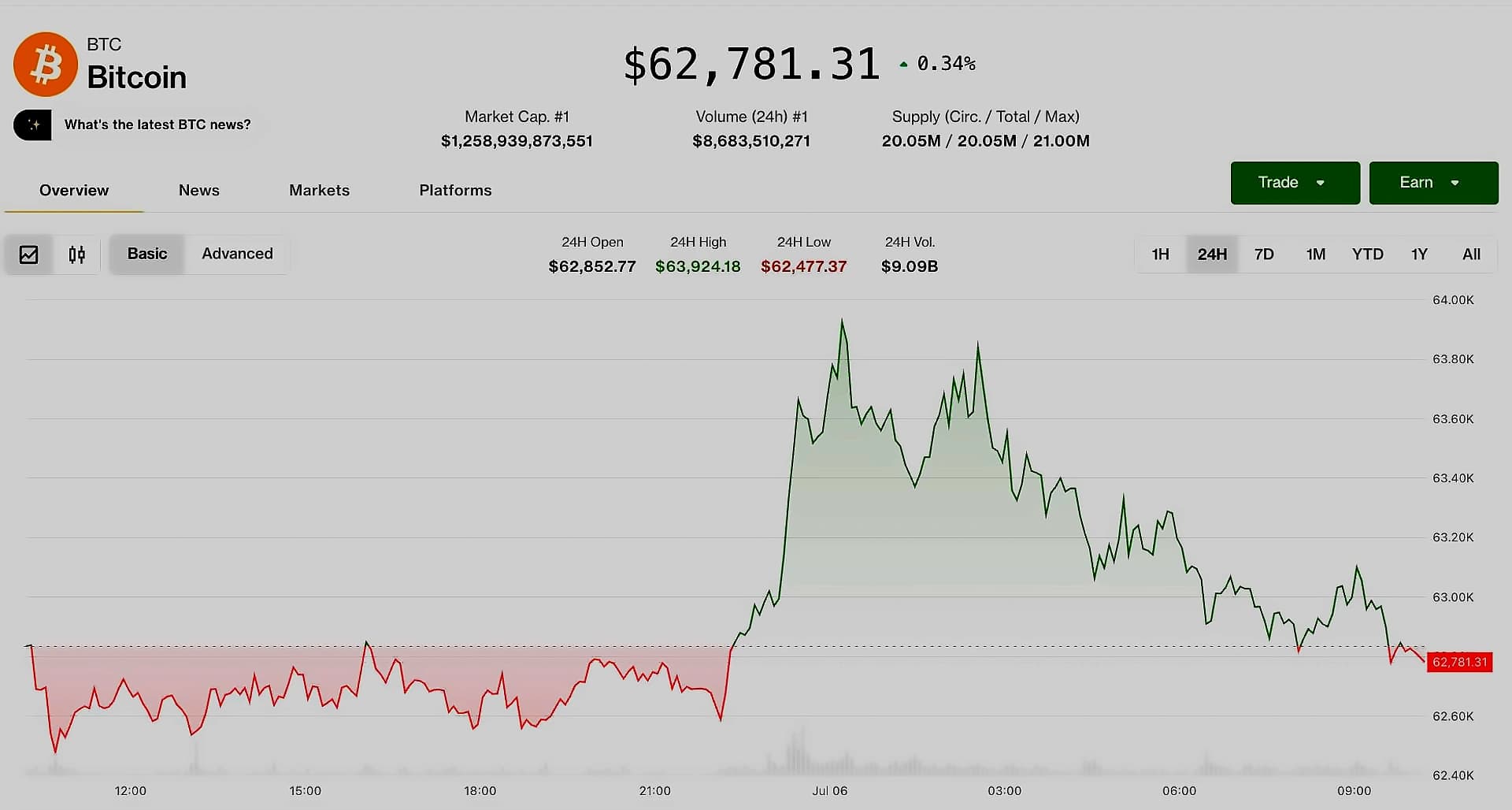
The Trump-Xi summit running from May 14-15 in Beijing is shaping up as one of the most important geopolitical events for financial markets in 2026, with crypto investors closely monitoring every development. According to latest reports, the two-day meeting marks Trump's first state visit to China since November 2017 - nearly a decade ago and officially centers around trade, technology, and security discussions. While markets aren't necessarily expecting a massive trade agreement, investors are hoping for signs that tensions between the world's two largest economies will not spiral further, which could determine whether global markets move into a 'risk-on' rally or another period of volatility. The summit is viewed as a possible turning point, with analysts believing a constructive outcome could lift major cryptocurrencies by 5%-10%. Recent market data confirms this narrative-driven bounce, with generative AI stocks gaining 2.42% in price and 22% in volume, while the Altcoin Season Index reached 42 (Neutral), indicating renewed interest in alternative assets. As per CoinMarketCap data, risk-on sentiment is showing up only in sectors directly tied to the diplomatic delegation, with narrative-aligned sectors absorbing capital flow and investors positioning for potential breakthroughs in AI technology and infrastructure.

Chinese President Xi Jinping told the chief executives of Apple, Tesla, Nvidia and other large companies that China will open wider to doing business, according to CNBC reports. This significant development represents a potential shift in China's approach to foreign investment and technology partnerships. The summit's most significant implications are now playing out in real-time as China technology stocks have shifted from forgotten to explosive, with KWEB now breaking aggressively above its long-term negative trend structure while reclaiming the 50-day moving average with authority. According to market analysis, this move has all the characteristics of an early-stage positioning squeeze rather than a fully matured rally. The rally in global technology is evolving from disciplined momentum into outright upside panic, with semiconductors and AI exposure becoming dangerously crowded trades. What makes this tape so dangerous is not simply the magnitude of the move, but the psychology underneath it - the market is no longer cautiously optimistic but becoming terrified of being left behind.
The summit's most significant implications may lie in the technology competition between Washington and Beijing over artificial intelligence leadership. The United States has tightened export controls on advanced AI semiconductors and chip-making equipment, targeting companies like NVIDIA and its high-performance H100 AI chips, with China representing a multibillion-dollar market for advanced AI hardware before restrictions intensified. This chip and semiconductor battle has become a major front in the competition, with China wanting fewer technology restrictions while the US wants China to restore smoother flows of rare earth exports. The semiconductor sector sits at the center of the modern economy, with AI companies, cloud computing firms, data centers, and even crypto mining operations depending heavily on advanced chips. A softer tone from the summit could boost semiconductor stocks and AI-related assets, while a more hostile outcome could deepen technological decoupling and pressure tech valuations globally. The discussions around rare earth export controls carry such enormous significance, as China still holds powerful leverage over critical industrial inputs and those restrictions continue to disrupt manufacturing chains across the United States, Europe, and India.
Currency traders are closely monitoring the US dollar and Chinese yuan movements during the summit, as trade policies and capital flows heavily influence the USD/CNY exchange rate. A stable or stronger yuan is generally viewed as positive for Chinese assets and global trade confidence, but if tensions escalate, investors could rush into the dollar as a safe haven, putting pressure on emerging markets and risk assets worldwide. Bitcoin historically struggles during periods of rapid dollar strength because tighter financial conditions reduce liquidity across global markets. This dynamic has already appeared in recent weeks as investors reacted to rising inflation and uncertainty around Federal Reserve policy. During periods of sharp market stress, crypto often behaves like a risk asset and falls alongside equities, though Bitcoin sometimes benefits from geopolitical uncertainty as investors search for alternative stores of value. The current market environment reflects this volatility, with risk-on sentiment showing up only in sectors directly tied to the diplomatic delegation.
Adding to the positive momentum, a dormant Ethereum whale reactivated after nine years, transferring nearly $157 million worth of ETH across new wallets, as reported by crypto.news. This significant whale movement could signal asset security measures or preparation for future selling, but so far, it hasn't increased sell pressure on the market. The whale activity, combined with the broader institutional and DeFi-driven demand, suggests continued institutional interest in Ethereum's long-term prospects despite short-term market volatility. Recent market data shows how sensitive crypto remains to macro developments, with Bitcoin's recent decline following the largest single-day ETF outflow in four months, highlighting the interconnected nature of traditional markets and digital assets. The current market environment reflects this institutional interest, with narrative-aligned sectors absorbing capital flow and investors positioning for potential breakthroughs in AI technology and infrastructure.