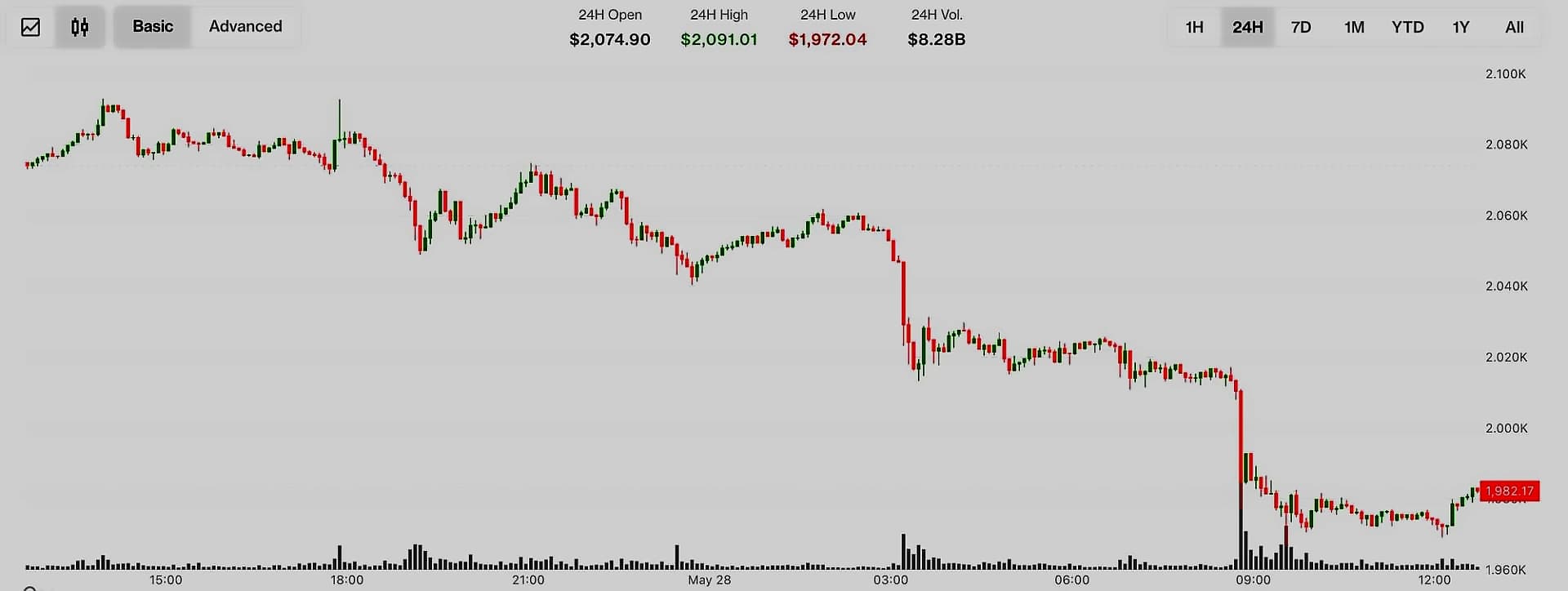
The cryptocurrency market experienced a 3.3% decline to $2.53 trillion following fresh U.S. airstrikes on Iran near the Strait of Hormuz, with Ethereum losing the $2,000 support level for the first time since late March. According to latest reports, Bitcoin fell below $73,000 for the first time in recent weeks, while XRP slipped under $1.30 and Solana fell back near $80. The selling pressure reached across all cryptocurrency segments, from major coins to meme coins, as investors fled risk assets amid escalating geopolitical tensions. The Crypto Fear and Greed Index has dropped into fear territory, indicating traders are bracing for more pain rather than seeking bargains, with sentiment driving sell-first-ask-later behavior.
Despite the current decline, Standard Chartered reaffirmed its $40,000 Ethereum target for end-2030, with Global Head of Digital Assets Research Geoff Kendrick comparing Ethereum's slump to Amazon during the 2001 dot-com bust. Kendrick argued that transaction counts and total value locked (TVL) sit near all-time highs in ETH terms, contrasting with ETH below $2,000 today and a 57% drop from the August 2025 record of $4,946. He noted that ETH/BTC ratio dropped to a five-year low around 0.027, with Santiment data flagging a wave of retail "buy the dip" orders once the $2,000 level broke. The bank projects stablecoin market capitalization will rise sixfold by end-2028, with tokenized real-world assets potentially multiplying fiftyfold over the same period, with Ethereum hosting 50% to 65% of both segments.
Prediction markets now favor Ether falling below $1,000 by 2026, with models showing 69% probability versus 71% market consensus. According to latest prediction market analysis, traders anticipate ETH falling below $1,750 (71% probability) and $1,500 (51% probability) by year-end 2026. The bearish sentiment is driven by weakening on-chain activity signals, macroeconomic headwinds, and a significant Glamsterdam upgrade delay from H1 2026 to Q3 2026. This represents a significant escalation from previous geopolitical events that had already pressured the cryptocurrency market, with a 63% chance ETH could fall to $1,500 according to technical analysis. The recent Iran strikes have reinforced these bearish predictions, as the market was already fragile before the geopolitical escalation.
Spot Bitcoin ETFs bled over $2 billion this month, with nearly $1 billion in mostly-long positions liquidated in a single day when the Iran strikes hit. Ethereum ETFs have also bled for 11 days straight, representing a significant shift in institutional investor sentiment toward ETH. According to latest data from Farside, nearly $500 million worth of investments has left Ethereum ETFs in the past 11 days alone, more than reversing the $354 million inflow recorded in April. The deteriorating sentiment extends beyond price movements, with Thielen noting that "the only buyer has been Bitmine but they indicated that they will slow down their purchases." However, certain institutional metrics, such as consistent positive ETF inflow streaks and the Coinbase premium, suggest underlying demand for the asset despite the bearish prediction market sentiment.
Despite the price decline, Ethereum staking has reached a new high with 32.4% of ETH now locked in staking, up from near zero in early 2021, indicating growing network participation despite bearish sentiment. Meanwhile, the amount of ETH held on exchanges has fallen dramatically from over 33 million in 2021 to about 14.9 million today, suggesting increased long-term holder retention. However, Ethereum's DeFi ecosystem value has shrunk 55% from its peak, signaling broader market weakness across the Ethereum ecosystem. The Ethereum Foundation experienced notable leadership turnover in 2026, with key contributors like Tim Beiko, Barnabé Monnot, and former co-executive director Tomasz Stańczak leaving amidst a broader institutional restructuring. This strategic shift toward a 'CROPS' mandate (Censorship resistance, Capture resistance, Openness, Privacy, and Security) aims to foster long-term organizational sustainability but has contributed to short-term sentiment volatility.