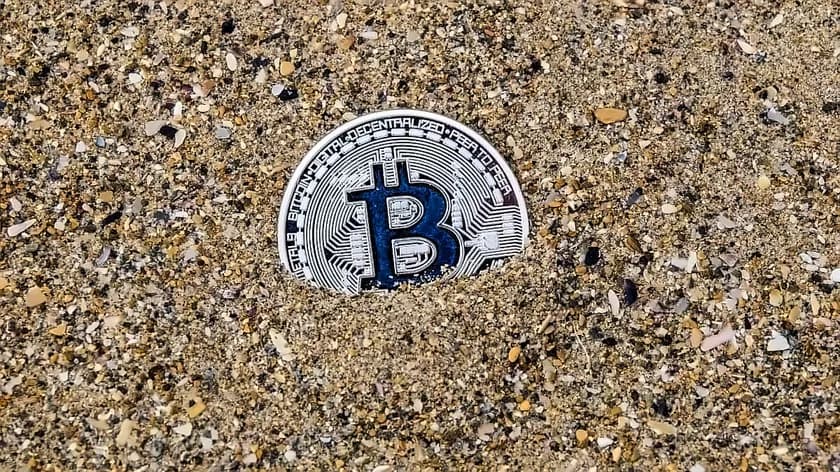
The cryptocurrency market has experienced an unprecedented decline in 2026, with Bitcoin down approximately 27% and gold declining around 3%, making them the only major asset classes in negative territory for the year. According to market analyst Charlie Bilello's 15-year data, Bitcoin and gold have never before finished a calendar year together as the two worst performers among the majors. This represents a stark reversal from 2025, when gold gained more than 63% and Bitcoin returned 121%, marking the end of an extraordinary two-year run for both assets. The contrast is particularly striking given that the S&P 500 has gained around 9%, small-cap stocks have risen about 19%, value stocks are up roughly 15%, and emerging-market equities are outperforming during the same period. As per Business Standard, Bitcoin has recovered to around $65,000 but remains down 48% from its peak of $1,26,198 touched in October 2025, while Ethereum has fared even worse, with an investment of ₹5 lakh at the start of 2026 becoming ₹3 lakh, resulting in a loss of ₹2 lakh or 42.2% amid a drop from $2,979 to $1,720.

In contrast to crypto's struggles, equity markets have demonstrated greater resilience in 2026. As reported by Business Standard, the benchmark Nifty 50 index has shown far greater resilience, correcting nearly 16% from its January peak of around 26,300 to 22,158. The index recovered steadily as geopolitical situation improved and is now trading close to 24,000, gaining more than 8% from its lows. An investment of ₹5 lakh in the Nifty 50 index at the start of 2026 would now be worth about ₹4.80 lakh, with the index declining only 4% so far this year. Similarly, investments in Nifty Midcap 100 and Nifty Smallcap 100 would have fallen to roughly ₹4.85 lakh, with both indices shedding around 3% each during the same period. The current market rotation shows emerging and international stocks beating the S&P 500, value stocks are beating growth, small and mid-caps are beating large caps, and even the dominant technology megacaps that led the market for years have struggled.
The unprecedented decline in Bitcoin and gold stems from specific macroeconomic forces rather than fundamental asset weakness. According to market analysis, the primary driver is rotation, where capital has moved from crowded safe-haven trades into previously lagging areas of the market. The stronger dollar and higher nominal and real interest rates are creating particular pressure on both assets, as neither gold nor Bitcoin pays a yield, making the entire return from holding them come from price appreciation. When real interest rates rise, the forgone yield becomes significant, making non-yielding assets less attractive. The dollar index has been strong in 2026 and, by some readings, on the verge of a major breakout, which directly pressures both dollar-priced assets. A hawkish Fed keeps rates high and the dollar strong, high rates raise real yields, and high real yields and a strong dollar both pressure non-yielding dollar-alternative assets, creating an environment specifically tailored to hurt Bitcoin and gold. This macro environment represents a 'reversal of everything' where the patterns of recent years have inverted, with money rotating out of the recent winners and into the previously unloved corners of the equity market.
The simultaneous decline of Bitcoin and gold in 2026 presents a significant challenge to both assets' core narratives. Bitcoin's bull case has long rested partly on two related claims: that it is 'digital gold,' an uncorrelated store of value that holds up when other assets fall, and that it is a hedge against monetary debasement and uncertainty. However, a year in which both Bitcoin and gold fall while every flavor of stock rises puts both ideas under stress at once. An uncorrelated safe haven is supposed to hold its value when risk assets are volatile, not fall while they climb, and Bitcoin's deep drawdown amid a strong equity market looks more like a risk asset selling off than a safe haven doing its job. The fact that Bitcoin and gold are falling together is itself evidence that they are responding to the same macro forces, higher real yields and a stronger dollar, which is exactly what you would expect of two non-yielding stores of value. The honest synthesis is that 2026 is a real stress test of the digital-gold narrative, exposing that Bitcoin still trades with significant risk-asset sensitivity and does not reliably act as a safe haven in the short run.
The 2026 divergence offers crucial lessons for investors holding or considering Bitcoin and gold as portfolio components. For anyone holding Bitcoin specifically for downside protection or non-correlation, 2026 is a reminder that these properties are unreliable on short horizons, and that other tools may suit that purpose better. However, for investors with a multi-year horizon who hold Bitcoin or gold as a long-term store of value, the divergence is a stress test passed or failed only over time, not in a single year. The horizon matters enormously - the short-term safe-haven claim looks weak this year, while the long-term store-of-value case remains a separate question this year does not settle. The practical discipline is to hold these assets for the role they actually play over your horizon rather than the role the narrative promises in every environment. Market experts suggest that clearer signals on U.S. monetary policy and spot ETF inflows could strengthen institutional participation and improve overall market confidence, while the path forward depends on whether the Federal Reserve maintains a benign stance and whether ETF bleeding finally stops.