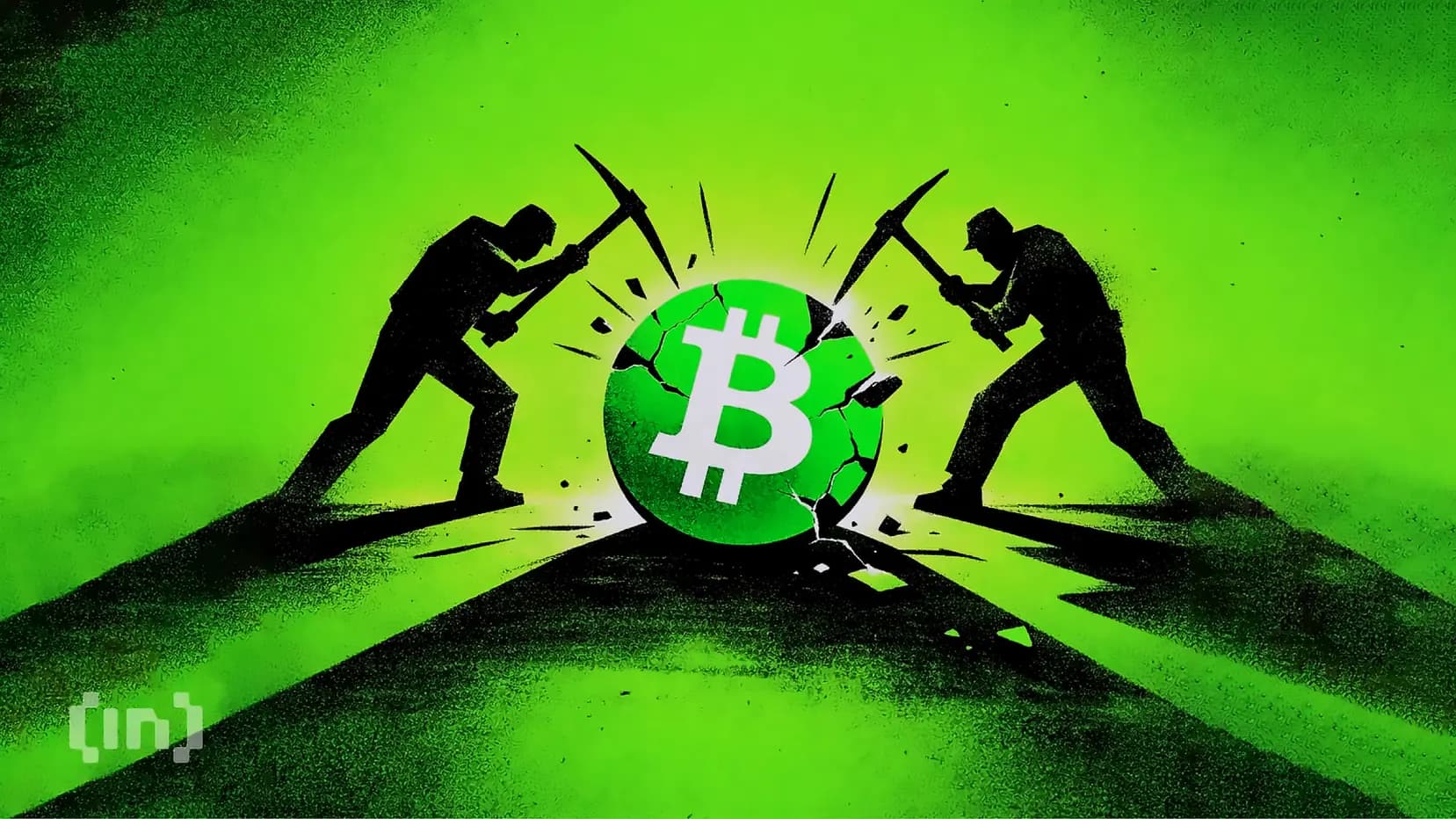
Publicly listed bitcoin miners have collectively reduced their BTC treasuries by over 15,000 BTC from peak levels, marking a significant shift as companies pivot toward AI infrastructure investments. Core Scientific sold roughly 1,900 BTC worth $175 million in January and is planning to liquidate substantially all remaining holdings in Q1 2026, while Bitdeer reduced its treasury to zero in February. Riot Platforms sold 1,818 BTC worth $162 million in December, and even Marathon, the largest public holder at 53,822 BTC, quietly expanded its policy to authorize sales from its entire balance sheet reserve. This massive capital reallocation reflects the sector's strategic pivot from mining to AI computing infrastructure.

Recent market data reveals a significant shift in Bitcoin trader sentiment, with demand for Bitcoin put options premiums increasingly surpassing call premiums on the Deribit crypto exchange. According to OptionMetrics research, the 30-day CME Bitcoin implied volatility skew has been steadily climbing higher starting in Q4 2025, driven by the sharp selloff from Bitcoin's all-time high near $126,000. Garrett DeSimone, head of quantitative research at OptionMetrics, explains that this positive skew reflects investors paying relatively higher premiums for insurance against Bitcoin crash risk rather than bullish expectations. The skew has been climbing since President Trump's tariff shocker on October 10, 2025, which led to the initial selloff amid fading expectations for further Fed rate cuts.
The mining sector's financial transformation has resulted in unprecedented debt levels as companies fund massive AI infrastructure projects. IREN now carries $3.7 billion in convertible notes across five series, while TeraWulf has $5.7 billion in total debt, split between convertible notes and senior secured notes at its compute subsidiary. Cipher Digital issued $1.7 billion in senior secured notes in November, causing its quarterly interest expense to surge from $3.2 million for the first nine months to $33.4 million in Q4 alone. These are not mining-scale debt loads but infrastructure-scale bets that AI revenue will materialize fast enough to service the obligations, representing the sector's transition from traditional mining operations to comprehensive AI computing platforms.
The massive miner exodus from bitcoin mining creates significant security implications for the network. The network peaked at approximately 1,160 exahashes per second in early October 2025 and has since declined to roughly 920 EH/s, with three consecutive negative difficulty adjustments - the first such streak since July 2022. The hashrate decline reflects the rational economic decision of miners to reallocate capital away from mining when it becomes unprofitable and AI operations become lucrative. However, if enough miners continue this transition, the network's security budget shrinks, creating a fundamental tension between economic rationality and network security. This creates a potential feedback loop where reduced mining participation could further undermine network security, accelerating the transformation of mining operations into AI infrastructure.
Digital asset treasuries are demonstrating resilience after facing significant headwinds since late 2025, according to Grayscale research. As reported by AMBCrypto, Zach Pandl, head of research at asset manager Grayscale, noted that the sector has 'crawled out of distress through new strategies' including optimized capital structures, income generation, and diversified business models. The recovery comes after nearly all treasury firms' crypto holdings value fell below their enterprise value in recent months, forcing most to engage in share buybacks through crypto holdings or additional loans. Despite initial challenges, digital asset treasuries have shown net accumulation in recent weeks, indicating a return to market participation as the sector adapts to new market conditions.
The crypto treasury sector faces a critical juncture as mining companies' AI pivot accelerates while traditional treasury firms navigate recovery strategies amid deteriorating market sentiment. Whether the current transition represents a temporary response to unfavorable economics or a permanent structural shift depends on one variable: the price of bitcoin. If bitcoin returns to $100,000, mining margins recover and the AI pivot slows, while if it stays at $70,000 or below, the transition accelerates and the mining sector as it existed for the past decade continues to disappear. According to Finality Capital Partners, Bitcoin has fallen roughly 52% from its late-2025 record high, but recovery depends on global liquidity improvements, with price effects typically lagging by six to nine weeks. The sector's adaptability through strategic pivots and operational improvements continues to demonstrate resilience amid these transformational market conditions.