Electronics giant Samsung delivered exceptional Q2 results with operating profit jumping 250-fold to $62 billion, driven by AI-driven memory chip demand that pushed revenue to a record high of 171.5 trillion won, up 130% year-over-year. According to Business Standard, the profit figure was 19 times higher than a year earlier and above the LSEG SmartEstimate, demonstrating the extraordinary pricing power of AI memory scarcity. The company's Device Solutions division posted a 56% quarterly sales jump, with the memory arm setting records for both revenue and operating profit. Server sales reached a record share of Samsung's chip mix as the company prioritized server products to meet AI capacity needs. Samsung also scaled up production of HBM4, a high-bandwidth memory chip used in AI processors, and shipped the industry's first samples of HBM4E to major customers. The company forecasts accelerating demand for server memory and high-bandwidth chips through the second half of 2026 as AI infrastructure spending broadens further, following recent AI chip supply deals with Nvidia and Broadcom.
Samsung expects chip shortages to worsen and extend into 2028, according to Jaejune Kim, executive vice president of Samsung's memory business, as reported by Business Standard. The company has signed long-term supply agreements with the top five global data centre firms and is nearing deals with five other large companies, without disclosing their names. Kim stated that these long-term deals would last at least five years and account for 60% to 70% of its total capacity for the longer term, including upfront payments and floor pricing aimed at hedging capital investment risks. Shares in the world's top memory chipmaker surged as much as 8% before trading down 1.1% on Thursday, with analysts noting that management's commentary was better than expected. As per NH Investment & Securities senior analyst Ryu Young-ho, "it was one of the more reassuring calls we've heard in quite some time."
Samsung's HBM4 revenue is expected to more than triple in the third quarter, bringing its HBM market share in line with its overall dynamic random access memory (DRAM) chip market share in the second half, according to Business Standard. The company, which counts Nvidia and Advanced Micro Devices among its HBM customers, is racing to catch up with Korean rival SK Hynix in supplying high bandwidth memory chips used in AI processors. Samsung's semiconductor division posted an operating profit of 89.2 trillion won ($61.7 billion) in the second quarter, which surpassed the company's combined earnings over the past three years. However, those surging chip prices hurt the company's mobile division, which reported a 700 billion won loss, its first quarter in the red. As noted by eToro analyst Josh Gilbert, "the chips enriching one side of Samsung are now hurting the other, leaving the group more exposed than ever to memory pricing and the durability of hyperscaler demand."
Samsung's foundry business, which competes with TSMC and Intel, is expected to turn around "in the near future" driven by rising factory utilisation rates and chip prices, according to Business Standard. The company is on track to start operations of its Taylor fabricating plant in Texas this year and aims to break ground on a second fab, which could start mass production in 2030. Samsung reported operating profit of 89.5 trillion won ($61.98 billion) for the April-to-June period, in line with its estimate of 89.4 trillion won and up from 4.68 trillion won a year earlier. The South Korean company's revenue rose 130% to 171.5 trillion won in the quarter from a year earlier, with Business Standard noting that Samsung's cross-town rival SK Hynix on Wednesday reported bumper quarterly results but fell short of lofty investor expectations.
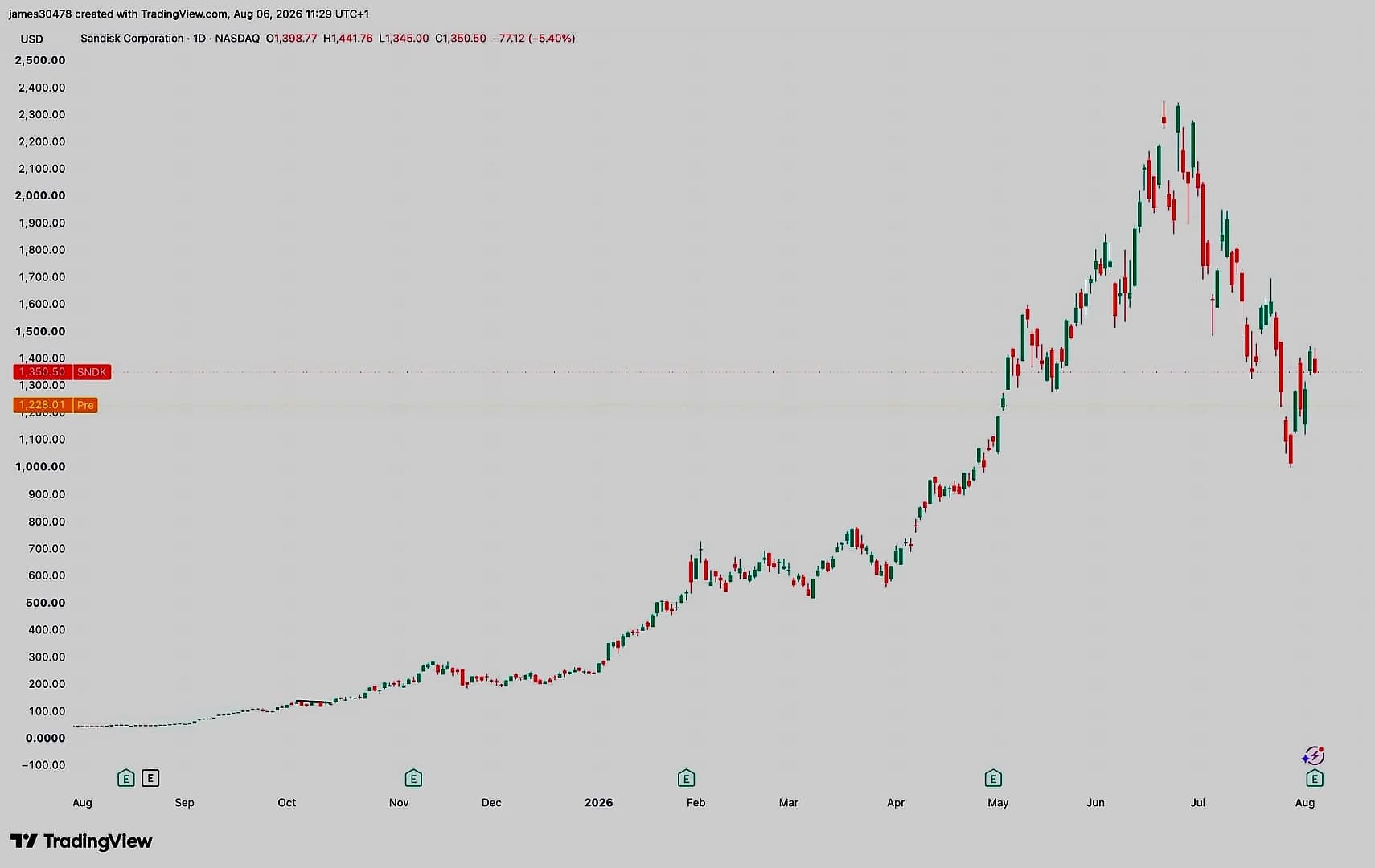
The memory market's extraordinary performance reflects both the AI infrastructure boom and fundamental supply constraints that differ from traditional memory cycles. Samsung's February announcement that it had begun mass production and commercial shipments of HBM4 gave it a cleaner way back into the center of the conversation after SK Hynix led the early HBM race. It held through last Thursday's $797 billion drop in U.S. megacap technology and through Korea's record two-day decline midweek. U.S. tech earnings were mixed with Microsoft climbing about 9% in after-hours trading after posting its fastest cloud growth in four years, while Meta fell 8% on weak revenue guidance. Nasdaq 100 futures rose 1% after the index entered a technical correction, indicating some stabilization in equity markets. The market's elevated expectations for the AI industry, rather than earnings alone, appear to be weighing on chip stocks, with strong chip earnings not translating directly into higher share prices.