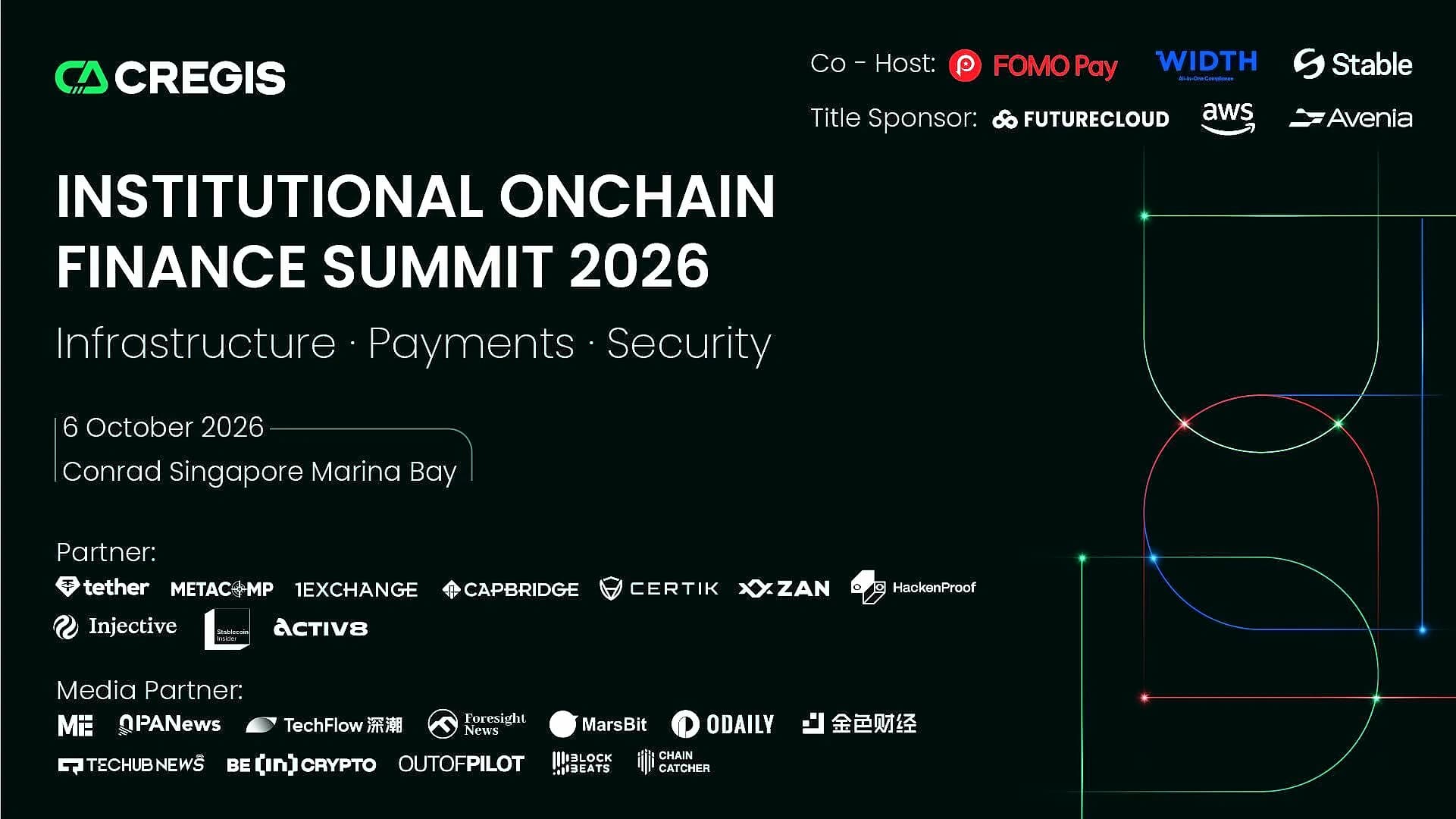
The Institutional Onchain Finance Summit 2026 was held on October 6 during TOKEN2049 Week in Singapore, jointly hosted by Cregis, FOMO Pay, Stable, and Width. According to reports from the summit, the event brought together executives from digital asset infrastructure, payments, financial services, stablecoins and cybersecurity to discuss the infrastructure needed for institutional adoption. The summit opened with Jason Ma, COO of Cregis, delivering a keynote titled A Solid Foundation for Your Business on Chain. Cregis has built its infrastructure around operational needs of businesses using digital assets, spanning wallet infrastructure through Wallet-as-a-Service (WaaS), fund-flow orchestration through Rails, and custody and governance capabilities. Its Wallet-as-a-Service and Payment Engine products support a range of enterprise digital asset operations.
A panel moderated by Chiara Munaretto, cofounder of Stablecoin Insider, examined stablecoins as solutions for cross-border payment challenges. As reported by the summit, the panel included Leandro Noel, Founder and COO of Avenia; Andres Kim, Regional Expansion Lead at Tether; Eddie Hui, Co-President and COO of MetaComp; and Zack Yang, Co-Founder of FOMO Pay. The discussion focused on where stablecoins address practical pain points in cross-border transactions, with cost, settlement speed and predictability emerging as recurring concerns. Traditional cross-border payments involve multiple intermediaries, variable fees and limited visibility into the status of a transfer, while stablecoins offer round-the-clock settlement and onchain visibility. The panel emphasized that stablecoins are not positioned as replacements for local payment systems but as additional rails for cross-border transactions, with Andres Kim noting South Korea's domestic payment infrastructure remains important. Leandro Noel described stablecoins more broadly as a potential "global ledger," allowing companies to connect markets without rebuilding the same financial infrastructure in every jurisdiction.
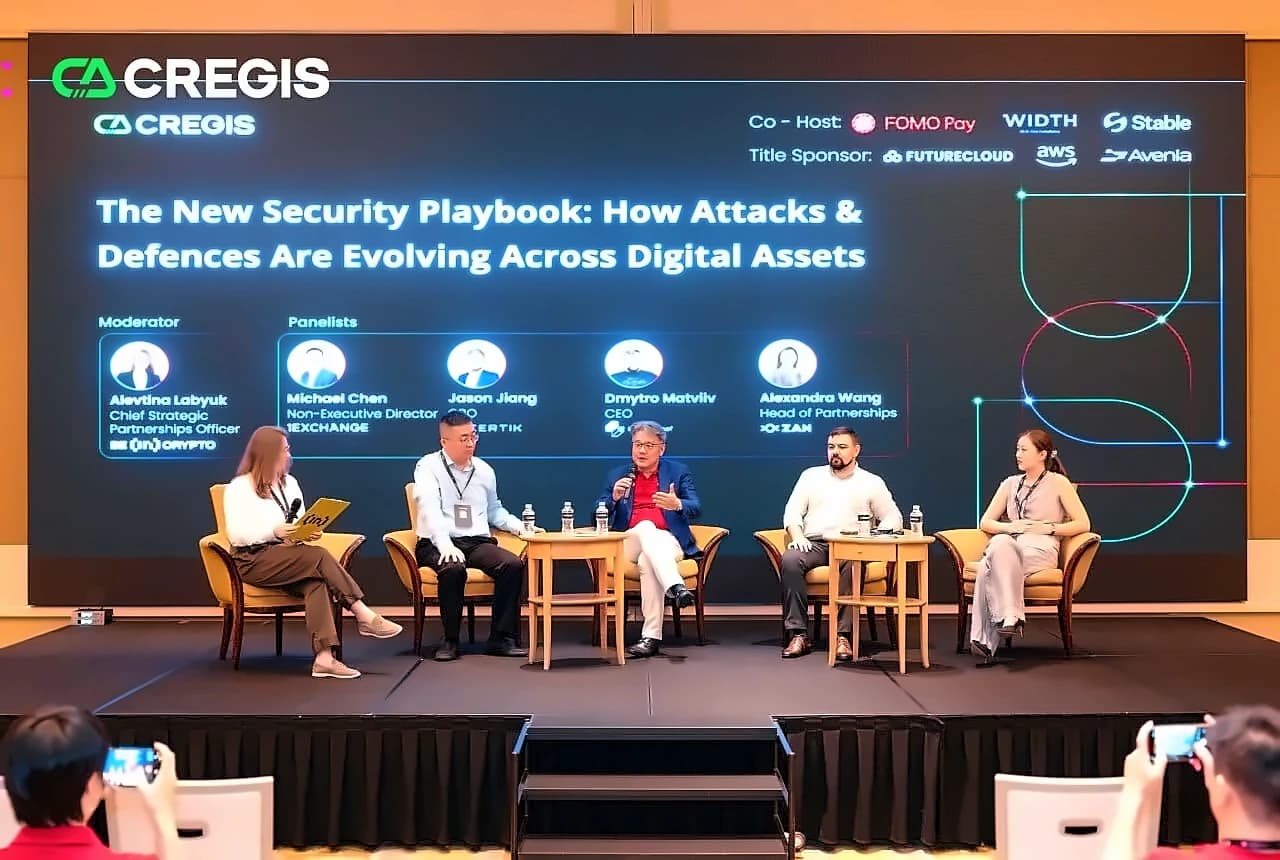
Chye Kit Chioh, CEO and Co-Founder of Width, addressed compliance issues in his keynote The Future of Compliance 2027 and Beyond: AI, Automation, and the Shift to Real-Time Risk Intelligence. According to the summit, compliance is becoming more closely tied to transaction flows as stablecoins move deeper into payment flows. The stablecoin panel highlighted that cross-border transactions span local payment systems, stablecoin conversion and multiple regulatory jurisdictions, creating a need for closer coordination among banks, payment providers, stablecoin companies and regulators. Panelists called for regulators to gain more practical experience with real-world stablecoin use cases. A second panel examined security challenges, with Michael Chen, Non-Executive Director at 1exchange; Jason Jiang, Chief Business Officer at CertiK; Dmytro Matviiv, CEO of HackenProof; and Alexandra Wang, Head of Partnerships at ZAN discussing how security risks extend beyond smart contract codes.
According to the summit, Cregis, founded in 2017, now serves more than 4,000 businesses across more than 50 countries and has processed more than $300 billion in cumulative transaction volume. The company's infrastructure covers enterprise wallets, payments and fund-flow operations, with the company continuing to expand its capabilities for institutional asset management and governance. The focus for companies using digital assets is how to fit these capabilities into existing financial and operational systems while maintaining control over payments, compliance, security and treasury functions. Brian Mehler, CEO of Stable, addressed payment infrastructure in his keynote Global Payments, Made Stable, outlining Stable's approach to stablecoin-based payments and global money movement. The summit also featured Eric Chen, CEO and Co-Founder of Injective, presenting Injective's Institutional Stack for institutional financial applications.