According to reports from Anthropic's Claude AI, the artificial intelligence platform predicts that Chainlink (LINK) faces a catastrophic collapse that could erase years of progress and leave the token trading at a fraction of its former relevance by January 1, 2027. The hypothetical landmark catalyst involves a coordinated institutional rejection of decentralized oracles, where a consortium of major global banks, clearing houses, and rating agencies announces in mid-2027 that they will migrate all critical data feeds, cross-chain messaging, and compliance infrastructure to a new permissioned, bank-operated oracle network built on proprietary technology. This scenario represents a probability-weighted bearish prediction, not a certainty, with macro conditions, liquidity, and risk appetite ultimately determining the actual path.
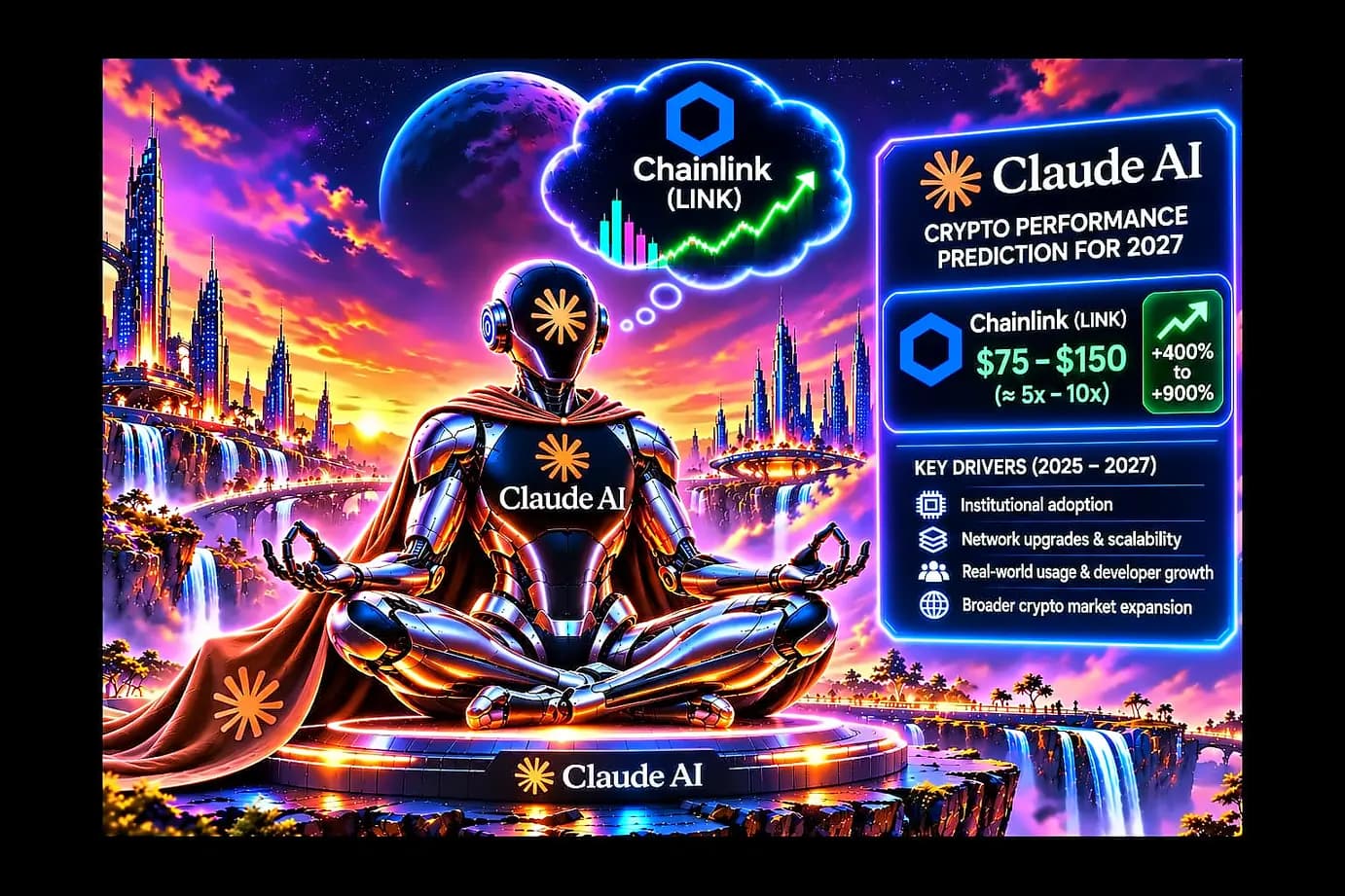
As reported by Claude AI, in this extreme but not impossible scenario, Chainlink could trade at $1.85 by January 1, 2027. On higher-timeframe charts looking into 2027, LINK has spent years forming a broad distribution pattern after its previous-cycle peak. Multi-year descending trendlines and failed attempts to sustain higher structural highs leave the asset vulnerable to a decisive breakdown. Should the institutional narrative fracture, measured-move projections from the long-term range and Fibonacci extensions of prior major declines open the door to a deep retracement of the entire post-2020 advance. Volume profiles and long-term moving-average clusters that once acted as support would flip into heavy overhead supply, reinforcing a sustained downtrend through the remainder of the cycle.
According to reports from Claude AI, throughout late 2026, Chainlink secured high-profile integrations, expanded CCIP volume metrics, and completed a Moody's testnet pilot for multi-chain credit ratings. The platform also partnered with OpenZeppelin for institutional tooling, advanced work with LG CNS on Korean digital assets, and saw banks publicly discuss moving from exploration into production systems. However, these recent catalysts that were widely viewed as bullish could paradoxically kill the Claude prediction if they ultimately fail to convert into sticky, high-volume, fee-generating usage that meaningfully accrues value to the LINK token. A sudden pivot by the same institutions toward closed alternatives would turn the current partnership pipeline into a liability rather than an asset.
As reported by Claude AI, the consortium's migration to a new permissioned network would be driven by unresolved concerns around decentralization risks, potential single points of failure in the broader ecosystem, and regulatory pressure for fully controllable systems. The scenario effectively freezes new production deployments of Chainlink's CCIP and Data Streams, with existing pilots being wound down and the narrative that Chainlink would become the standard connective tissue for tokenized finance collapsing almost overnight. This represents a fundamental shift in institutional adoption patterns, where current partnerships that were built on decentralization principles become obsolete as institutions pivot toward more controllable alternatives.