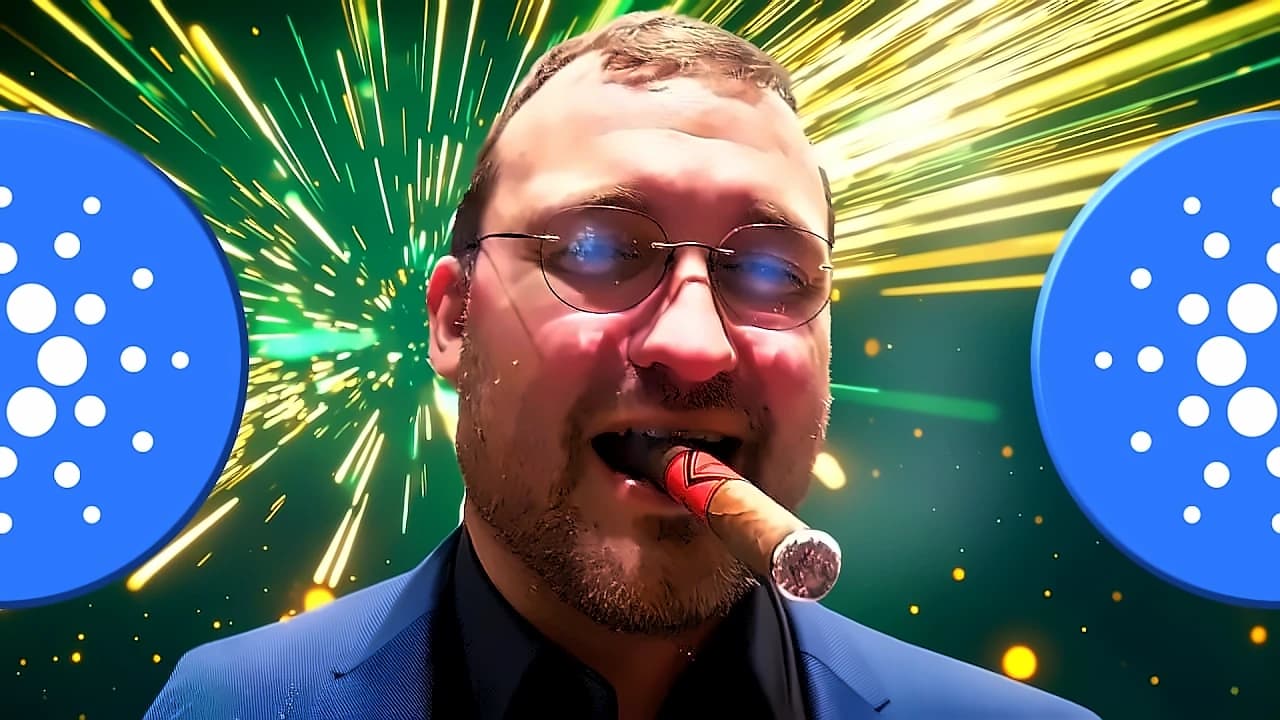
Charles Hoskinson has intensified his warnings about Cardano's future while simultaneously promoting the network's global ambitions, stating he is taking a break and predicting a 'wave of failures' across the ecosystem. In his latest comments, Hoskinson warned that 'If you want someone to make $ADA go back to all-time highs, I'm not your person.' This follows his earlier clarification that he will take a summer leave from X (formerly Twitter) citing toxicity rather than exiting the network entirely. The founder's latest warnings came after ADA dropped to around $0.19, down nearly 35% over the past month and more than 70% over the past year, marking its lowest level since May 2020. The sell-off intensified after Hoskinson's remarks about potential ecosystem failures, following the shutdown of analytics platform TapTools after four years and the community's rejection of funding for the 2026 Cardano Summit in Singapore. Hoskinson even floated a nuclear option, launching a new Cardano with a proof-of-burn to leave hostile holders behind, highlighting his desperation to address the declining ecosystem.
Despite current market challenges, Hoskinson has outlined Cardano's four core pillars as the foundation for his global trust-reduction vision. According to his latest statements, the first pillar is Ouroboros, Cardano's proof-of-stake consensus protocol, combined with the extended UTXO accounting model used by partner chains such as Midnight. The second pillar encompasses Cardano's modular structure and decentralized governance system, which Hoskinson claims no other cryptocurrency currently offers in combination. 'When you take these four things together, there is no cryptocurrency right now that has these properties,' Hoskinson stated, arguing that Cardano competes on long-term infrastructure rather than short product cycles. He framed the network's mission around replacing expensive intermediaries with open, verifiable systems, noting that 'The cost of establishing trust on a global basis is in the hundreds of billions for just the well-regulated financial markets.'
The Cardano ecosystem has experienced a dramatic collapse in activity metrics, with total value locked (TVL) in DeFi apps falling from approximately $905 million in late 2024 to just $186 million, representing an 85% decline. According to latest data, weekly Cardano DEX volume has collapsed from a peak near 19 million ADA in late 2025 to about 1.9 million, close to the year's lowest week. Daily active addresses have slipped from a late-2025 peak near 17,600 to about 14,900, while token trading volume has nose-dived significantly. The data reveals low network usage and poor reception for ADA in a crypto market where trading has been a trend. Major protocols are bleeding across the board, with Minswap (the largest DEX) losing about 11% of its locked value, Indigo falling roughly 19%, Djed dropping 21%, and SoSoValue shrinking 19%. Only Surf Lending, a lending protocol, grew its locked value by about 98% over the month and 14% in a week, though it holds only about $4.62 million. ADA recently fell below $0.20 for the first time in more than five years before recovering toward $0.17, highlighting the severity of the current market conditions.

Cardano's smart money index, which tracks how informed money trades against the crowd, has fallen to its lowest level of 2026 as the price corrected by over 35% since May 10 with rising sell volume. Leverage interest has drained significantly, with ADA futures open interest collapsing from about $1.6 billion in September 2025 to roughly $324 million. This aligns with the earlier drop in token trading volume data and highlights a lack of discernible sentiment for the token. On Hyperliquid, nearly all large long positions sit underwater, with entries between $0.20 and $0.37, and most holders continue to hold through the losses. Even smart money, as revealed by Nansen AI, is offside with only profitable short trades while long bets keep bleeding. The positioning data reveals that whales are stuck rather than confident, with the only silver lining being that underwater long trades have not yet closed their positions. Despite the challenging conditions, Cardano has passed 121 million transactions and has operated continuously for more than eight years, demonstrating the network's resilience.
Hoskinson has revealed the stark reality of his diminished control over Cardano's governance, stating 'I don't have any special powers with Cardano.' According to CryptoSlate reports, he specifically outlined his limitations including lack of governance keys, inability to initiate hard forks or protocol parameter changes, no treasury access, and no ownership of the Cardano trademark. The Cardano Constitution defines hard-fork initiation, protocol parameter changes, and treasury withdrawals as governance actions, with the Cardano Developer Portal describing a governance model involving DReps, stake pool operators, and the Constitutional Committee rather than a founder key. Hoskinson still maintains influence through Input Output Global and his large public audience, but his comments highlight the tension between his public market association and Cardano's decentralized governance structure. The latest developments show ADA has moved down to 14th place in market capitalization ranking, falling behind Dogecoin and Stellar (XLM). Hoskinson has asked the Cardano community to avoid judging progress only through total value locked or short-term ADA price moves, linking the wider goal to reducing distrust between people, companies, and governments.