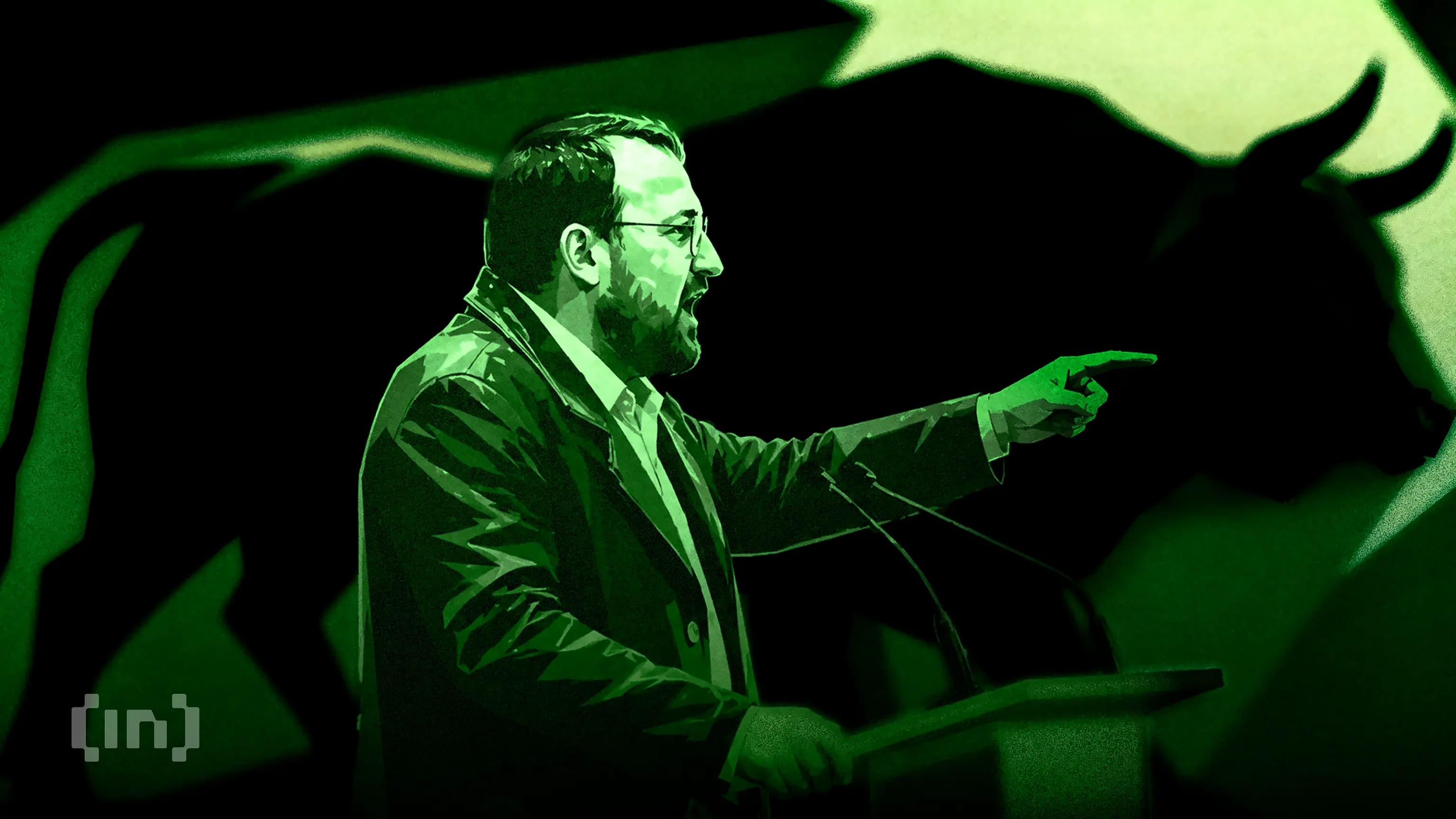
Charles Hoskinson, founder of Cardano, has warned that the European Union's digital euro could enable spending caps and transaction discrimination within a decade. Speaking at the Future of Money, Governance & the Law Summit hosted by the Government Blockchain Association at UN headquarters on October 2, Hoskinson expressed concerns about the potential for central bank digital currencies to become 'financial panopticons' that watch and block payments. According to reports from BeInCrypto, he warned that users could face restrictions such as being declined when attempting to purchase fuel despite having €2,000 in their bank account due to monthly limits on petrol purchases. 'You're going to go to buy some fuel and even though you have €2,000 in your bank account, it's going to decline your card and say, 'Well, I'm sorry. You've already purchased 50 L of petrol this month. You're not allowed to buy anymore,' Hoskinson explained, emphasizing that 'Don't believe it? Well, then put it in some sort of law that you're not going to do it' regarding potential spending restrictions.
Hoskinson argued that only binding law would prove his fears wrong, as the EU's draft law currently under negotiation still allows for programmable spending rules. As reported by BeInCrypto, he emphasized that 'Don't believe it? Well, then put it in some sort of law that you're not going to do it' regarding potential spending restrictions. The European Parliament voted 416 to 169 on July 9 to open trilogue talks, but the third round on September 30 ended without agreement on merchant fees or holding limits that would cap individual balances. On paper, the EU's draft law already rules out programmable spending rules, but that text is still under negotiation and not yet binding.

The European Central Bank plans a 12-month pilot program from late 2027, with potential issuance scheduled for 2029. According to BeInCrypto reports, the Commission's 2023 proposal states that the digital euro should not be programmable money. Then-European Central Bank board member Fabio Panetta also told lawmakers in 2023 that the bank would never limit where, when, or to whom people pay. However, none of these safeguards are currently binding, leaving room for future implementation of spending restrictions.
Hoskinson promoted his Midnight privacy network as an alternative to the digital euro, stating that code should shift the standard to 'can't be evil'. As reported by BeInCrypto, the same day as his summit appearance, Brian McGleenon, Global Head of News at BeInCrypto, led a panel on AI outpacing financial regulation at UN headquarters. The session launched joint research on AI, blockchain, and quantum computing in finance, with final findings due in January 2027. Experts from the Internal Revenue Service (IRS), Mastercard, and the UN Joint Staff Pension Fund debated who controls money-moving AI agents, with the session exploring the intersection of artificial intelligence and financial regulation.
In contrast to Europe's approach, the US Senate has passed a temporary CBDC ban running through 2030. According to BeInCrypto reports, Europe's negotiators must now demonstrate that written guarantees can satisfy critics who trust only code-based restrictions. The ongoing negotiations between the European Parliament, member states, and the Commission continue to shape the final framework for the digital euro's implementation and potential spending controls, with the third round of trilogue talks ending without agreement on key provisions.