The Cardano Foundation has officially launched CIP-113, Cardano's new programmable token standard, on the mainnet following extensive joint development efforts with Cardano community experts and completion of multiple independent security audits. As announced on October 7, the standard is now live on Cardano mainnet and has received significant regulatory recognition. The Swiss Capital Markets and Technology Association (CMTA) and the Cardano Foundation announced that Cardano's CIP-113 Programmable Asset Tokens have been recognized as a smart contract equivalent to the CMTAT for the purpose of CMTA's certification scheme. The CIP-113 Programmable Asset Tokens include the mandatory functions listed in the CMTAT framework and may be used for certifying compliance of ledger-based equity securities under CMTA's standards, supporting the adoption of Swiss ledger-based securities while reducing the due diligence burden and preserving a chain-agnostic approach.
The standard introduces ledger-enforced compliance rules that travel with the asset and are enforced every time it moves, positioning Cardano as infrastructure for institutional issuers. According to Frederik Gregaard, CEO of the Cardano Foundation, "The rules have to travel with the asset and be enforced every time it moves. Cardano can now do that natively, and we believe the way we do it is unique." The standard builds compliance controls directly into the token structure, eliminating the need for hard forks to the network's underlying rules. Tokens issued under the programmable token standard remain native Cardano assets, with issuers selecting modular rule sets known as modules or writing their own, and can update them as regulation evolves without changing the core standard. The design keeps tokens in a shared smart contract, with computers checking transactions before accepting transfers, while execution costs remain predictable regardless of transaction complexity.
Under CIP-113, regulated issuers can freeze holdings, seize assets, restrict recipients, and apply KYC, AML, and sanctions checks to their tokens. As reported by Giovanni Gargiulo, Senior Blockchain Architect at the Cardano Foundation, "On Cardano, a programmable token is still a native asset, so the whole ecosystem can work with it, while the issuer's rules are checked by the ledger on every transaction." The framework supports requirements that ordinary Cardano native tokens could not previously enforce after issuance, including allowlists, denylists and KYC-based transfer restrictions. A regulated fund could require both sender and recipient to meet identity requirements before transfers clear, while a stablecoin issuer could block addresses included on sanctions lists. Modules can give authorized operators powers to pause transfers or move assets without holder approval when token rules permit such action, with permissions divided among different operators so issuers don't need to grant complete administrative powers to single accounts. The controls are optional and only applicable to CIP-113 tokens, with Cardano Foundation confirming that neither the Cardano Foundation, token issuer, or Cardano itself can freeze ordinary ADA in mainnet.
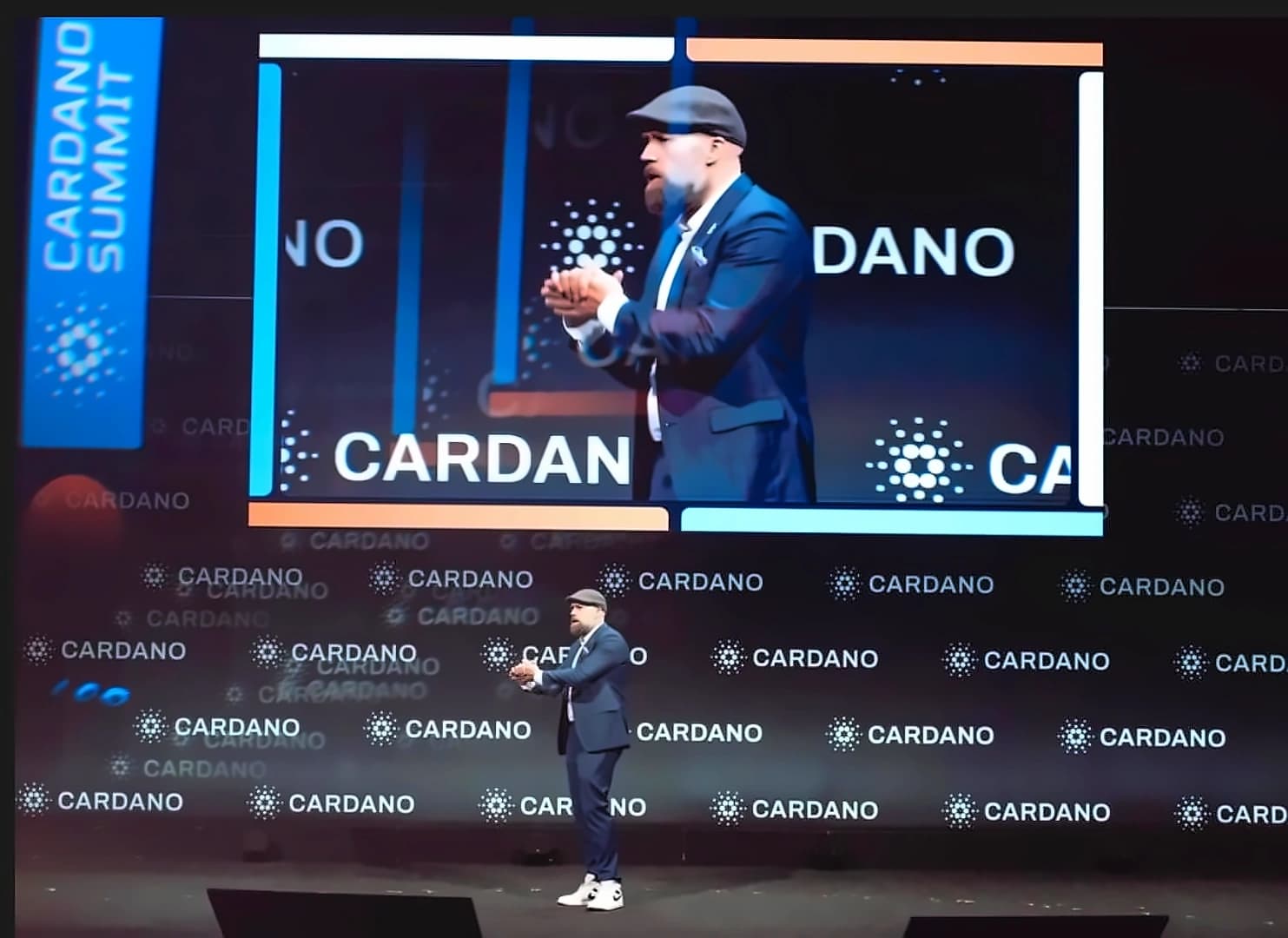
The Cardano Foundation has completed the spinout of Veridian as an independent digital identity company after three years of development, with its shares tokenized on Cardano using the new CIP-113 programmable token standard. According to the Foundation's announcement dated October 8, Veridian's shares have been issued as ledger-based securities under Switzerland's DLT Act, making them the first asset deployed on Cardano using the new CIP-0113 programmable token standard. CEO Thomas A. Mayfield will lead the company's government, enterprise, and AI agent identity business, with the Foundation's CEO Frederik Gregaard serving as Veridian's chair and joining the board alongside Chief Legal Officer Nicolas Jacquemart. Veridian plans to seek strategic partners and investors in 2027 to support expansion, including in the United States, with investment supporting U.S. government business, European enterprise operations, growing issuer network in Asia-Pacific, and development of tools that verify AI agents' authority. The company has mapped all 142 requirements in Utah's state-endorsed digital identity implementation guide (SB 275), which Utah became the first U.S. state to pass in 2026, requiring privacy-preserving identity under individual control. Veridian uses open technical standards known as KERI and ACDC to issue digital credentials that allow people, companies and software agents to prove their identity or authority without a central database holding the information.
The Veridian spinout provides Cardano with its first live example of the programmable-token framework it introduced on Tuesday. As Frederik Gregaard noted, "Veridian is the first to tokenize its own shares on the new CIP-0113 that we announced yesterday. People have talked about tokenized equity for years, and now there's an operating company on Cardano doing it." The company has 1 million shares in total, with most of them tokenized on the Cardano blockchain. Veridian's mobile wallet is live on iOS and Android platforms, and the company has already secured its first commercial application through Masumi, an AI-agent payment and identity network built on Cardano by Serviceplan Group and NMKR. According to Gregaard, "AI agents will need verifiable identity too. Veridian can serve that market better as its own company." The Utah framework and growing need to verify AI agents acting on behalf of people or companies created the rationale for separating Veridian from the nonprofit foundation, positioning it to serve the expanding market for verifiable digital identity solutions.