According to reports from Cardano News, ADA is trading near $0.25, stuck in a $0.25–$0.28 intraday band with neutral funding rates and whale accumulation at a 30-day low. The cryptocurrency is sitting approximately 80% below its $3.10 all-time high and roughly 49% down year-to-date. Despite this price stagnation, Cardano is executing one of the most aggressive post-quantum cryptography pushes of any major blockchain, with technical milestones piling up while price remains unresponsive. The contradiction is stark - technical progress is advancing rapidly, but market response remains muted.
As reported by Cardano News, Charles Hoskinson has framed Cardano's quantum resistance strategy as an existential preparation play, describing the quantum threat as "like an asteroid coming towards Earth" - a slow-moving but terminal risk that decentralized networks need to coordinate around before it becomes a market shock. A formal IOHK research proposal is expected next week, building on a governance vote already in motion. The technical architecture under discussion centers on a phased migration model, leveraging Cardano's established hard fork cadence as a structural advantage. The planned approach would layer post-quantum cryptographic signatures alongside existing ones, preserving compatibility while adding quantum-safe security primitives. Google Quantum AI reportedly ranked Cardano second among major blockchains for post-quantum security posture, behind only Bitcoin and ahead of Ethereum and Solana.
According to Cardano News, the $0.25–$0.28 range has acted as a soft floor through much of Q1–Q2 2026, but the 200-day moving average sits near $0.46 – a level the token has not challenged in months. Resistance at $0.28 capped the intraday high this week, while support near $0.258 held the low. If ADA breaks $0.28 on volume following the release of the formal IOHK quantum research proposal, targeting a retest of $0.34–$0.36 is possible, though a break below $0.258 support could open a retest of $0.22–$0.24. The market is sitting with the question of whether crypto security infrastructure has near-term pricing power, or whether ADA is simply trapped in a broader altcoin liquidity drought that no governance vote can fix.
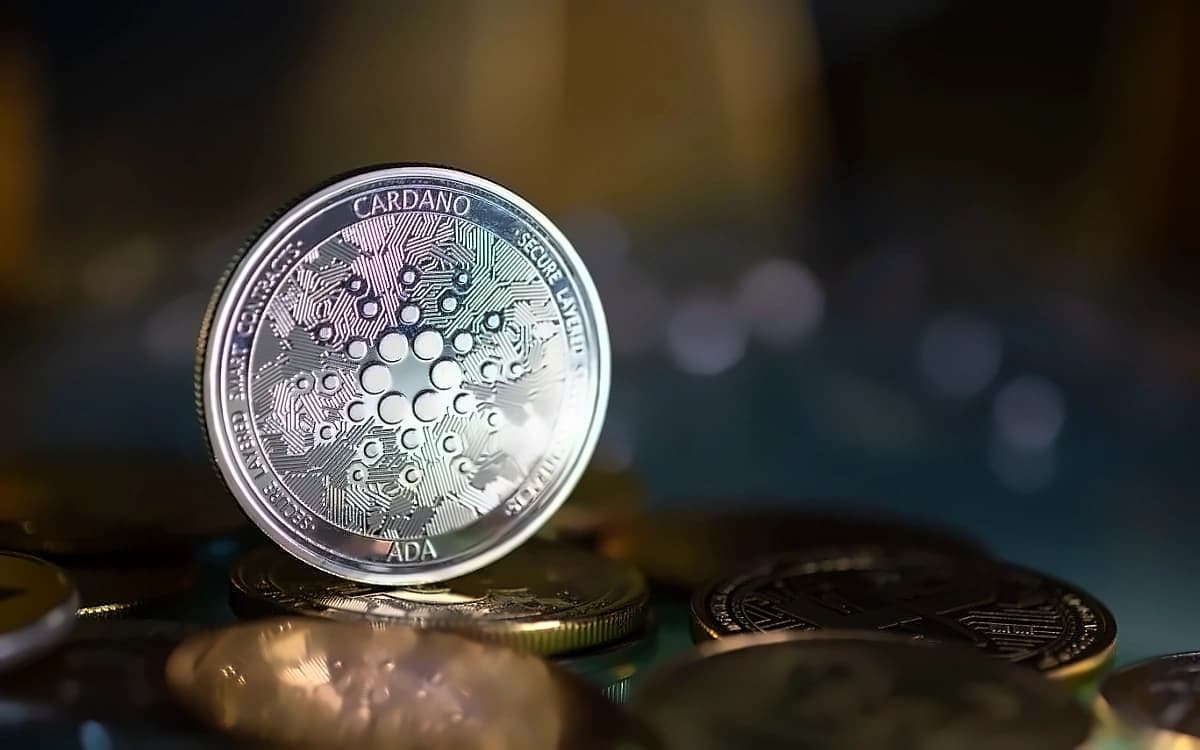
As reported by Cardano News, Cardano logs roughly 680 GitHub commits per week across approximately 80 repositories, placing it among the most active chains by development output. The work is real, but the market premium for it is not materializing. Traders are using ADA as a volatility vehicle, not a conviction hold, which suppresses the impact of any fundamental catalyst, including the quantum security roadmap. The market is not alone in this race - Ripple has outlined a four-phase roadmap for the XRP Ledger targeting quantum resistance by 2028, while Bitcoin developers have circulated BIP-360 and BIP-361 as migration frameworks. The question remains whether crypto security infrastructure has near-term pricing power, or whether ADA is simply trapped in a broader altcoin liquidity drought that no governance vote can fix.