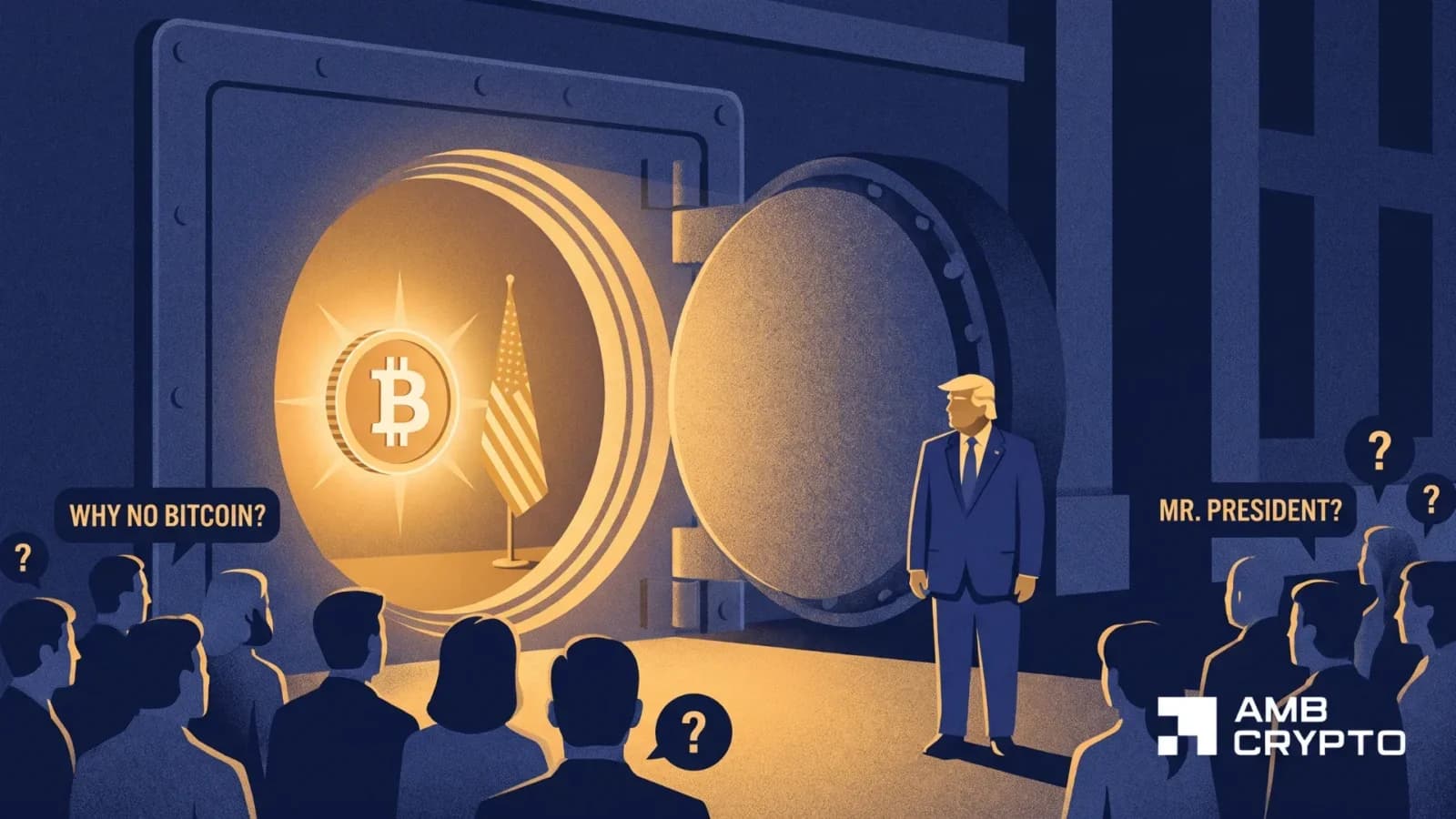
Bitget CEO Gracy Chen has placed the likelihood of U.S. government Bitcoin purchases at close to zero within the next two years. Speaking on Cointelegraph's Trade Secrets podcast, Chen stated that "from a policy perspective, it's probably unlikely. I just don't see it coming right now." According to reports from crypto.news, Chen emphasized that buying Bitcoin would require a more substantial policy decision than retaining assets already controlled by the government, with lawmakers and political parties needing to debate how any purchase program would operate. Chen's latest assessment cuts through the marketing, emphasizing that the legal architecture of the Strategic Bitcoin Reserve simply doesn't support the kind of sovereign accumulation that many Bitcoin bulls had priced in when the reserve was first announced.
President Trump's March 2025 executive order established the Strategic Bitcoin Reserve but did not provide funding mechanisms for regular purchases. As reported by crypto.news, the order directs the Treasury Department to maintain custodial accounts for Bitcoin obtained through criminal or civil forfeiture proceedings, with Bitcoin transferred into the reserve 'shall not be sold' except under specific circumstances. The White House permits additional acquisitions only through budget-neutral strategies that impose no additional taxpayer costs, with any new federal spending requiring congressional authorization. The framework emphasizes 'budget neutrality,' which is Washington's way of saying Congress doesn't need to appropriate a single dollar for this initiative, making active market purchases functionally impossible without new legislation.
The U.S. government holds an estimated 328,372 BTC, according to BitcoinTreasuries.NET, representing approximately 1% of Bitcoin's circulating supply and valued at about $17.3 billion at Bitcoin's recent price near $91,151. This position includes coins connected to major forfeiture cases, though the government has not released a complete public audit confirming eligible assets. Before the reserve order, the U.S. Marshals Service auctioned about 195,000 BTC obtained in criminal cases, with administration officials arguing earlier sales cost taxpayers billions in unrealized gains. The critical detail most people gloss over is that the reserve is limited exclusively to Bitcoin seized through civil and criminal forfeiture proceedings, with the executive order explicitly prohibiting new acquisitions using taxpayer funds.
Chen expects Bitcoin to remain broadly around current levels through the end of the year despite its recent surge, citing interest rates and broader macroeconomic conditions as key factors shaping the cryptocurrency's outlook. Speaking on Cointelegraph's Trade Secrets podcast, Chen said predicting whether Bitcoin will finish the year above or below $70,000 is difficult, pointing to the possibility of higher interest rates as one factor that could pressure prices. "If any of that happens, the price should go down, at least theoretically," Chen said, adding that BTC has become increasingly integrated with traditional finance and sensitive to broader macroeconomic conditions. "My guess is maybe around the same range," Chen said, adding that BTC could finish the year $10,000 to $20,000 above or below current levels, which she described as her "more responsible" forecast. Despite the recent rally, Bloomberg's Mike McGlone remains bearish, describing the move as "a bounce within the purge" and expecting Bitcoin to potentially roll over by year-end.