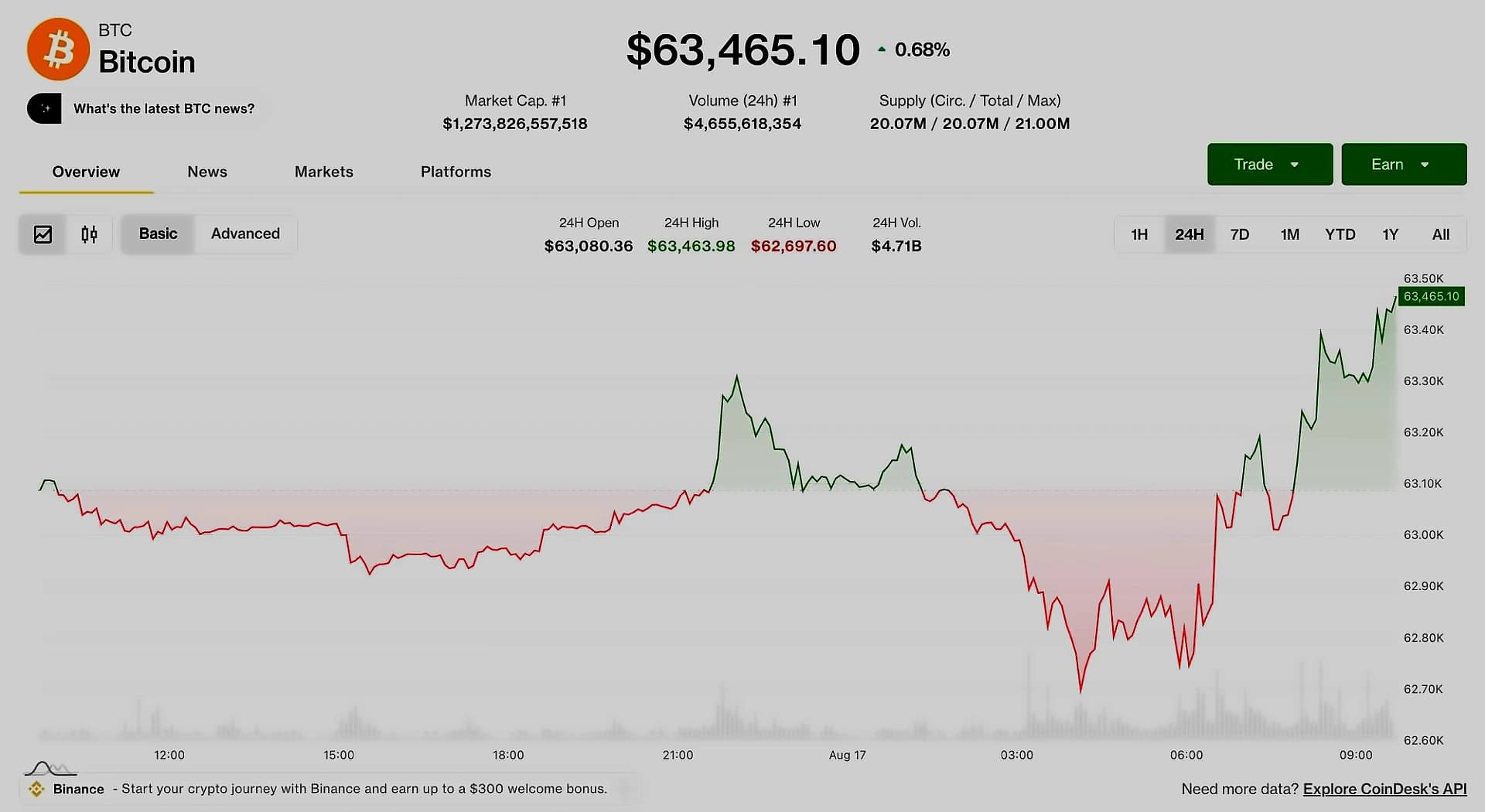
Bitcoin delivered an extraordinary 28% gain over eight days and crossed $80,000 for the first time since May 15, extending one of its strongest short-term advances since 2021. According to The Times of India, the cryptocurrency reached an intraday high of $81,237.94 on August 25, its strongest level since mid-May, before settling near $80,200 at press time. The latest advance came as Bitcoin climbed above $80,000, reaching more than a three-month high as softer U.S. dollar news revived momentum in the crypto sector. The rally has been supported by $7.2 billion in leveraged bearish bets across all cryptoassets being liquidated last week, with another $780 million over the next 24 hours, almost all shorts. As per crypto.news, Bitcoin gained roughly 38% from its late-June low below $58,000 as buyers returned to markets, effectively erasing losses accumulated since May.

U.S. spot Bitcoin ETFs recorded $337.6 million in net inflows for the third consecutive week, bringing total six-week inflows to approximately $2.26 billion. According to Farside data, BlackRock's IBIT led with $208.9 million, representing 62% of the total category inflows on August 24. These issuers have been the primary sources of majority investments so far this year, with the weekly ETF demand reaching 26,762 BTC - a reversal of all negative readings that occurred from May through July. ETFs absorbed roughly 3,800 BTC per day against miners' production of approximately 450 BTC each day, placing institutional demand roughly 8.5 times greater than new issuance. The latest weekly inflow has also far surpassed the 15,000 BTC reference point after being below zero for weeks, with sustained accumulation potentially tightening available supply further.
IBIT now sits at $59.09 billion in assets under management with a 0.25% expense ratio, maintaining its position as the dominant force in the Bitcoin ETF market. According to Farside Investors, IBIT's share of daily inflows ranged from 54% to 83% across the six consecutive positive sessions, with the fund pulling in $160.2 million on August 17, $143.6 million on August 18, $284.7 million on August 19, $503.0 million on August 20, $239.3 million on August 21, and $208.9 million on August 24. CoinGlass data shows IBIT's cumulative net inflow of 782,210 BTC, representing approximately 75% of the entire spot Bitcoin ETF market. The fund's August 24 update showed a price of $44.735 per share across 1.33 billion shares outstanding, with $358.73 thousand in volume and 8,020 shares traded.
BitWise's European BTC1 ETP has exceeded another major scale milestone, with assets reaching $155.5 million and holdings climbing to roughly 1,961 BTC, up from earlier levels around $100–$130 million. According to Bitwise Investments data, this increased asset size and holdings indicate continued investment subscription during Bitcoin's recovery. The 0.05% fee structure provides European investors with a low-cost route into physically backed Bitcoin exposure, with BTC1 keeping those holdings in cold storage directly linked to product growth. While U.S.-based ETFs represent the majority of all demand, this expansion demonstrates that regulated acquisition is expanding globally rather than staying strictly localized, with broader issuer inflows providing stronger confirmation that institutional participation can support Bitcoin above $80,000 sustainably.
The ongoing uptrend has been fueled by the renewed debasement trade as U.S. Treasury intervention in the bond market faces backlash and inflation fears. Notably, BTC began its explosive rebound last week after the Treasury announced a plan to double bond buyback from $4 billion to $8 billion. The move seeks to lower the yield (cost of government borrowing) for the 30-year bond below 5%. However, the 10-year Treasury yield rose to 4.737% while the 30-year yield increased to 5.276%, according to Dow Jones Market Data, bringing rates back to around where they stood before the buyback announcement. The Treasury said its larger buyback operations for longer-dated Treasurys would begin September 9 and were intended to provide greater liquidity support. Ian Lyngen, head of U.S. rates strategy at BMO, said concerns over de-dollarization, U.S. creditworthiness, and the need for a higher term premium remained central to the recent bond selloff, underscoring skepticism that the Treasury's buyback adjustment had changed the underlying drivers of rising yields.