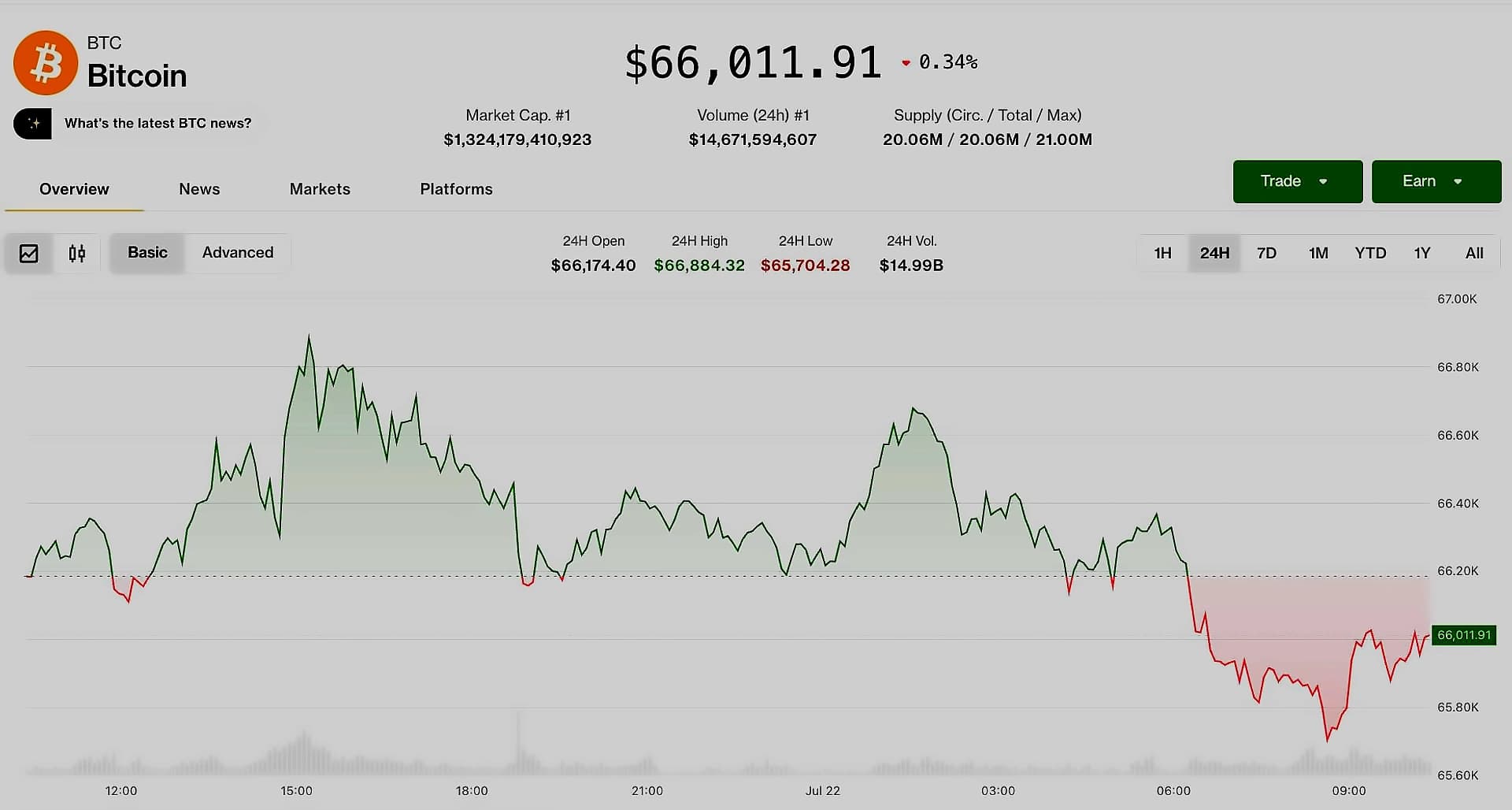
Bitcoin traded near $79,176 over the past 24 hours, down 0.8% as analysts forecast continued trading between $78,000 and $82,000 before the Federal Reserve's September 16 policy decision. According to CoinGecko, Bitcoin moved between a low of $78,707 and a high of $80,494 during the period, with trading volume increasing nearly 30% to about $24.4 billion. The cryptocurrency remains capped near $82,000 following another failed attempt to remain above that level, with sellers entering as the price approached $80,500. The global crypto market capitalisation edged down 0.33% to $2.7 trillion, with the crypto fear and greed index at 71, indicating market sentiment remains at greed levels. Despite macroeconomic pressures and rising yields, continuous spot ETF inflows and steady institutional interest helped support market sentiment.

US-listed spot Bitcoin ETFs absorbed $986.9 million in net inflows during the week ending September 4, taking the three-week total to approximately $3.8 billion, according to CoinEx chief analyst Jeff Ko. This institutional demand provides critical support as Bitcoin faces its biggest macro test yet, with analysts noting that unlike the S&P500, Bitcoin continues to see strong underlying demand. However, Ko noted that three weeks of positive flows were not enough to confirm a sustained accumulation period, stating that he would like to see another few weeks of sustained net inflows before calling this a genuine accumulation phase. The resilience remains intact despite potential selling pressure from this week's macro catalysts, with ETF products not preventing losses earlier in 2026 when the funds registered a combined $5.29 billion in net outflows during the first half of the year.
Price action shows Bitcoin trading in a relatively tight range with momentum remaining subdued as the market consolidates near current levels. Bitfinex analysts told crypto.news that Bitcoin's current structure supports "continued consolidation with an upside bias" rather than a confirmed breakout, as ETF demand counters pressure from elevated Treasury yields and expectations of another US interest rate increase. The intraday retreat followed another failed attempt to remain above $80,000, with sellers entering as the price approached $80,500, keeping BTC inside the $77,200–$82,100 range identified by Bitfinex. A move below the lower end of the range would bring the $77,200 level into focus, while Bitcoin would need to clear $80,500 before testing the stronger supply area around $82,000. Technical analysis shows Bitcoin breaking above the upper Bollinger Band at approximately $80,422, with the price near $80,845.
Interest-rate expectations remain the main external test for Bitcoin ahead of the September 15-16 Federal Open Market Committee meeting, with markets considering a 25-basis-point increase from the current federal funds target range of 3.50%–3.75%. Federal Reserve Chair Kevin Warsh adopted a hawkish tone during his Jackson Hole speech, after which CME FedWatch probabilities for a September increase climbed to around 66%. Stronger August employment figures renewed the case for tighter policy, with nonfarm payrolls increasing by 162,000 while the unemployment rate remained at 4.1%. The two-year Treasury yield recently moved above 4.34%, while the 10-year yield is placed near 4.8% by CoinEx. Jeff Ko noted that "a hot print that pushes yields and the dollar sharply higher would be the cleanest test of Bitcoin's resilience."
More than 71% of Bitcoin's circulating supply is now held at a profit, compared with about 67% when the asset traded above $82,500 during its May consolidation, according to Bitfinex. At similar prices, a larger share of holders can now sell without realizing a loss, with supply in profit approaching its historical average of 74.7%. Bitfinex attributed the difference to summer accumulation, which lowered the short-term holder cost basis to $68,400 at its weakest point. The US Treasury's expanded buyback operation on September 9 will provide another measure of bond-market liquidity before the inflation data and Fed meeting. Treasury Secretary Scott Bessent announced that the maximum size of liquidity-support buybacks would increase from $2 billion to at least $4 billion per operation, with the higher limits scheduled to remain in place from September 9 through November 4.