Bitcoin touched a fresh three-month high near $81,550 on Monday, successfully breaking through the key resistance zone for the first time since late January. The move represents a significant milestone as BTC now sits just above the short-term holder cost basis of about $81,486, a threshold many traders view as a potential accelerator for further gains. A daily close above roughly $81,500 would be seen as a bullish signal, potentially firming up $80,000 as a new base and opening room for the next leg toward the mid-to-upper $80,000s. According to reports from Crypto.com, the momentum is being driven by strong demand for spot bitcoin ETFs, with more than $500 million flowing into spot BTC funds led by BlackRock's and Fidelity's products on Monday, reflecting continued interest from large investors. CryptoQuant has highlighted the significance of this level, noting that "A confirmed daily close above $81,500 flips that level from resistance to support, opening the path toward $87,000–$92,000." However, the rally is occurring against a backdrop of severe geopolitical tensions, with President Trump issuing a 24-hour ultimatum to Iran and oil prices surging 24% over the past two weeks, creating a stark divergence between crypto and traditional risk assets.
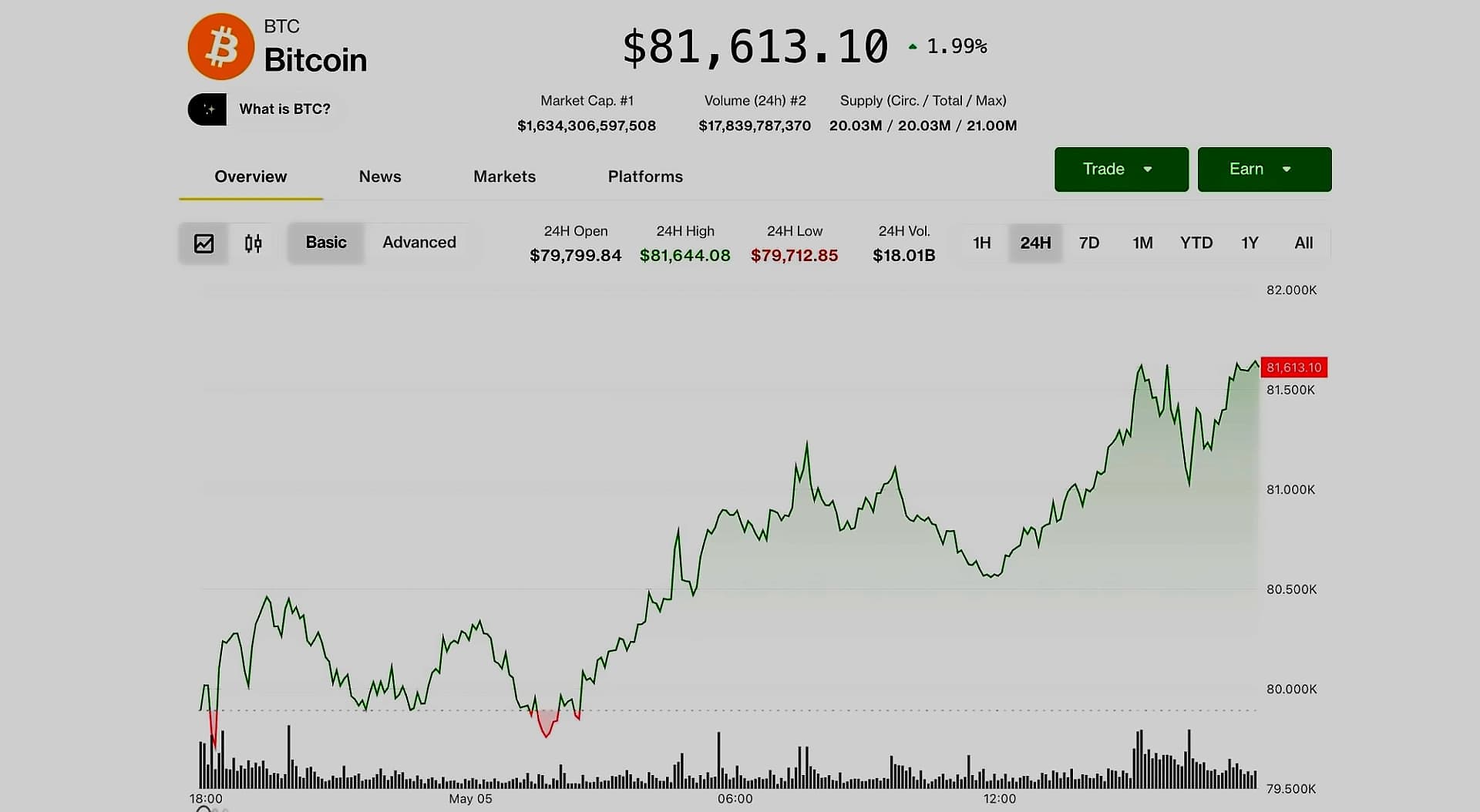
The latest crypto rally gained significant momentum as Circle stock jumped 18% on May 4 after Senators Tillis and Alsobrooks released the CLARITY Act stablecoin yield compromise on May 2, removing the last wall blocking crypto regulation all year. Coinbase CEO Brian Armstrong posted "mark it up" within hours, with Bitcoin pushing through $81,550 for the first time since January. The CLARITY Act compromise cleared the path for a Senate Banking markup, creating a vital need for investors to separate real adoption from market noise. April spot BTC ETF inflows reached $2.44 billion, the strongest institutional month since October 2025, with every new cryptocurrency benefiting when this much capital enters the market. The regulatory clarity is expected to drive capital into crypto faster than any previous cycle, as institutional money flows into altcoins, presale tokens, and projects with real tools behind them.
The latest crypto rally is concentrating on tokenization plays, with several companies benefiting from this trend. Bullish (BLSH) surged 12% after announcing the $4.2 billion acquisition of transfer agent Equiniti, positioning the company deeper into capital markets infrastructure. As reported by CoinDesk, analyst Owen Lau from Clear Street described this as a strategic push to transform Bullish from a crypto exchange to a capital market infrastructure provider capturing the tokenization trend, potentially driving more recurring revenue and stronger margins over time. The tokenization market, including stablecoins, is projected to reach $18.9 trillion by 2033 according to Ripple and BCG, making it one of the fastest-growing sectors at the intersection of blockchain tech and traditional finance. Ondo Finance has received a massive institutional boost by being selected to join the DTCC's Industry Working Group, putting it at the table with the biggest names in finance to design a tokenization service for the $114 trillion asset custody giant. The Depository Trust & Clearing Corporation's plan to pilot tokenized securities trading in July, with a full launch scheduled for October, signals that tokenization of real-world assets is moving from a crypto-native thesis to Wall Street reality.
Market sentiment flipped from "Fear" to "Neutral" according to the Crypto Fear & Greed Index, as leading cryptocurrencies extended gains while stocks declined on Monday. The global cryptocurrency market capitalization stood at $2.65 trillion, up 1.33% over the last 24 hours, with over $480 million liquidated in the past 24 hours, including $329 million in short positions alone. Open interest in Bitcoin futures rose further by 4.95% over the last 24 hours, signaling heightened speculative interest. However, on-chain data reveals a concerning trend - long-term holders who bought between two and three years ago are taking profit at a rate of over $209 million per hour, according to Glassnode data. This suggests that while new money flows in, old money is heading for the exits, with the cohort using this rally as exit liquidity. The divergence between Bitcoin's performance and traditional risk assets is particularly striking, as oil prices have risen 24% pricing in severe supply shock while Bitcoin is up only 9%, indicating this move lacks widespread retail participation and appears to be a concentrated, institutionally driven trade.