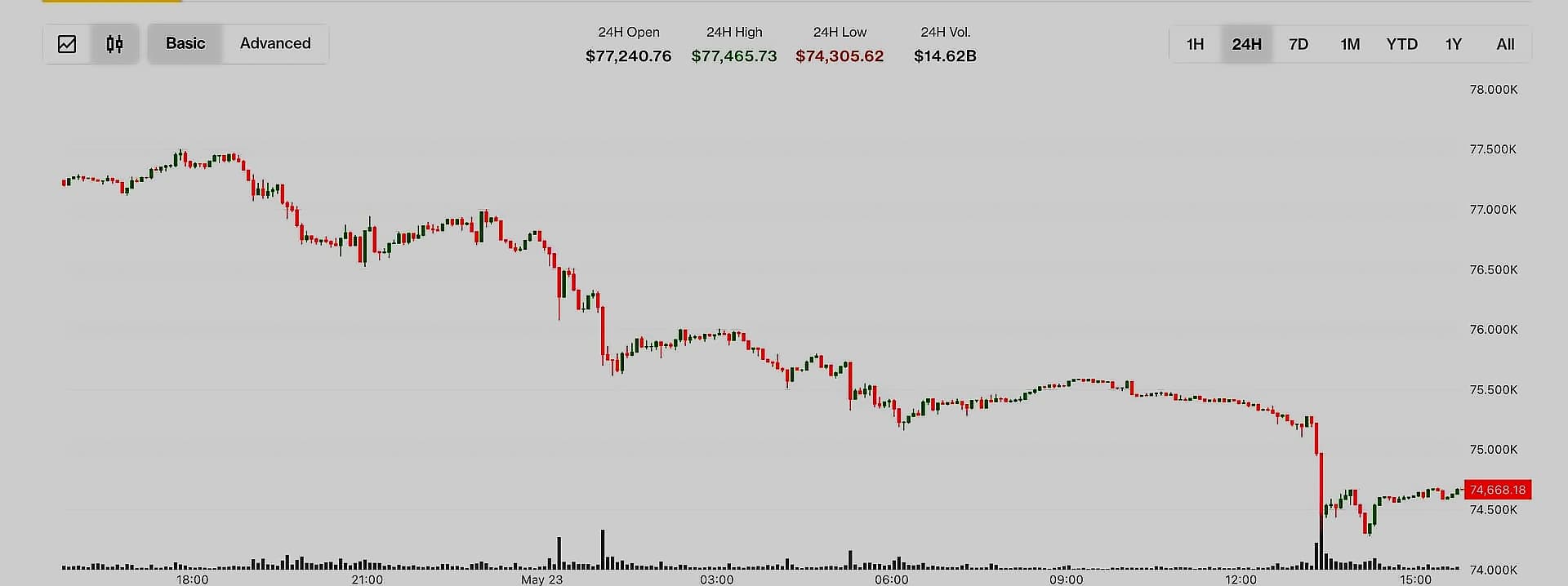
Bitcoin experienced a sudden and sharp decline, crashing below $77,000 as selling pressure intensified across the crypto market. According to Cryptopolitan, the abrupt price movement represents a significant acceleration in the downward trend that had already begun with U.S. spot Bitcoin ETFs recording more than $1 billion in net outflows last week. The decline came as more than $661 million in crypto positions were liquidated within 24 hours, erasing part of Bitcoin's CLARITY Act rally that had briefly pushed BTC above $82,000 after the bill cleared the Senate Banking Committee in a 15-9 vote.
The U.S. calendar through May 22 presents several key events that could shape market sentiment. Fed minutes are scheduled for Wednesday, with markets watching for language on inflation and rate policy. According to crypto.news, recent PPI and CPI data have raised concerns that the Federal Reserve may keep rates higher for longer, which can pressure Bitcoin and other risk assets when liquidity expectations fall. Additional economic data includes reports on pending home sales, weekly ADP employment changes, jobless claims, manufacturing activity and consumer sentiment.

Nvidia will report first-quarter fiscal 2027 results on May 20 at 2 p.m. PT, as reported by the company's investor calendar. The earnings release matters significantly for crypto markets because AI-linked tokens often react when traders reprice demand for AI stocks and data-center growth. Previous market coverage showed that strong Nvidia earnings helped lift Bitcoin and altcoins as investors moved back into risk assets, while weak guidance could add pressure to AI-related crypto names. The sudden Bitcoin crash adds urgency to this earnings event as market participants seek clarity on AI demand trends.
Oil prices remain another market driver, with crypto.news reporting that WTI crude futures climbed above $107 as stalled U.S.-Iran talks and Strait of Hormuz disruptions fed inflation concerns. Higher oil prices can keep rate-cut hopes under pressure and reduce demand for speculative assets, adding to the cautious market sentiment affecting crypto markets. The current oil price environment continues to create headwinds for risk assets, particularly as geopolitical tensions persist in the Middle East.