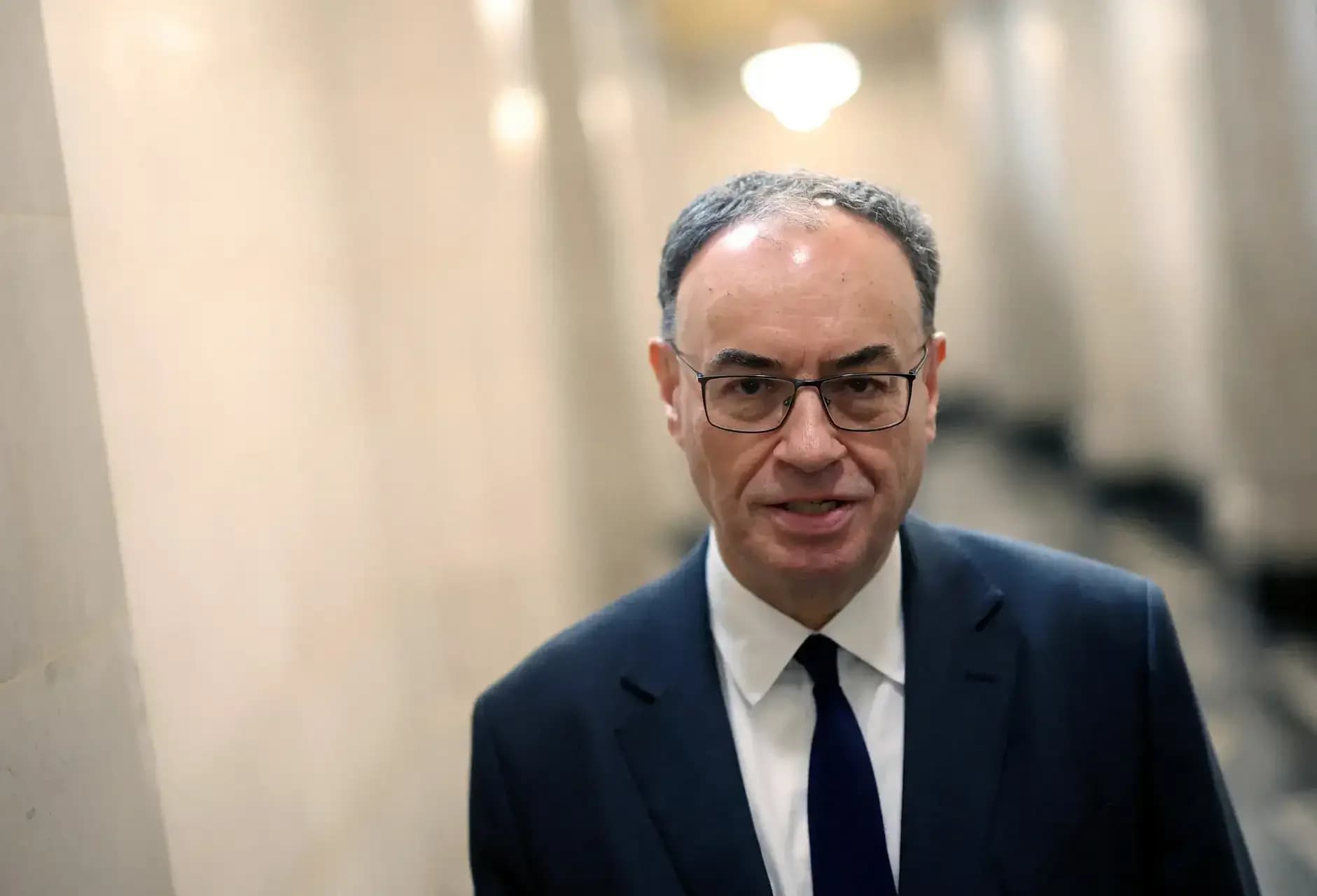
Bank of England Governor Andrew Bailey has intensified warnings about growing tensions with the United States over stablecoin oversight, speaking at a Bank of England conference focused on financial imbalances on May 8, 2026. Bailey described discussions with the U.S. administration as likely to become a 'coming wrestle' over stablecoin rules and international payment standards. According to Reuters, Bailey emphasized that stablecoins would only function properly in international payments if regulators agreed on common standards across global payment systems. The governor has consistently expressed caution toward cryptocurrencies, arguing they could undermine systemic safeguards without coordinated global rules. 'If we want stablecoins to be part of the global payments architecture… they will only work if we have international standards,' Bailey stated, warning that global regulators should expect an 'imminent dispute' with the United States regarding stablecoin rules.
The regulatory landscape is becoming increasingly complex as the U.S. Senate Banking Committee has scheduled a markup for May 14 on the CLARITY Act, its second attempt after January's planned markup collapsed. This legislative tension reflects ongoing disagreements between banking groups and the crypto industry over stablecoin yield restrictions. Banking groups including the American Bankers Association, Bank Policy Institute, Consumer Bankers Association, Financial Services Forum, and Independent Community Bankers of America warned that the latest compromise still leaves room for crypto firms to recreate deposit-like products through staking, membership programs, balance-based rewards, and other 'yield-like' incentives. The groups argued the proposal 'falls short' of preventing deposit substitution and warned firms could evade restrictions through what one industry letter described as 'cosmetic structuring.' Meanwhile, the U.S. Senate Banking Committee has scheduled a markup for May 14 on the CLARITY Act, with lawmakers still needing to reconcile it with the Senate Agriculture Committee version and find 60 votes before sending anything to the House.
A core concern Bailey raised centers on redemption mechanisms in certain U.S.-issued stablecoins. Some lack straightforward pathways for holders to convert them back into dollars during periods of market stress, often requiring transactions through cryptocurrency platforms rather than direct banking channels. This structural weakness, he suggested, could prove problematic if stablecoins gain widespread use in cross-border finance. In the event of a market disruption, Bailey explained that investors might rapidly shift away from less reliable tokens toward jurisdictions with stricter safeguards. 'We know what would happen if there was a run on a stablecoin—they would all end up here,' he cautioned, underscoring the risk of sudden pressure on British markets and financial infrastructure. The Bank of England's position aligns with a stricter regulatory strategy in the United Kingdom, with Bailey advocating that large banks prioritize tokenized deposits instead of creating their own stablecoins since 2025.
The stablecoin market has reached significant scale, with CoinGecko data valuing the market at more than $317 billion. Most of the largest stablecoins are tied to the U.S. dollar and rely on reserves such as Treasury bills and cash held in dollars. As reported by Reuters, Bailey warned that some dollar stablecoins may not remain easily redeemable during market stress, potentially creating systemic risks. Serving as chair of the Financial Stability Board, Bailey continues to view stablecoins as a potential financial stability risk despite their growing adoption. His intervention reinforces long-standing calls for harmonized oversight to prevent regulatory gaps that could amplify shocks across borders. If stablecoins become widely used for cross-border payments, dollar tokens that are difficult to convert could flow into other countries, including the UK, which is planning to impose strong laws on stablecoin conversion. The British proposal includes additional requirements for immediate liquidity, including reserves held at the Bank of England and short-term government bonds, while the Bank of England is also considering imposing holding limits on systemic stablecoins denominated in British pounds, with an initial proposal setting limits of £20 for individuals and £10 million for companies.