Arthur Hayes, former BitMEX CEO and Maelstrom CIO, warns that the global AI arms race has triggered a historic surge in fiat credit. According to his latest newsletter, nation-states treat AI spending as a survival contest, with central banks and commercial lenders now funding the build-out indefinitely. Hayes argues that most US AI capital expenditure has come from operating cash flow at the largest software firms, but this source is running out, forcing bank credit to fund the next leg of growth. The AI arms race between the US and China serves as a key driver for unlimited credit creation, fueling Bitcoin demand.
In China, President Xi Jinping has steered lenders away from real estate and toward technology, while the Federal Reserve and the People's Bank of China have eased financial conditions to support the AI build-out. Researchers at Simple Mining echoed Hayes's analysis, describing AI capex as a national-security concern driving Bitcoin demand. The scale of current and future CAPEX spending now requires growth in funding via the credit channel, as noted in Hayes's newsletter. Hayes marks February 28, the start of the US-Iran conflict, as the bull market's beginning, noting Bitcoin's outperformance over gold and tech stocks since then.
White House AI and Crypto Czar David Sacks has amplified the same message, estimating AI capex will deliver a 2% tailwind to US GDP growth this year, with contributions potentially climbing above 3% next year. The national-security framing gained further weight on May 1 when the Department of Defense signed AI deployment deals with eight major contractors, including Google, Microsoft, Amazon Web Services, Nvidia, OpenAI, Reflection AI, SpaceX, and Oracle. Bitcoin advocate Simon Dixon called this sequence a manufactured crisis used to justify emergency money creation. Hayes expects Bitcoin to return to $126,000 as almost certain, with the cryptocurrency having bottomed near $60,000 earlier this year.
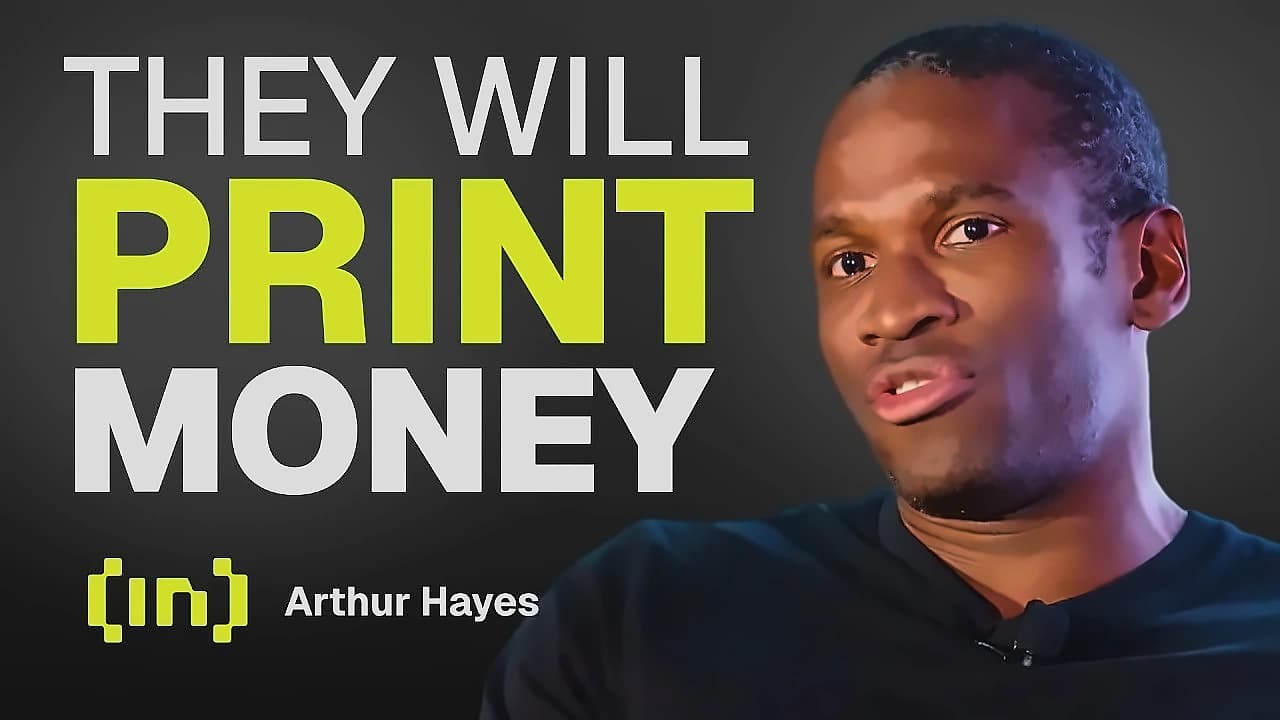
Hayes's family office, Maelstrom, is increasing risk exposure, targeting NEAR Protocol as the next major investment, expecting it to rebound and generate positive cash flow. He expects acceleration once the price clears $90,000 and short sellers are forced to cover. However, he warns that an oversized AI public offering or merger could end the mania, while anti-AI rhetoric from a 2028 Democratic challenger could pressure capital allocators. Rising electricity and commodity costs may also draw populist backlash heading into the November US midterm elections. Hayes advises investors to embrace the bull market despite potential short-term political risks.
Investors are watching AI infrastructure spending, central bank policy, electricity markets, and upcoming technology IPOs for early signs the cycle is turning. Until one of those signals appears, Hayes argues the path of least resistance for Bitcoin is up. The analysis comes as the AI infrastructure build-out continues to drive unprecedented credit expansion, with Hayes invoking Jevons Paradox to explain why computing demand keeps accelerating even as model efficiency improves.