The world's largest asset manager BlackRock has released a groundbreaking research paper titled 'The Machine-Native Economy' that fundamentally redefines the relationship between AI and digital assets. According to the paper co-authored by BlackRock's head of digital assets Robert Mitchnick, AI is machine-native intelligence and crypto is machine-native money, creating a natural synergy between the two sectors. The report emphasizes that AI agents are programs that finish tasks with little human help, making today's payment systems inadequate for their needs. Current card systems require human sign-ups, impose fees that make penny payments pointless, and take days to settle - all issues that AI agents cannot tolerate.
Stablecoins have emerged as the primary beneficiaries of AI agent adoption, with stablecoins moving more than $11 trillion in 2025, putting them in the same league as Visa and Mastercard. As reported by BlackRock, these crypto tokens pegged to the dollar never close, making them ideal for AI transactions. The infrastructure is already being developed, with Coinbase building x402, a tool that allows software to pay websites instantly, and Cardano joining x402 earlier this month. This represents a significant shift from traditional payment methods to blockchain-based solutions that can handle AI agent requirements.
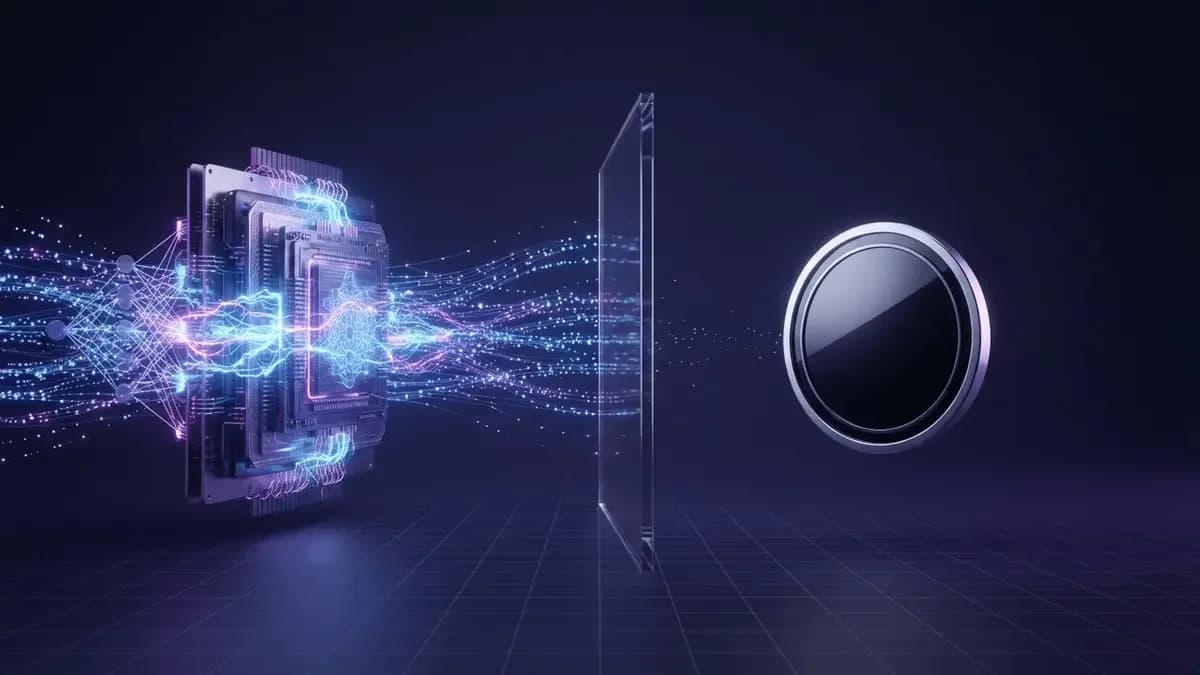
The most ambitious aspect of BlackRock's vision involves treating AI computing power as a tradable commodity similar to oil. According to the research paper, analyst estimates cited by BlackRock put cloud revenue at Amazon, Microsoft, and Google near $1.1 trillion by 2030. BlackRock envisions this raw processing power being sold in standard contracts and settled on blockchains. The trend is already gaining momentum, with Stripe agreeing to buy OpenRouter in August, which routes AI requests across more than 400 models. As Stripe's CEO Patrick Collison stated, 'Tokens are the central currency for companies building with AI'.
Despite its bullish outlook, BlackRock has significant exposure to the current crypto market challenges. The firm's iShares Bitcoin Trust (IBIT) held $67 billion as of September 25, but the fund has lost approximately one-third of its value this year. This substantial position underscores the complexity of the AI-crypto integration timeline, as the firm's research suggests a future where AI agents drive demand for digital assets, while current market conditions show a $24-25 billion AI crypto sector with most major tokens remaining 70%-90% below their 2024-2025 highs.
Gartner projects global AI spending is climbing from $1.76 trillion in 2025 to $2.52 trillion in 2026 and $3.34 trillion by 2027, with AI infrastructure taking the largest share. The BlackRock research paper acknowledges that AI agent payments are still limited, and cites tests where AI models chose stablecoins to spend and Bitcoin to save, though these were simulations rather than real purchases. However, the report emphasizes that continued agent usage and revenue capture would strengthen the case for token value, while attention without these metrics would leave the current $24-25 billion sector exactly where it is now. New developments like tokenized private markets and AI-assisted deal research are emerging as alternative investment opportunities as the traditional meme coin rotation to utility altcoins gains momentum.