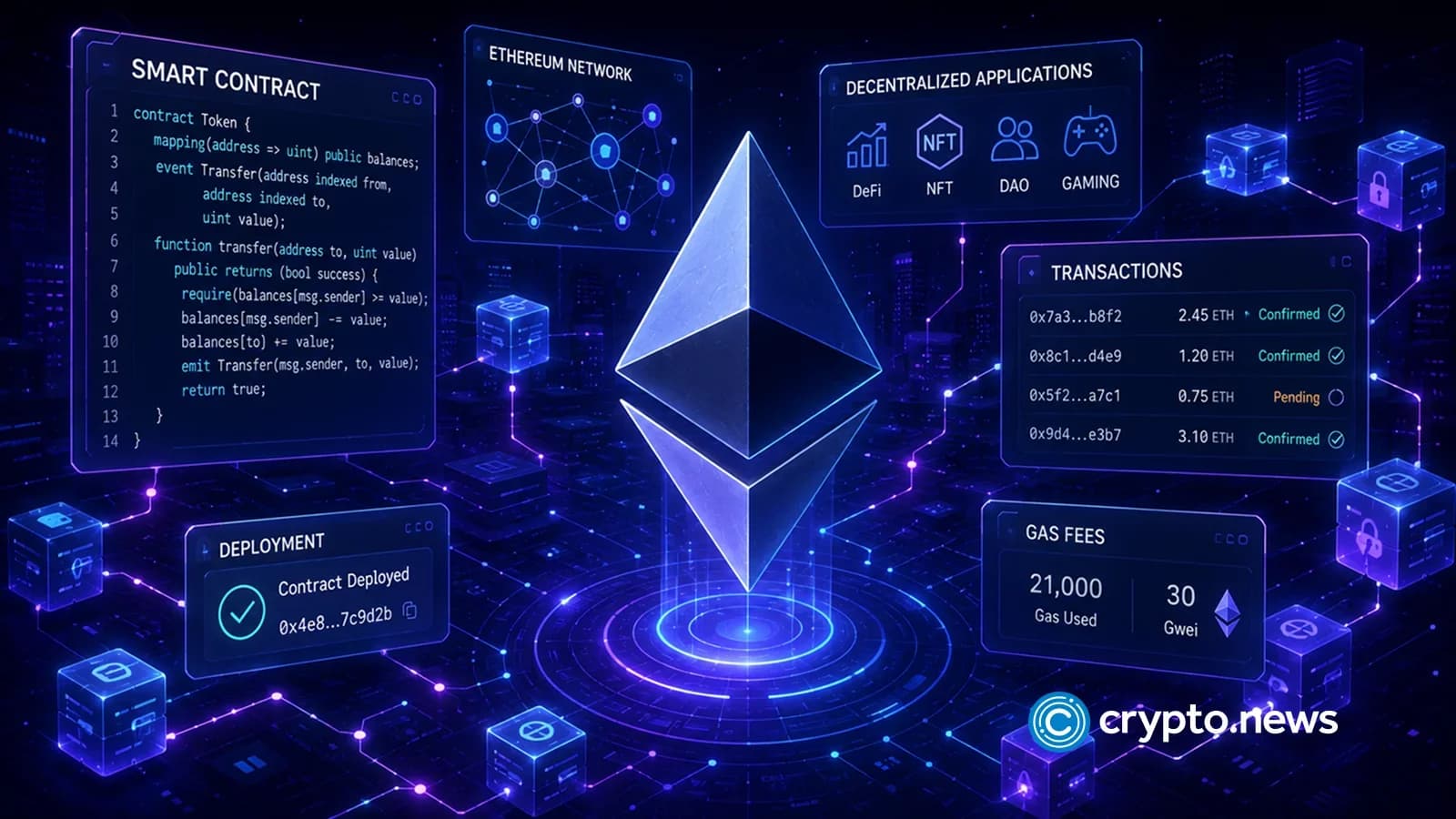
Account abstraction fundamentally changes how cryptocurrency wallets operate by replacing the traditional seed phrase system with passkey authentication and smart contract-based security. According to reports from CoinDesk, this technology turns wallets into programmable smart contracts that can enforce arbitrary rules about who may sign transactions, how gas is paid, and what happens when a key is compromised. The upgrade operates entirely at the smart contract layer, allowing users to authenticate with fingerprint, face scan, or device PIN while keeping private keys securely within hardware enclaves. As Nasscom reports, this represents a fundamental shift where the layer of trust we have always outsourced to institutions is now being embedded directly into code.
ERC-4337, authored by Vitalik Buterin and other Ethereum developers, went live on mainnet in March 2023 without requiring protocol-level changes. As reported by CoinDesk, the standard introduces four key components: UserOperations that describe intended actions, bundlers that collect UserOps into single transactions, an EntryPoint contract for validation and execution, and paymasters that sponsor gas costs. This design enables gas savings through bundling and allows users to send transactions without holding ETH for gas, solving the long-standing onboarding barrier that has persisted since Ethereum's 2015 launch. According to Nasscom, this standardization is part of the trend to make smart contracts the invisible infrastructure of world trade.

Coinbase Smart Wallet, launched in June 2024, has deployed over 10 million smart accounts using passkey authentication. According to CoinDesk, account creation takes under 10 seconds with biometric authentication, eliminating the need for seed phrases or browser extensions. Safe (formerly Gnosis Safe) has integrated passkey signing into its multi-signature framework, allowing users to combine biometric convenience with threshold signature security. The technology works across Apple devices (Secure Enclave), Google Pixels (Titan M), and Windows machines (TPM). As Nasscom notes, this represents the smart contract market valued at more than ₹1.5 billion and expected to rise exponentially in the coming decade.
Social recovery replaces the single backup seed phrase with a group of designated guardians who can approve recovery requests. As reported by CoinDesk, this system requires a threshold (such as 3 of 5 guardians), with most implementations including a 24-48 hour delay during which the original owner can cancel fraudulent attempts. The guardians can be friends, family members, institutional custodians, or other smart contracts, with implementation requiring careful selection to avoid creating single points of failure. This mechanism eliminates the physical security burden of storing seed phrases while providing recovery options when passkeys are lost. According to Nasscom, implementing timelocks and multi-sig controls for administrative functions and setting up bug bounty programs are essential security practices.
Base Layer 2 network processes over 30 million UserOperations by mid-2026, driven by Coinbase Smart Wallet adoption. According to CoinDesk, Polygon offers native account abstraction through zkEVM rollup, while Arbitrum and Optimism support ERC-4337 through standard EntryPoint contracts. StarkNet and zkSync implement native account abstraction at protocol level, with Ethereum's roadmap including EIP-7702 to allow existing EOA holders to access AA features without migration. The technology addresses the 20% of Bitcoin estimated by Chainalysis to be held in wallets with presumed lost keys, offering a more secure and user-friendly alternative to traditional seed phrase storage. As Nasscom reports, interoperability across chains is coming to maturity, with no single blockchain in the future but a network of thousands of chains communicating via smart contract-based bridges.