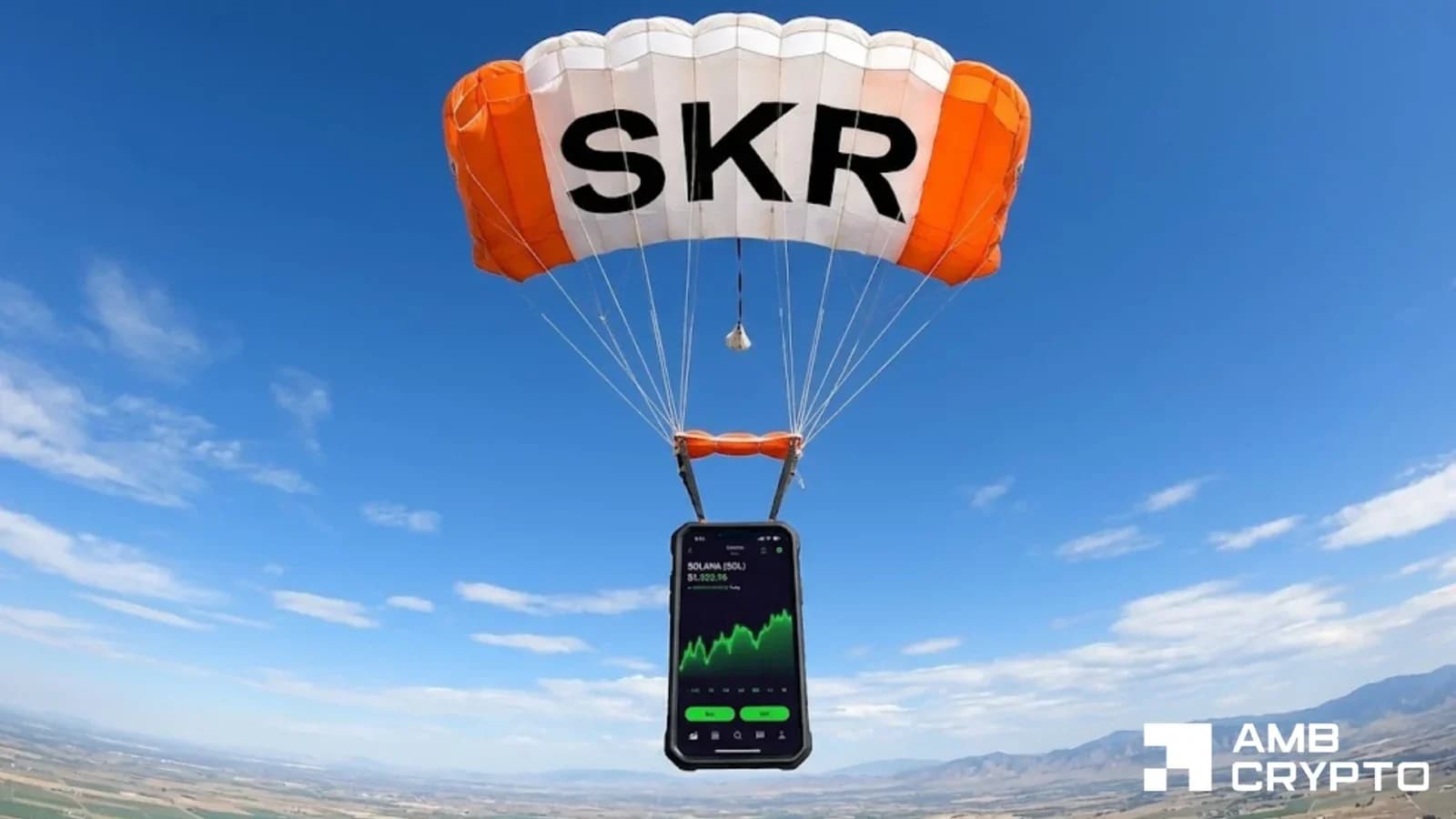
According to latest market data, Solana Mobile's Seeker (SKR) token has surged more than 186% in seven days, with the latest CoinGecko snapshot showing the rally extending beyond 200% as prices continue to move rapidly. The token reached $0.027 on Aug. 31, up more than 100% over 24 hours and roughly 250% over seven days, representing one of the crypto market's biggest weekly gainers. Trading volume had climbed to almost $295 million in 24 hours, while SKR's market capitalization approached $190 million. This dramatic change from only days earlier, when CoinMarketCap data cited SKR near $0.0117 with approximately $28.5 million in daily volume on Aug. 30, demonstrates the explosive nature of the current rally.
According to reports from VALR, the next crypto cycle is being defined by a retail ownership supercycle that extends beyond traditional crypto trading. Robinhood's CEO Vlad Tenev has positioned the platform's mission as ownership for everyday retail investors, launching the Robinhood Chain to bring mainstream retail equity investors directly onto native on-chain execution. The platform introduces novel mechanics like The Index, which automatically drops fractional tokenised equities directly into users' wallets, allowing crypto-native traders to gain organic exposure to traditional stock portfolios. This movement is being propelled by retail culture, with memes like Popcat, Pepe, and Doge previously demonstrating mass-market retail appetite on tier-one exchanges, while today's energy is driving on-chain execution. The SKR token's explosive growth exemplifies this retail ownership trend, with more than 100,000 users and 188 developers eligible for SKR at launch, and nearly 2 billion tokens allocated to the community.
As reported by VALR, this cycle marks a fundamental pivot toward Centralised-Decentralised Finance (CeDeFi) through direct liquidity integration. Major platforms are integrating with decentralised infrastructure providers, with Robinhood integrating Lighter and VALR integrating Hyperliquid. VALR's integration provides over two million users across Africa and emerging markets with seamless access to more than 200 liquid markets across crypto, equities, stock indices, commodities, precious metals, and foreign exchange. This infrastructure convergence represents a departure from previous cycles where centralised exchanges built isolated, walled-garden blockchains and proprietary wallets.
According to latest market analysis, Bitcoin faces a potential short-term pullback after its recent rally pushed the market into overbought conditions. The price is currently moving sideways, with traders watching the $76,400–$76,800 area for a possible liquidity sweep. Bitcoin's weekly Super Trend indicator remains red, and the latest weekly candle closed below the roughly $80,000 level needed to flip the indicator back to green. On the three-day chart, BTC price continues to face resistance between $80,000 and $82,000, with support remaining around $73,000–$75,000. The recent slowdown follows a sharp bullish move that pushed Bitcoin into overbought territory on the daily Relative Strength Index.
According to the analysis, the two-phase transformation of money is unfolding through stablecoins and tokenised assets. Stablecoins are becoming the pragmatic rails for daily users, global enterprises, and international trade, digitising fiat currency for effortless storage, transfer, and spending. However, stablecoins only digitise fiat and do not protect against chronic currency debasement. When inflation becomes obvious as long-lasting and ever-worsening, Phase 2 will transition to sound money through tokenised gold like XAUt and fundamentally, Bitcoin. The report suggests this transition will be swift and violent, with stablecoins providing the off-ramp for capital transfer.
As reported by VALR, the rise of agentic finance involves autonomous AI agents and algorithmic execution handling complex market mechanics, liquidity deployment, and execution strategies. The report notes that AI's impact on economies is still unfolding, with the optimistic view being that technology will outsource mundane tasks to machines so humans can focus on service, kindness, creativity, and contemplation. This trend represents a fundamental shift in how financial services are delivered and managed through artificial intelligence integration.