Zee Entertainment Enterprises Ltd isn't just protecting songs—it's defending a revenue engine. The company's catalogue of 19,450 songs across 17 languages represents one of India's most comprehensive music libraries, generating substantial income through multiple streams. On YouTube alone, Zee Music commands ~175 million subscribers with 51 billion video views in Q3 FY26. The syndication business, which licenses this content to third parties, showed 7x year-on-year growth in "Other Sales & Services" revenue during the same quarter. Transcripts +2
When JioStar allegedly used this music "at least 50 times" across TV programs and streaming content after licensing agreements expired in 2024 and 2025, it directly attacked Zee's monetization model. Each unauthorized use circumvents legitimate licensing fees, undermines catalogue valuation, and distorts market pricing for similar agreements. The $3 million damages Zee seeks—approximately ₹25 crores—might seem modest against the company's Q3 FY26 revenue of ₹2,298.5 crores (~$275 million), but it represents strategic positioning rather than mere financial recovery.
A Tale of Two Disputes: $3 Million vs $1 Billion
Reliance is seeking $1 billion from Zee in London arbitration over a failed ICC cricket licensing deal—a 333x multiple of the music copyright claim. This dramatic difference reflects the nature of each dispute: the cricket case involves a collapsed $1.4-1.5 billion alliance agreement for ICC TV rights from 2024-2027, while the music dispute centers on post-expiration usage violations.
Yet both disputes stem from the same market dynamics. The cricket arbitration began after Zee missed the first installment payment of $203.56 million, with the company arguing that Star India failed to meet certain conditions including securing financial guarantees and ICC approval. Meanwhile, the music dispute emerged from licensing agreements that weren't renewed due to disagreements over commercial terms following the Reliance-Disney merger.
The $8.5 billion Reliance-Disney merger in 2024 fundamentally altered competitive dynamics. JioStar now commands unprecedented scale: 500 million monthly users on JioHotstar, 130 television channels, 750 million weekly viewers across platforms, and an estimated ₹17,000 crore in annual media revenues. This consolidation created bargaining power that traditional players like Zee cannot match.
Before the merger, Zee could negotiate licensing terms with Star India and Viacom18 as separate competitors. Post-merger, the combined entity controls 50% of the total GEC TV market (Hindi GEC: 50%, Film industry: 35%, Regional: up to 55% in Marathi and Bengali markets). With fewer platform alternatives and a dominant market player, Zee's negotiating leverage diminished significantly. The failure to renew licensing agreements in 2024-2025 reflects this power asymmetry—disagreements over commercial terms that might have been resolved through platform switching now require legal intervention.
Copyright Enforcement as Competitive Strategy
Zee's aggressive enforcement against both JioStar and Nykaa (seeking $210,000 over Instagram reels usage) represents a strategic shift. As one of India's oldest media groups facing intense competition from the consolidated JioStar entity, copyright enforcement serves as a competitive equalizer. By establishing legal precedents for content valuation and post-expiration usage boundaries, Zee is leveraging its IP strength to maintain relevance and bargaining power.
The enforcement strategy aligns with Zee's broader positioning.
The company's music business maintains "healthy profitability", making IP defense increasingly valuable as syndication revenue shows exponential growth. Transcripts +1
Financial Pressures and Contingent Liabilities
The cumulative legal exposure is substantial. Beyond the current disputes, Zee's balance sheet already carries significant legal-related obligations: ₹176.8 crores in recognized provisions and approximately ₹4,112 crores in contingent liabilities (primarily disputed taxes). The potential $1 billion liability from the cricket arbitration would represent a significant contingent risk, though management states "no material adjustment is required in the accounts and expects no lasting impact on its financial position". AnnualReports
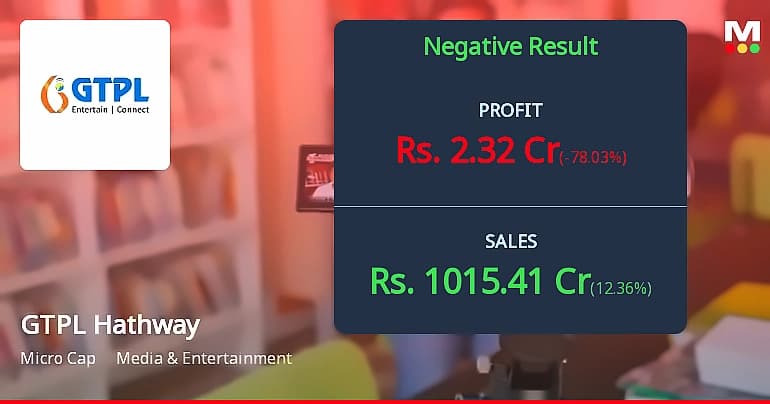
Zee's operating margins have already declined—EBITDA margin dropped from 15.0% in FY25 Q4 to 11.6% in Q3 FY26—though the company maintains strong cash generation with ₹1,094.4 crores in free cash flow for FY25. However, adverse legal outcomes could pressure margins further through additional provisions and potential cash outflows over multiple years.
JioStar's 15-Day Compliance Nightmare
The Delhi court's directive requiring JioStar to ensure no ongoing infringement within 15 days creates significant operational challenges. With 130 TV channels and 500 million monthly users across JioHotstar, implementing content removal across legacy programming is technically complex. The alleged infringement occurred across music and dance shows on both TV and streaming platforms, requiring systematic review of historical content.
JioStar's position that "residual and passive archival hosting does not amount to infringement" highlights a critical legal gray area. If courts accept that archival hosting doesn't constitute infringement, it could reduce the effective value of content catalogues by limiting monetization opportunities and creating uncertainty about what constitutes "active use" versus "passive archival hosting" in licensing agreements.
Non-compliance risks contempt of court proceedings, enhanced damages, and broader injunctions. Under Indian intellectual property litigation practices, courts can impose imprisonment, fines, compensation, or all of these for contempt. Willful infringement after court order could also result in punitive or enhanced damages beyond the original $3 million claim.
Enforcement Challenges Across Platforms
The dispute demonstrates fundamentally different enforcement challenges for linear broadcast versus digital streaming. Linear broadcast requires re-editing and re-broadcasting entire episodes, affects all viewers simultaneously, and involves complex regional feed management across multiple languages. Digital streaming faces scale challenges with 3 lakh hours of content, 24/7 monitoring requirements, and cross-platform coordination needs.
For large-scale platforms like JioHotstar, residual archival hosting creates particular complications. Content may exist in backup systems, caches, or redundant storage. Users might access content through direct links, bookmarks, or sharing rather than platform search. Distributed systems may create multiple copies across different servers. The Indian legal framework lacks clear guidance on archival hosting obligations, creating uncertainty for both platforms and rights holders.
The Expanding Enforcement Frontier
Zee's separate lawsuit against Nykaa for Instagram reels usage illustrates how copyright enforcement challenges are expanding beyond traditional media to social media and e-commerce channels. The case hinges on distinguishing commercial use (brand promotions) from non-commercial use (individual posts) under platform licensing agreements—a gray area in influencer marketing and social commerce.
With Indian e-commerce brands influencing over $50 billion in sales through short videos in 2025 and the creator economy estimated at more than $3.5 billion, the copyright implications are massive. This case could establish important precedents for social media copyright enforcement, influencer-brand agreements, and platform liability frameworks.
The Road Ahead
The outcomes of these disputes will have far-reaching implications. Legal precedents established will influence content valuation methodologies, post-expiration usage standards, and future licensing frameworks. The resolution could reshape how intellectual property rights are managed across platforms in India's evolving entertainment ecosystem.
As India's media landscape continues consolidating, copyright enforcement is becoming a strategic tool for traditional media companies to maintain relevance against dominant platforms. The Zee-JioStar battle represents just one chapter in an ongoing story of how market power shifts are reshaping content licensing, enforcement, and valuation across broadcast, streaming, and social media platforms.
The next hearing in the JioStar case is scheduled for July 23, 2026, while evidentiary hearings in the cricket arbitration are set for November 2025. Until then, both companies face significant operational, financial, and strategic uncertainty as they navigate this new era of consolidated media competition.