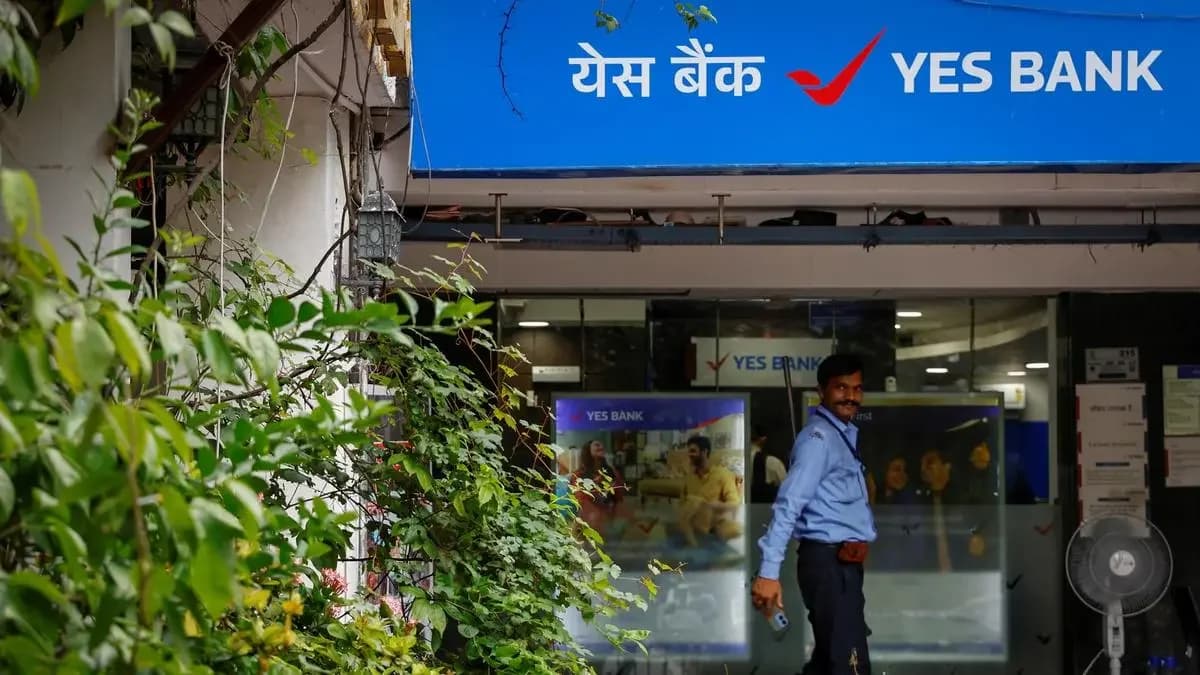
Yes Bank is making a bold move. The bank's board has approved a comprehensive plan to raise up to Rs 16,000 crore, split between Rs 7,500 crore in equity and Rs 8,500 crore in debt. This isn't a distress signal—it's a strategic pivot from recovery to aggressive growth. But why now, and what does this mean for the bank's future?
The Capital Adequacy Puzzle: Why Raise Funds Now?
At first glance, Yes Bank's capital position looks comfortable. As of March 31, 2026, the bank reported a Common Equity Tier 1 (CET1) ratio of 13.8% and a Total Capital Adequacy Ratio (CRAR) of 15.3%. These figures significantly exceed the RBI's Basel III minimum requirements of 5.875% for CET1 and 11.875% for total CRAR. So, what's driving this capital raise? InvestorPresentations +3
The answer lies in competitive positioning and future-proofing. Private sector peers are maintaining Tier-1 ratios above 15%, and Yes Bank needs to bridge this gap to compete effectively for high-quality corporate mandates. The bank is also preparing for the RBI's revised Basel III norms coming into effect from April 1, 2027, which will enhance risk sensitivity and potentially increase capital requirements for certain asset classes. Additionally, the RBI has tightened risk weights for unsecured consumer credit to 125%, making capital-intensive growth in retail segments more expensive.
Management has indicated that current capital levels can support 12-15% credit growth, but the Rs 16,000 crore infusion signals ambitions for more aggressive expansion, particularly in corporate lending where growth targets hit 20%. This capital raise is about building buffers ahead of a projected pickup in corporate credit demand and ensuring the bank can bid competitively for large-ticket transactions. Transcripts +1
Balancing Act: Equity vs. Debt Trade-offs
The 47:53 split between equity and debt reflects careful calibration. Equity dilution is capped at 10%, including conversions from convertible debt. With Yes Bank's market cap at approximately Rs 78,749 crore and share price around Rs 25, the Rs 7,500 crore equity component represents about 9.5% dilution. This will pressure Earnings Per Share (EPS) in the short term—current annualized EPS of around Rs 1.36 could dilute to roughly Rs 1.24 if earnings remain constant.
However, equity brings permanent capital that strengthens Tier-1 ratios without interest obligations. The debt component, likely through Tier-II bonds and Non-Convertible Debentures (NCDs), will cost an estimated 7.5-8.5% based on historical references and improving credit profile. This is 170-270 basis points higher than Yes Bank's current cost of funds of 5.8%, but it avoids immediate shareholder dilution and offers tax-deductible interest benefits. InvestorPresentations
The trade-off is clear: equity provides the highest quality capital but dilutes ownership, while debt is cheaper on a pre-tax basis but adds fixed obligations and doesn't match the regulatory capital quality of CET1. Yes Bank is betting that the growth enabled by this capital will eventually offset the dilution and servicing costs.
Impact on Profitability Metrics
The immediate impact on Return on Equity (RoE) will be mixed. Current RoE stands at 8.4% (normalized 9.2%). The equity dilution alone could depress this to around 7.7% in the near term. However, management has achieved a 1% Return on Assets (RoA) target and aims to improve this by 25-50 basis points through NIM expansion and cost discipline. If successful, RoE could recover to 10-12% within 2-3 years as the fresh capital gets deployed profitably. InvestorPresentations +3
Net Interest Margin (NIM) currently sits at 2.7% (normalized 3.1%). Management has set a structural target of 3.25-3.5% over the next 2-3 years. The fresh capital enables a strategic shift toward higher-yielding assets. Yes Bank's retail disbursements are growing above 20% year-on-year, with secured business loans up 17% and credit cards up 23%. The bank is also pursuing 20% growth in corporate banking, focusing on sectors like renewable energy, infrastructure, and healthcare. InvestorPresentations +6
The debt component's higher cost could compress spreads initially if deployed at current yields of 9.2%. But as the capital enables a product mix optimization—reducing reliance on low-yielding government securities and increasing share of RoA-accretive retail products—NIM should expand. The bank's improving CASA ratio, now at 35.1% (up 110 bps QoQ), provides additional support for funding cost reduction. InvestorPresentations +3
Strategic Deployment and Competitive Positioning
Yes Bank's total advances stood at Rs 2,73,445 crore as of March 31, 2026, growing 11.1% year-on-year. The Rs 16,000 crore infusion will accelerate this toward the 13-15% overall growth target for FY27. The deployment strategy is balanced across segments: Transcripts +1
Retail banking, comprising 46% of the portfolio, is targeted for 10-11% growth with a focus on secured products like business loans and affordable housing. Corporate & Institutional Banking, growing at 19.7%, aims to sustain 20% growth through new client acquisitions and relationship deepening. Commercial Banking targets 18% growth, led by New-to-Bank customers and anchor-led ecosystem financing. Transcripts +3
The competitive advantage story here is compelling. Yes Bank's strategic partnership with Sumitomo Mitsui Banking Corporation (SMBC), which acquired a 20% stake for Rs 13,483 crore, provides meaningful support in corporate and cross-border banking. This partnership expands Yes Bank's opportunity set, allowing it to balance growth and profitability while accessing SMBC's global network and expertise.
On the retail side, Yes Bank processes one out of every three digital transactions in India, providing unmatched data advantages for underwriting. Digital initiatives like GST FinFast (cashflow-based lending) and YES Business Loan HUB are streamlining MSME loan origination, with 90% of eligible New-to-Bank cases now logged through digital platforms. InvestorPresentations
Regulatory Path and Market Timing
The fundraising structure aligns well with RBI guidelines. The equity component qualifies as CET1 capital under Basel III, while the debt instruments will be structured as Basel III-compliant Tier-II capital with minimum five-year original maturity. Yes Bank already maintains strong liquidity metrics, with Liquidity Coverage Ratio at 119.0% and Net Stable Funding Ratio at 117.9%, both well above the 100% regulatory threshold. InvestorPresentations
Market conditions appear favorable for this capital raise. The RBI has reduced the repo rate by 125 basis points in 2025 to 5.25%, easing systemic liquidity. India's banking sector shows strong asset quality, with gross NPAs at historic lows of 2.15%. Yes Bank's own asset quality has improved significantly—GNPA at 1.3% and NNPA at 0.2%, the lowest since FY20. InvestorPresentations
The execution timeline will involve multiple regulatory approvals. Internal board approval is complete. Shareholder approval through special resolution will be required for the equity component. SEBI approvals will be needed for the Qualified Institutional Placement (QIP) or other equity routes, while RBI approval is required for Tier-II debt instruments. Credit ratings for debt instruments typically take 2-3 weeks. The entire process from board approval to fund closure is estimated at 5-6 months.
The timing appears strategic—Yes Bank is moving past its consolidation phase and tapping markets following stabilization in asset quality metrics. The capital raise prioritizes building buffers ahead of the projected pickup in corporate credit demand and the April 2027 Basel III implementation.
The Road Ahead
Yes Bank's Rs 16,000 crore capital raising marks a decisive transition from recovery mode to growth mode. The bank is not raising capital to survive—it's raising capital to compete. The balanced equity-debt mix reflects careful consideration of shareholder dilution versus leverage, while the deployment strategy focuses on high-growth, high-yield segments across retail, corporate, and MSME portfolios.
Success will depend on execution excellence. The bank must deploy the fresh capital at risk-adjusted returns that justify the cost of funds and dilution. Management's track record of achieving the 1% RoA target and improving asset quality provides confidence, but the market will watch closely for signs of asset quality deterioration as growth accelerates.
If executed well, this capital raise could enable Yes Bank to close the gap with larger private sector peers, sustain 13-15% balance sheet growth, and achieve the targeted NIM expansion to 3.25-3.5%. The SMBC partnership and digital leadership provide unique competitive advantages that could differentiate Yes Bank in an increasingly crowded banking landscape.
The next 12-18 months will be critical. Investors should watch for the actual pricing of the equity and debt issuances, the pace of capital deployment, and early signs of whether the growth strategy delivers the promised improvement in RoE and EPS. The June 29, 2026 board meeting was just the beginning—the real story will unfold in the execution that follows.