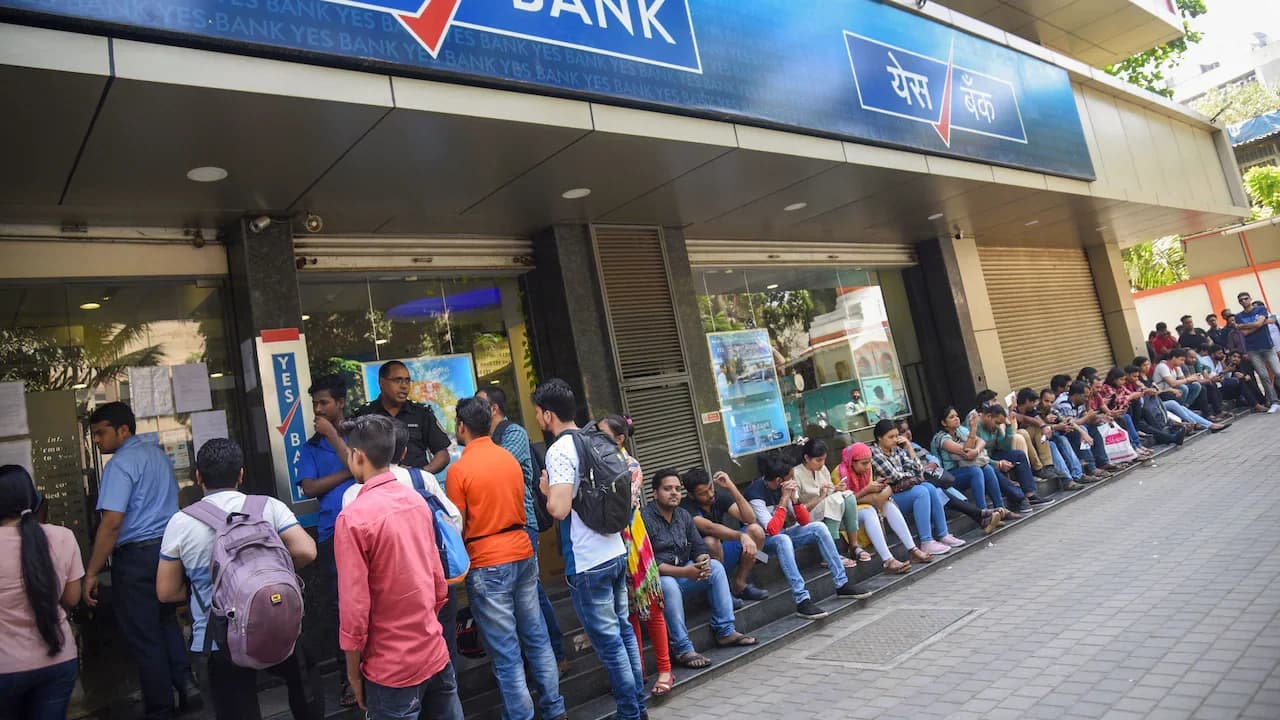
Yes Bank has filed a review petition in the Supreme Court against the October 15, 2026 judgment that overturned its ₹8,415 crore Additional Tier-1 (AT-1) bond write-down. The bank is challenging the ruling that upheld the Bombay High Court's decision, which found the administrator lacked authority to extinguish the bonds after the reconstruction scheme became effective. The stakes are enormous. Analysts estimate that reinstating the bonds could erode book value per share by up to 26% and reduce the Common Equity Tier-1 (CET1) capital ratio by approximately 230-270 basis points, potentially bringing it down to around 11.4%.
The core of the bank's argument rests on the exceptional circumstances of March 2020, when the write-down was executed under Reserve Bank of India (RBI) supervision to protect depositors and the financial system. However, the Supreme Court's reasoning centered on procedural lapses—the write-down provision was removed from the final reconstruction scheme, leaving the administrator without legal authority to act. This creates a difficult legal hurdle for the review petition, which is generally a narrow remedy and rarely successful. The bank's management has described the potential reinstatement as a balance sheet reclassification from reserves to borrowings with no cash outflow, but this characterization conflicts with analyst estimates of a significant post-tax profit and loss impact of around ₹6,300 crore. Transcript +3
Capital Adequacy Under Pressure
The financial implications of the ruling are severe. Yes Bank's reported CET1 ratio stood at 13.7% for Q2FY27, but pro forma estimates suggest this could fall by roughly 240-250 basis points if the AT-1 bonds are reinstated. While Tier 1 capital ratios are expected to remain around 13.7% on a pro forma basis, the hit to CET1 is critical because it represents the highest quality capital that absorbs losses. CARE Ratings had previously warned that an adverse ruling could reduce CET1 by 2.5-3% and necessitate additional capital raising. Moody's has listed a TCE/RWA ratio below 11% as a downgrade trigger, meaning the bank is uncomfortably close to levels that could prompt rating actions. Transcript +3
The bank faces a trade-off between prolonged litigation and settlement. Fighting on preserves the possibility of avoiding the capital hit, but it comes with escalating costs. Bondholders, represented by Axis Trustee Services, have filed a contempt petition alleging wilful disobedience of the Supreme Court order and demanding a concrete roadmap for bond restoration within three days. The trustee has threatened contempt proceedings against the bank, its directors, and officers, creating personal liability risks for senior management. Settling would remove this overhang but crystallize the capital erosion, potentially forcing equity dilution or a capital raise at depressed valuations. Nomura estimates that reinstatement could affect shareholders' equity by around 12%, while ICICI Securities has cut its target price to ₹17 from ₹24, valuing the stock at 0.9 times estimated FY28 adjusted book value compared to 1.2 times earlier. Other
Bondholder Escalation and Contempt Risk
Axis Trustee Services has moved beyond legal arguments to aggressive enforcement. After the Supreme Court judgment, the trustee wrote to Yes Bank on October 28, 2026, demanding reinstatement of the bonds and all necessary corporate actions within three days. When the bank failed to provide a "concrete roadmap," the trustee filed a contempt petition in the Supreme Court on November 6, 2026. This escalation copies in regulators including the RBI and SEBI, as well as depositories and exchanges, amplifying reputational risks. Other +1
The bank's response has been measured but firm. Yes Bank rejected the allegation of wilful disobedience as "baseless and without merit," stating it is examining the judgment and will act as necessary under applicable law. However, the trustee's actions create operational pressure. The demand includes restoring bond ISINs on depository and exchange platforms, a step that would formally recognize the liability. The Supreme Court has clarified that coupon payments are unaffected by the outcome and must be paid according to the Information Memoranda, adding another layer of potential cash outflow. Reuters has reported that the bank is unlikely to resume coupon payments, setting up another potential flashpoint for contempt. Other
Market Turmoil and Investor Perception
The stock market has reacted violently to the unfolding drama. Yes Bank shares plummeted 14.53% on the judgment day (October 15), with trading volume surging to 66.8 crore shares—nearly 3.7 times the one-month average. The stock hit a post-ruling low of ₹15.10 on October 30, coinciding with the trustee's ultimatum deadline, and has since recovered only partially to around ₹17.42. This represents a decline of approximately 17.8% from the pre-ruling close of ₹21.20. The 52-week range of ₹15.10-₹25.78 shows how far the stock has fallen from its recent highs.
Despite the volatility, institutional investors have not fled en masse. Foreign institutional investors (FIIs) actually increased their holdings to 47.82% in Q2FY27 from 46.12% in Q1FY27, though this data predates the ruling. Domestic institutional investors (DIIs) reduced their stake slightly to 23.07% from 24.05% over the same period. The promoter holding shows as 0.00% in available data, which may be a reporting gap requiring verification against official filings. The market appears to be pricing in capital dilution risk rather than solvency concerns, with the stock trading at roughly 0.9 times forward book value.
Ratings and Funding Stability
Credit ratings have so far remained stable, though this could change. ICRA's October 23, 2026 material event update shows infrastructure and Tier II bonds at AA (Stable), while the AT-1 bonds remain at D. CARE Ratings and India Ratings had upgraded the bank to AA+ (Stable) before the ruling, and Moody's and S&P maintain Ba2 (Stable) and BB+ (Stable) issuer ratings respectively. However, these ratings predate the final judgment, and agencies have flagged the capital risks. CARE's estimate of a 2.5-3% CET1 reduction and Moody's downgrade trigger of TCE/RWA below 11% suggest the bank is walking a tightrope. Other +4
On the funding side, deposits have shown resilience, growing 19.5% year-on-year to ₹3.54 lakh crore as of September 30, 2026. Retail and branch-led deposits increased 20.9%, and the bank mobilized ₹18,575 crore in FCNR(B) deposits, though this affected net interest margins which declined to 2.6%. Asset quality remains strong with gross NPAs at 1.2% and net NPAs at 0.2%, providing some buffer against the capital headwinds. The bank has not issued Tier 1 or Tier 2 instruments in FY25 or FY26, limiting near-term refinancing exposure. Other
The Road Ahead
Yes Bank now faces a complex matrix of decisions. The review petition is a long shot with high personal stakes for directors if the contempt petition advances. The bank's disclosure that it expects "no material financial impact" before a final verdict sits uncomfortably alongside management's own pro forma estimates of a 240 bps CET1 hit. This discrepancy may attract regulatory scrutiny from SEBI, which requires accurate and timely disclosures under LODR regulations. Other +1
The next critical date is Monday, November 16, when the market will first trade on the review petition news. Bond markets will watch for any RBI guidance on AT-1 bond accounting treatment, while equity investors will focus on the bank's capital management strategy. Analysts expect the bank to explore capital-raising options, potentially including qualified institutional placement or equity conversion for bondholders, though no concrete plan has been announced. The transition to the expected credit loss framework adds another 50-60 bps of CET1 pressure, though the new credit risk circular may offset much of this impact. Transcript
The AT-1 bond saga has evolved from a legal dispute into a test of corporate governance, regulatory compliance, and capital management. For Yes Bank, the cost of prolonged litigation extends beyond legal fees to market confidence, director liability, and strategic flexibility. For bondholders, it represents a landmark case on the limits of regulatory restructuring powers. For the banking system, it sets a precedent that future bank rescues cannot override bondholder rights without judicial sanction. The coming weeks will determine whether Yes Bank can navigate this minefield or becomes a cautionary tale in India's banking sector history.