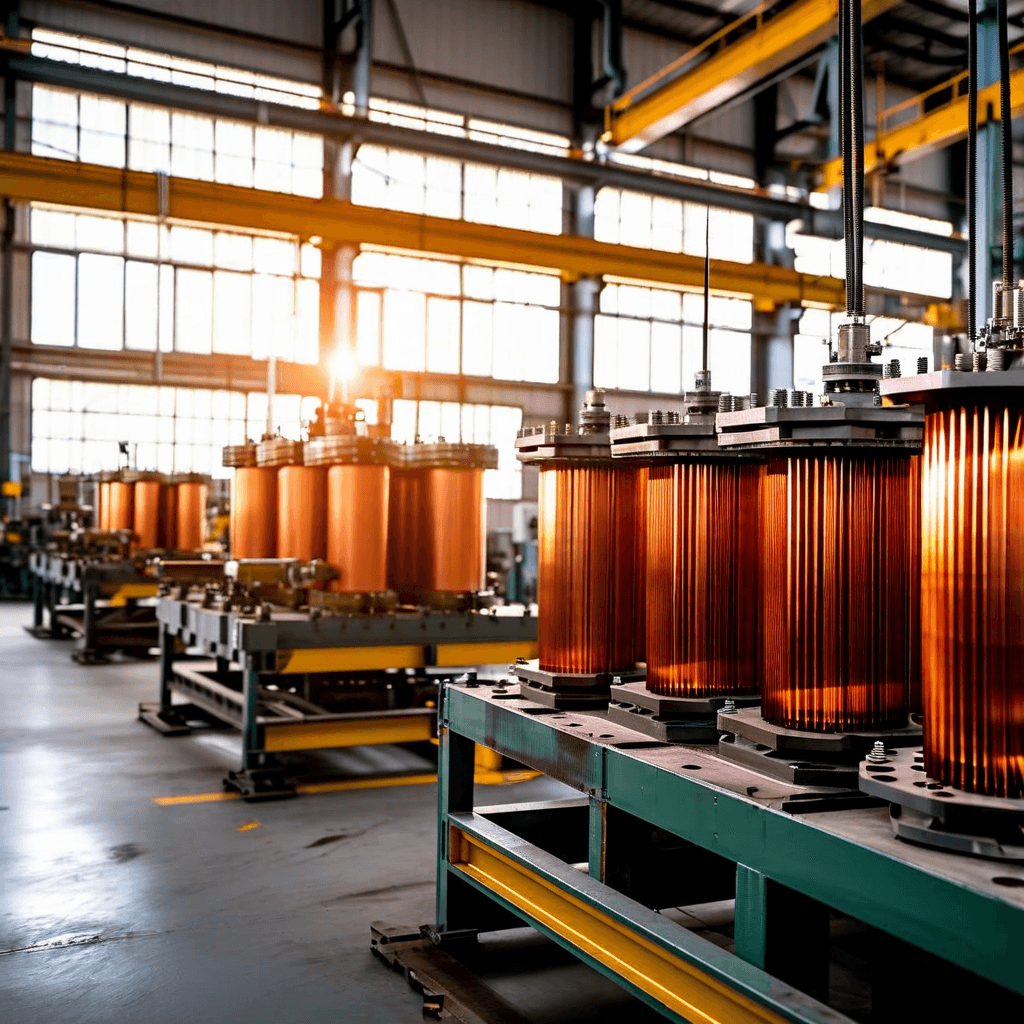
Voltamp Transformers delivered a Q4 FY26 performance that caught investors off guard. Net profit plummeted 50.5% to ₹47.9 crore from ₹96.8 crore in the year-ago quarter AnnualReports. Revenue barely budged, slipping 1.2% to ₹617.2 crore from ₹624.8 crore AnnualReports +2. But the real story lies beneath these headline numbers—operating profit dropped 30% to ₹79.8 crore AnnualReports, and EBITDA margins collapsed to 13.2% from 18.6% a year earlier AnnualReports. That's the lowest margin level since June 2023, raising uncomfortable questions about cost management and pricing power.
What Actually Went Wrong?
Let's break down the profit halving. Two one-time provisions hit the books: ₹4.9 crore for revised Labour Code compliance and ₹5.5 crore for employee incentives AnnualReports. That's ₹10.4 crore straight off the bottom line. But the bigger story is cost inflation. The rupee's slide made imported raw materials pricier AnnualReports. Critical component costs surged as vendors chased export markets and passed on the burden AnnualReports. The Middle East conflict drove transformer oil costs through the roof AnnualReports +1. These aren't one-offs—they're structural headwinds that squeezed margins from both sides.
Then there's the investment portfolio hit. The company parked substantial funds in long-term government securities and mutual funds when interest rates peaked. When G-SEC yields rose in Q4, mark-to-market losses on these investments turned negative AnnualReports +1. Result: other income swung from a positive ₹17 crore in Q4 FY25 to negative ₹10.1 crore this quarter AnnualReports +2. That's a ₹27 crore swing in the wrong direction.
The Execution Puzzle
Here's where things get interesting. The company's order book stands at a healthy ₹1,200 crore, up from ₹1,129 crore earlier AnnualReports. Yet revenue execution tells a different story. Full-year FY26 sales grew just 15.4% to ₹2,417 crore—the slowest pace since FY22 AnnualReports. Compare that to FY24's 46% growth and FY25's 31%, and you can see the deceleration is real.
Dig into the quarterly pattern, and a red flag emerges. A massive 38.6% of annual revenue—₹933 crore—landed in Q4 alone AnnualReports. That's back-loaded execution at its finest. Q1, Q2, and Q3 managed just 21.8%, 19%, and 20.6% respectively AnnualReports. This isn't steady manufacturing throughput—it's project-specific timelines, potential customer acceptance delays, or site readiness issues. Either way, it strains working capital and raises questions about operational predictability.
Capacity Constraints and Competitive Pressures
Management is addressing capacity limitations. A new power transformer factory is under construction, expected operational from July 2026 AnnualReports. That suggests current manufacturing capacity is indeed a constraint, though the company doesn't quantify its direct EBITDA impact in official filings.
But capacity isn't the only challenge. Competition is intensifying. Domestic and international players are crowding the market, while unorganized segments and previously sick units are getting revived AnnualReports. Customers now have better bargaining power on prices and terms AnnualReports. That's pricing pressure, plain and simple. Management's response? Selective order booking—avoiding commitments beyond nine months to protect margins from uncertain supply chains AnnualReports. It's a prudent strategy, but it comes at the cost of growth.
The Vadodara Plot: Expansion Amid Pressure
Despite margin compression, the Board approved ₹25 crore to acquire land near Vadodara AnnualReports +3. The rationale? Land banking for future capacity expansion when market conditions improve. It's strategic positioning—securing space now to avoid delays when demand strengthens. With a new factory already coming online in July 2026, this acquisition signals long-term confidence even as near-term headwinds persist.
Funding the Expansion
Here's the reassuring part. The ₹25 crore acquisition is comfortably funded through internal accruals. Cash and cash equivalents stand at ₹73.1 crore, up from ₹38.6 crore in FY25 AnnualReports +2. Operating cash flow for FY26 came in at ₹139.7 crore AnnualReports +2. The company even generated ₹161 crore from investment sales AnnualReports. The land acquisition represents just 0.8% of total assets—it's a rounding error on a strong balance sheet.
What the Stock Decline Tells Us
The stock has taken a beating, dropping nearly 20% to around ₹10,062 AnnualReports. That's a sharp correction from the 52-week high of ₹12,799. The market is signaling concerns about near-term earnings visibility. Margins at three-year lows, back-loaded revenue execution, persistent input cost inflation, and competitive intensity—all these factors are weighing on sentiment.
Yet the stock remains up 23% over one year and 36% over six months AnnualReports. That's the market telling us the long-term structural story remains intact. The power sector outlook is encouraging, with peak demand expected to grow 7% annually over the next five years AnnualReports. The recent decline looks like a sentiment correction rather than a fundamental break.
The Path Forward
Management maintains a "stable and cautiously optimistic" outlook AnnualReports. The strategy is clear: disciplined order booking, tight working capital control, and selective pursuit of profitable growth. The new factory coming online in July 2026 should ease capacity constraints. The land bank acquisition provides expansion flexibility.
But the near-term challenges won't vanish overnight. Input cost inflation, currency volatility, and competitive pressures are structural. The company's ability to restore margins to the 18-20% range will depend on two things: executing orders more evenly across quarters rather than back-loading into Q4, and maintaining pricing discipline in a competitive market.
For investors, the question isn't about the long-term opportunity—that remains robust. It's about the near-term trajectory. Can Voltamp navigate this margin compression while executing on its expansion plans? The balance sheet strength provides a cushion. The order book provides visibility. But the market will want to see execution improve before rewarding the stock with a re-rating.