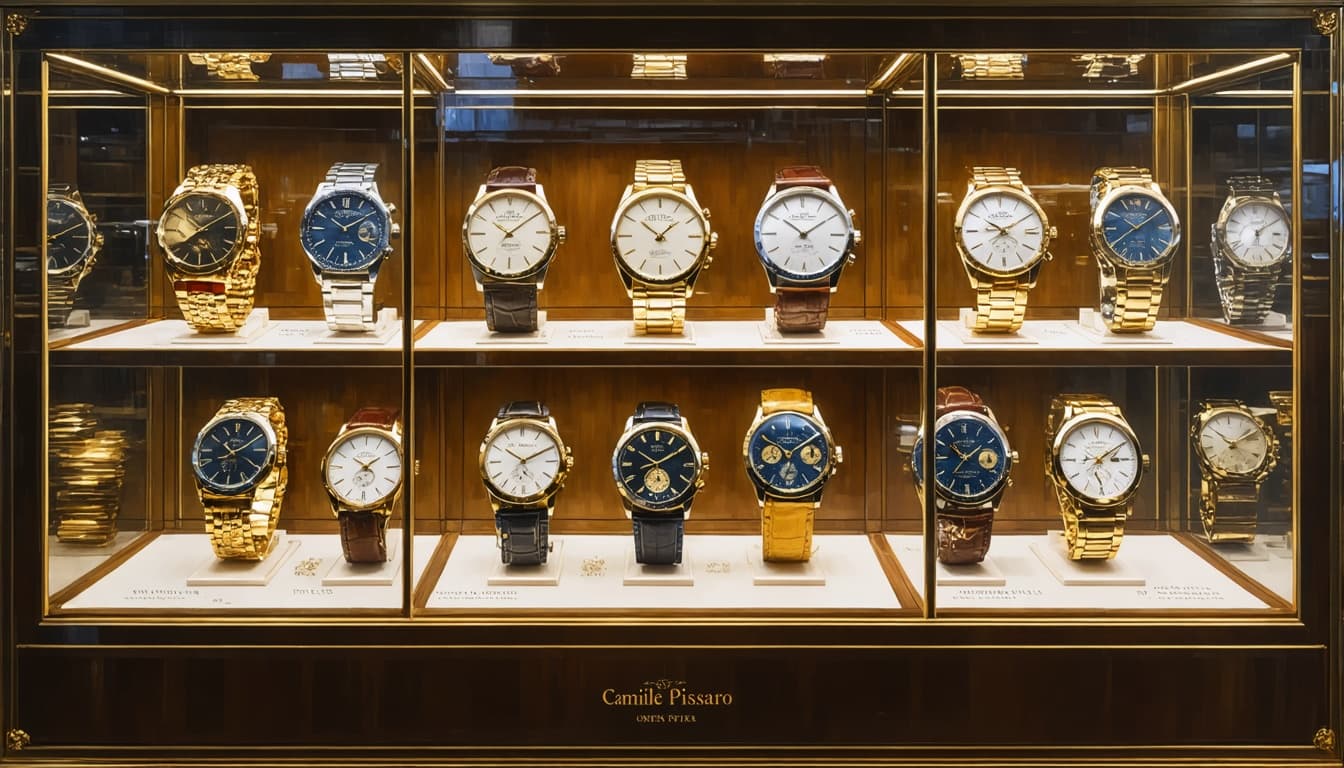
Titan Company Limited is betting big on moving upmarket. The company currently commands a staggering ₹3.63 lakh crore market cap and trades at a premium P/E ratio of 71.52, reflecting investor confidence in its ability to capture India's growing appetite for luxury. The strategy is straightforward yet ambitious: push premium watches priced above ₹25,000 while simultaneously elevating jewellery offerings into higher value segments. This dual-track premiumisation aims to drive both margin expansion and market share gains in a rapidly formalizing Indian market.
The numbers tell a compelling story.
But beneath this performance lies a fundamental shift in business mix. Jewellery now dominates at 92-93% of total revenue, while watches have shrunk to roughly 5% contribution. This skew makes the premiumisation strategy not just about growth, but about rebalancing the portfolio toward higher-margin segments that can sustain premium valuations.
Watch Segment: The Premium Margin Opportunity
Titan's watch business is targeting a significant margin upgrade through premiumisation. Management has guided for watch margins to gradually revert toward a 16-17% band, with mid-teen margins (15-16%) expected over the next 1-2 years. This represents meaningful improvement from historical levels, driven primarily by richer product mix and operating leverage. Transcripts +1
The premium segment is already delivering results. Premium brands like Edge, Nebula, and Xylys have grown more than 50% recently, while average selling prices have increased approximately 10% year-on-year. Analog watches, contributing 85-90% of the watch business, are growing at 15% annually with healthy volume and ASP improvements. The retail expansion supports this shift—Helios premium stores grew 36% year-on-year, while Helios Luxe luxury format expanded from 6 to 8 stores. Transcripts +3
However, the luxury watch market presents formidable challenges. Titan acknowledges its presence in the ultra-luxury segment is "very, very small," with independent jewellers and European heritage brands dominating the high-end market. The company faces a significant brand equity gap against Swiss luxury marques possessing centuries of heritage. A proposed GST hike on watches above ₹25,000 also threatens to dampen demand in the very segment Titan is targeting. Transcripts +1
Jewellery Growth: The Revenue Engine
Titan's jewellery business is the primary growth driver, targeting 15-20% CAGR over the medium term. The company has nearly doubled its market share over the past five years, reaching approximately 8.6% of the ₹525,000 crore Indian jewellery market. Management aims to capture double-digit market share within 3-4 years, requiring sustained execution and capital deployment. InvestorPresentations +1
The growth strategy is multi-pronged. Store expansion targets 1,250+ stores across 300+ towns by FY27, up from 900 stores currently. International expansion through the Damas Jewellery acquisition (67% stake for ₹1,190 crore) provides immediate presence across GCC markets, with ambitions to become the "jeweller of choice for NRI PIO in the GCC and North America within 3 years". Premium studded jewellery is showing disproportionate growth, with the ₹5 lakh plus segment performing well. InvestorPresentations +4
Margin management remains challenging. Jewellery EBIT margin guidance stands at 11-11.5% for FY25, but rising gold prices have already caused 10-20 basis points of margin erosion. Titan is responding through mix re-engineering, lightweight jewellery, and introduction of lower karatage options (14-carat, 18-carat) to maintain accessibility while protecting margins. Transcripts +3
The Bluestone Clarification
A critical clarification: Titan has not acquired Bluestone Jewellery. Based on comprehensive research across corporate filings and management commentary, Bluestone continues to operate as an independent competitor. Titan's digital jewelry strategy centers on CaratLane, which achieved revenue of ₹4,702 crore in FY26 with 34% year-on-year growth and strong profitability (13% operating EBIT margin). CaratLane, not Bluestone, plays the crucial role in Titan's digital strategy and overall growth outlook. InvestorPresentations +1
Investor Sentiment and Valuation Dynamics
Titan's premiumisation narrative has driven exceptional investor sentiment, reflected in premium valuation multiples.
Even with slight moderation in FY25 (ROCE at 59.24%, ROE at 31.76%), these returns remain exceptionally strong.
The margin implications of premiumisation are broadly positive. Richer product mix, higher ASPs, and operating leverage benefits are driving profitability improvements. Premium brands growing 50%+ in watches, combined with 10% ASP growth, directly impact margins. In jewellery, premium studded jewellery returning to pre-pandemic contribution levels supports margin expansion through richer product mix. Transcripts +2
The stock trades near the upper end of its 52-week range (₹3,303-₹4,605), leaving little room for disappointment. Sustaining premium returns will require flawless execution on ambitious growth targets.
Operational Strain and Resource Constraints
Pursuing premiumisation across both segments creates significant operational challenges. Working capital management is particularly complex given gold price volatility. Management acknowledges margin pressure of 10-20 basis points due to rising gold prices, while maintaining inventory levels requires substantial capital deployment. The introduction of multiple caratage options (9-carat, 14-carat, 18-carat) adds inventory planning complexity. Transcripts +2
Capital allocation prioritization is clear—growth is the number one priority over near-term margin protection. Management explicitly states they are "not constraining growth by way of trying to somehow keep a high margin". This means continued investment in retail expansion, renovations, increased store footprints, and marketing spend, even as these investments pressure margins. Transcripts +1
The business mix itself creates challenges. Jewellery's 40% growth versus 17-18% in other businesses has made jewellery more dominant in the portfolio. Since jewellery is a slightly lower-margin business, this mix shift has "suppressed TCL India or TCL consolidated margin a little bit". Resource allocation is increasingly skewed toward jewellery due to its growth differential and market opportunity. Transcripts
Competitive Threats and Strategic Responses
The competitive landscape is intensifying across both segments. In jewellery, Titan faces a "multipolar" competitive environment with 7-8 large national players, 8-10 large regional chains, and numerous regional players fighting for market share. Competition has intensified significantly over the past 5-6 years as organized players secure funding and expand operations. Management describes competitive intensity as "very high" with "price warriors" active in the market. Transcripts +2
Global watch giants present a different challenge. Swiss and European luxury brands possess established heritage and distribution networks that Titan cannot quickly replicate. Technology-driven competitors, particularly in smartwatches, have caused market corrections—the smartwatch segment moved from overheated growth (2021-2023) to a normalized, subdued state in 2024. Lab Grown Diamonds also pose potential threats to natural diamond portfolios. AnnualReports +2
Titan's strategic response focuses on customer acquisition and retention. Exchange programs create "evangelists and customers for life" through transparency and purity. The Golden Advantage program accounts for 20-25% of jewellery business. Accessibility initiatives include multiple strategies to maintain affordability amid rising gold prices—exchange programs, 18-carat gold, 14-carat studded jewellery, 9-carat options, and lightweight jewellery. Transcripts +2
In watches, Titan has created a new business vertical for premium watches focusing on Titan Edge, Nebula, and Xylys. Product innovation is at an all-time high with launches like Titan Stellar, Automatics, and Raga collections. The company even launched India's first-ever tourbillon watch as part of its 40-year celebrations. Technology investments include AI and IIoT implementation across watch assembly locations for automated testing and predictive maintenance. AnnualReports +2
The Discretionary Spending Dependence
Titan's premiumisation strategy is fundamentally dependent on consumer discretionary spending trends and aspirational demand. The above ₹1 lakh segment is performing well for studded jewellery, while the ₹5 lakh plus segment in Tanishq and Zoya shows fairly good growth. But these segments are highly sensitive to economic cycles and consumer confidence. Transcripts +1
The watches category itself is characterized by management as "the most challenging category from a consumption point of view" in current market conditions. Changing consumer behavior patterns and shifting preferences toward smartwatches create headwinds. The premiumisation trend is real, but its sustainability depends on continued middle-class income growth and aspirational consumption patterns. Transcripts
The Path Forward
Titan's premiumisation strategy represents a high-stakes wager on India's luxury consumption story. The company has demonstrated strong execution capability, nearly doubling its jewellery market share over five years and achieving exceptional returns on capital. The premium watch segment shows promising early traction with 50%+ growth in premium brands.
But the challenges are equally significant. Rich valuations leave little margin for error. Intensifying competition from both domestic and global players threatens market share gains. Operational complexity and working capital strain increase with scale. The dependence on discretionary spending creates vulnerability to economic cycles.
Success will require balancing aggressive expansion with operational efficiency, maintaining premium positioning while ensuring accessibility, and navigating competitive dynamics without sacrificing profitability. Titan's management has demonstrated confidence in sustaining 15-20% jewellery growth through their established playbook, but the premium watch segment against global luxury brands remains the wild card.
For investors, the key question shifts from "will premiumisation work?" to "can Titan sustain premium returns at current valuation levels?" The answer lies in execution consistency, market share gains, and successful international expansion. The next 3-5 years will determine whether Titan's premiumisation strategy delivers on its promise or faces the harsh realities of competing against established luxury giants in an increasingly complex market.