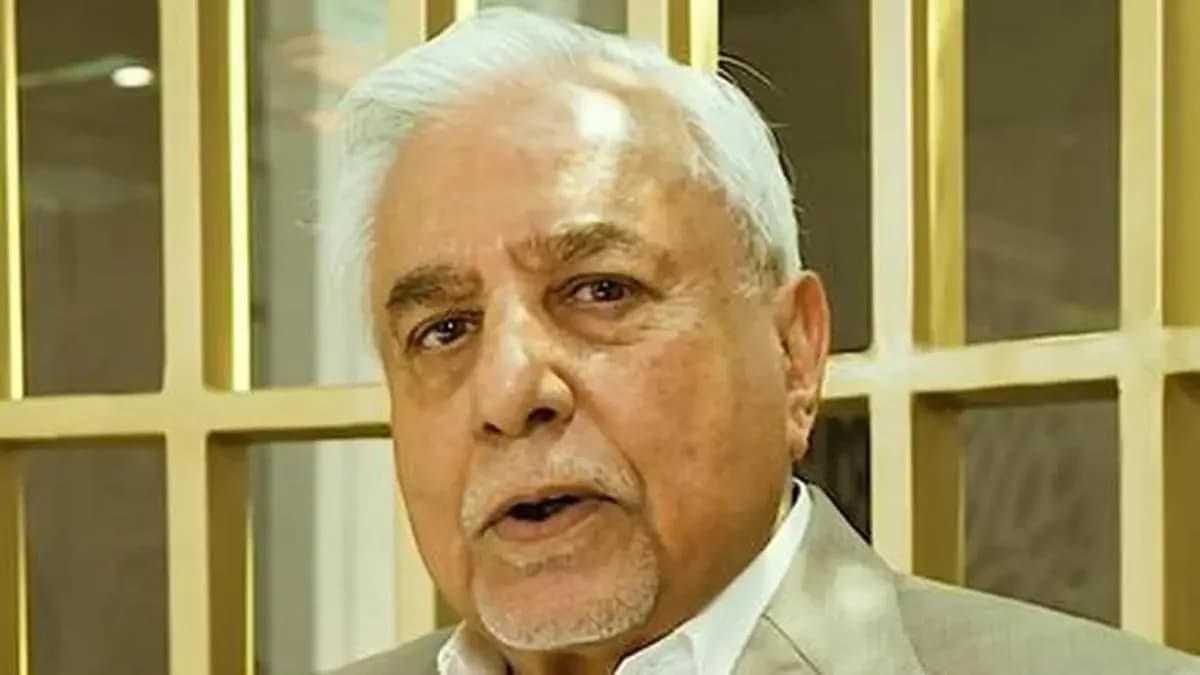
Subhash Chandra, founder of Zee Entertainment, would pay just ₹6.5 crore against admitted creditor claims of approximately ₹22,006.57 crore. That's a recovery rate of 0.03%—essentially three paise for every hundred rupees owed.
The approval came from Nilesh Sharma, a third judicial member brought in specifically to break a deadlock between the original Delhi bench members who couldn't agree on the plan. Sharma's opinion cleared the way for Chandra to exit personal insolvency proceedings after implementing what amounts to a token payment.
The 0.03% Puzzle: How Did We Get Here?
The story begins with a dramatic collapse in disclosed net worth. In 2017, certificates assessed Chandra's net worth at ₹45,888 crore. By 2018, this had dipped to ₹40,562 crore. Today? Approximately ₹31.79 crore. That's a decline of over 99.9% from peak valuations.
How does someone lose nearly ₹45,000 crore in less than a decade? The Essel Group's debt crisis tells the tale. Essel Group is a promoter group of Zee Entertainment which was founded by Subhash Chandra’s family. The group's debt ballooned to over ₹12,000 crore, much of it raised by pledging shares in flagship company Zee Entertainment Enterprises. When infrastructure bets failed and lenders invoked pledged shares, a fire sale ensued. Through a major restructuring, the group paid off over ₹11,500 crore—but at a devastating cost to net worth.
By 2020, Chandra had declared to Parliament's Ethics Committee that his unencumbered assets stood at just ₹9.85 crore. The ₹31.79 crore disclosed in IBC proceedings represents only a marginal recovery from that nadir.
LIC Housing Finance's ₹38 Lakh Windfall
Among the biggest losers is LIC Housing Finance, which voted against the repayment plan. The company had an admitted claim of ₹1,322.39 crore. Under the approved plan, it will receive ₹38,09,294—a recovery rate of 0.028%.
To put this in perspective, LIC Housing Finance's net profit for FY26 stood at ₹5,603.67 crore. The ₹38 lakh recovery represents just 0.007% of annual profits. The effective write-off of ₹1,322 crore amounts to roughly 23.6% of the company's yearly earnings.
Yet the impact on capital adequacy appears manageable. With total assets of ₹3.18 lakh crore and a healthy return on equity of 13.05%, LIC Housing Finance has the balance sheet strength to absorb this hit. The real question isn't about survival—it's about precedent.
The Voting Mystery: 80% Approval Despite Bank Opposition
Here's where things get interesting.
Who voted in favor? Entities like World Crest Advisors, Lemonade Capital Advisors, Corpcall Capital Advisors, and Veena Investments.
Major banks including HDFC Bank, Axis Bank, Canara Bank, RBL Bank, and Union Bank of India all opposed the plan. So did LIC Housing Finance. Yet their collective opposition wasn't enough to block approval.
Objecting creditors alleged that the entities voting in favor were "associates of the debtor" whose votes shouldn't count. The NCLT acknowledged these objections but noted that under the Insolvency and Bankruptcy Code (IBC), once claims are admitted, voting rights are automatically conferred based on financial claim amounts—regardless of relationships.
The Missing Forensic Audit
Why didn't the NCLT order a forensic investigation into Chandra's assets given the staggering net worth discrepancy? The answer lies in Section 114 of the IBC.
This gap in the framework means resolution professionals can accept debtor-disclosed asset values at face value, even when they show 99.9% declines from historical assessments. The burden of proving asset concealment shifts entirely to objecting creditors, who face strict IBC timelines and must fund independent investigations.
The Supreme Court Connection
The case traces back to a ₹170 crore loan from Indiabulls Housing Finance (now Sammaan Capital) to Vivek Infracon, an Essel Group company that defaulted in 2022. Chandra was the personal guarantor.
Initially, the case was withdrawn from the National Company Law Appellate Tribunal (NCLAT) following settlement discussions. But when settlement terms weren't met, Indiabulls revived the petition. This revival was made possible by a November 2023 Supreme Court ruling upholding the validity of personal insolvency provisions under the IBC.
That ruling removed legal uncertainty about NCLT's jurisdiction over personal guarantors, giving financial institutions the green light to pursue individuals who had guaranteed corporate loans. Without this Supreme Court validation, the Chandra case might never have reached its current conclusion.
The Section 115 Exit Strategy
Once the NCLT approved the repayment plan under Section 114 of the IBC, Section 115 kicked in. This section makes approved plans binding on all creditors—including those who opposed it. Upon successful implementation of the ₹6.5 crore payment, Chandra receives a discharge from personal insolvency proceedings.
The legal protection is permanent. Creditors are barred from pursuing any further action for the admitted claims once the plan is implemented. Chandra effectively eliminates ₹22,000 crore of liability for a ₹6.5 crore payment—a 99.97% reduction in obligations.
What This Means for India's Credit Landscape
The precedent set by this case extends far beyond Subhash Chandra. It establishes that 0.03% recovery can be legally acceptable in personal guarantor cases. It shows that dramatic net worth reductions can be accepted without forensic verification. And it demonstrates how creditor voting processes can be influenced by entities with alleged connections to the debtor.
For India's banking sector, the implications are significant. Personal guarantees, long considered a cornerstone of secured lending, may lose their effectiveness. Banks might need to increase provisions for personal guarantee exposures and tighten requirements. Risk models built on the assumption that guarantors have "skin in the game" need reevaluation.
The case also highlights potential gaps in the IBC framework. The absence of mandatory forensic audit requirements, the vulnerability of creditor voting processes to related-party influence, and the acceptance of minimal recovery rates all point to areas where regulatory reforms may be needed.
The Road Ahead
The matter will now go before the Original Division Bench for implementation directions. Once Chandra pays the ₹6.5 crore and the approved plan is implemented, he walks free from ₹22,006.57 crore of admitted claims. Creditors, meanwhile, must write off virtually the entire amount.
For retail investors watching this space, the key takeaway is this: personal guarantees in India may not provide the protection creditors once assumed. When high-profile business figures can reduce their net worth by 99.9% and exit insolvency by paying 0.03% of their obligations, the rules of the game have fundamentally changed.
The Subhash Chandra case isn't just about one man's financial troubles. It's a stress test of India's insolvency framework—and the results suggest the system may need strengthening before similar cases become the norm rather than the exception.