Tata Power Company Limited delivered a remarkable performance in Q4 FY26, achieving an 8.3% increase in consolidated net profit to ₹1,415.52 crore despite a 13% revenue decline to ₹14,900.20 crore. This divergence between profit growth and revenue contraction tells a story of strategic transformation, operational excellence, and a decisive shift toward higher-margin businesses. InvestorPresentations +1
Margin Expansion Through Operational Efficiency
The company's 10% year-on-year rise in EBITDA to ₹4,216 crore during the March quarter was the primary driver of margin expansion, with EBITDA margins improving to 28.3% from 22.5% in the prior year. This improvement stemmed from systematic cost structure optimizations across segments. Thermal plant availability (excluding Mundra) improved to 93% in FY26 from 87% in FY25, while Maithon Power availability surged to 96% from 83% in Q4 FY26. Prayagraj Power achieved lower borrowing costs by approximately 40 basis points, and operating expenses were tightly controlled across segments. InvestorPresentations +2
Pricing mechanisms remained stable across distribution businesses, with revenue per unit holding steady: TPCODL at ₹6.0, TPSODL at ₹6.9, TPWODL at ₹6.1, and TPNODL at ₹6.4. More importantly, Aggregate Technical and Commercial (AT&C) losses were reduced by 2% across distribution businesses during FY26, with Odisha Discoms achieving a reduction to 15.5% from 17.5% year-over-year. InvestorPresentations +2
Segment Performance: Renewables Lead the Charge
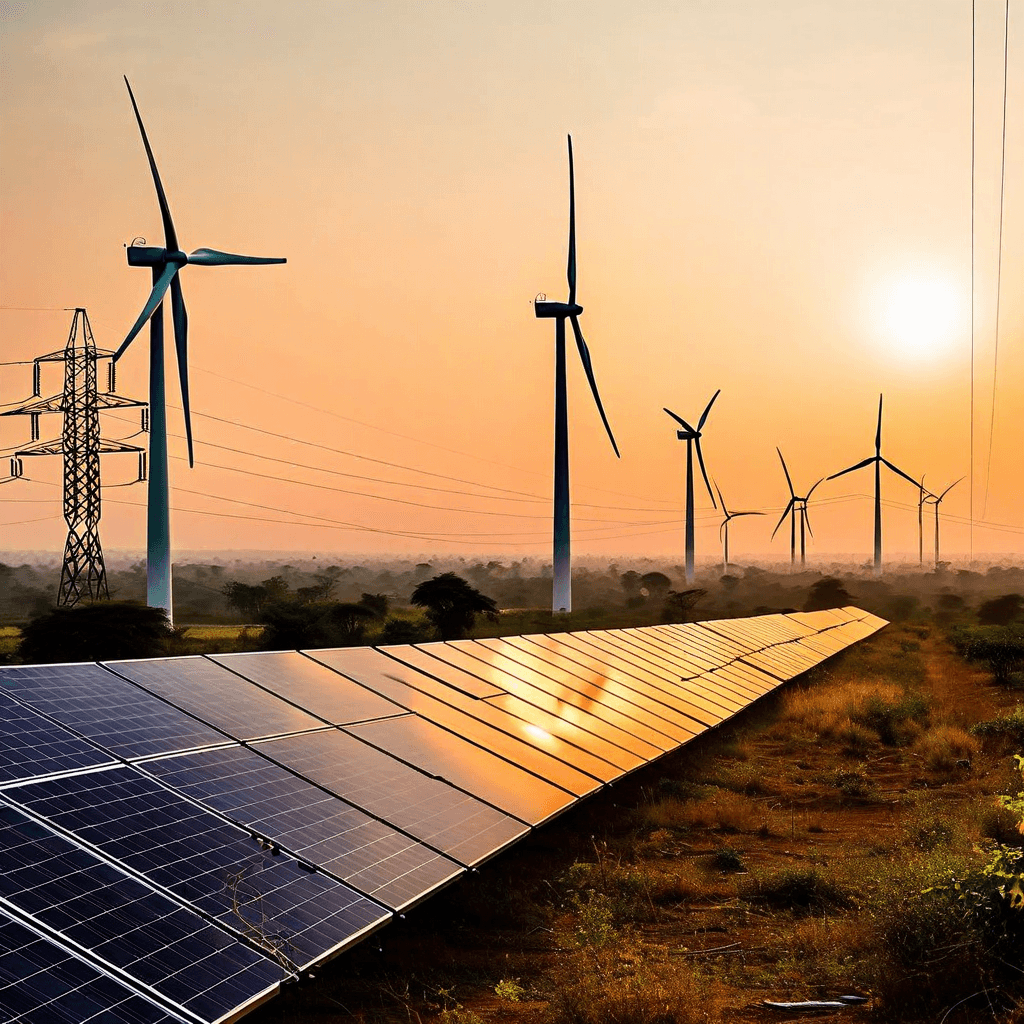
The renewable energy business emerged as the star performer, with PAT surging 59% year-on-year to ₹1,994 crore in FY26. This growth was driven by capacity expansion—the total installed renewable capacity reached 6,509 MW, up from 5,540 MW in FY25—and strong execution across business verticals. The segment's consolidated revenue grew to ₹15,028 crore from ₹9,876 crore, with TP Solar Manufacturing contributing ₹6,968 crore and Solar EPC adding ₹9,796 crore. InvestorPresentations +2
Cell production grew dramatically from 846 MW in FY25 to 3,759 MW in FY26—a 344% increase—while module production reached 3,825 MW. The company achieved industry-leading yields with module yield at 96% and cell yield at 95%, driving EBITDA margin expansion from 16% to 25%. InvestorPresentations +2
The rooftop solar business experienced explosive growth, with revenue surging 115% to ₹4,759 crore. The residential rooftop segment grew 248% year-on-year to ₹2,951 crore, dramatically outpacing commercial and industrial growth. The company installed a record 1.7 GWp of rooftop solar during FY26, supported by an expanded partner network of 697 channel partners and 3,000+ retailers. InvestorPresentations +2
Distribution Transformation: Operational Excellence
The transmission and distribution segment delivered exceptional performance, with PAT increasing 49% year-on-year to ₹2,978 crore. This growth was driven by comprehensive operational improvements, systematic loss reduction initiatives, and strategic infrastructure strengthening. Smart metering deployment played a crucial role, with nearly 27 lakh smart meters installed across Odisha discoms alone. InvestorPresentations +1
The Odisha distribution business achieved remarkable results, with PAT surging 84% to ₹809 crore from ₹439 crore. All four Odisha discoms improved profitability significantly, with AT&C losses reducing to 15.5% from 17.5%. The Delhi distribution business also delivered exceptional performance, with PAT growing 189% to ₹399 crore in Q4 FY26, supported by favorable regulatory outcomes and maintained AT&C losses at 5.4%. InvestorPresentations +2
Strategic Capital Allocation and Future Outlook
The company demonstrated robust cash flow generation with consolidated net cash flow from operating activities reaching ₹5,993.33 crore, while maintaining a strong balance sheet with net worth of ₹42,153.39 crore and net cash and cash equivalents of ₹4,327.45 crore. AnnualReports +2
This investment addresses a significant market opportunity—India currently has only 2 GW of wafer and ingot capacity but will require 50-60 GW within the next 2-3 years. The move will reduce dependence on imported raw materials, improve cost control, and create additional revenue streams from third-party sales. Transcripts +1
Tata Power's renewable portfolio expansion continues with the commissioning of 2.5 GW of capacity, bringing the total renewable portfolio to 11.6 GW. The company targets adding 2-2.5 GW of renewable capacity annually, aligning with India's goal of 500 GW non-fossil fuel capacity by 2030. This expansion provides strong revenue visibility for the next 6-24 months and enhances earnings stability through diversified, long-term PPAs.
Navigating India's Energy Transition
India's electricity demand is growing at approximately 5% annually, with peak demand expected to reach 270-280 GW in 2026. This structural demand growth, coupled with the accelerating energy transition, presents significant opportunities for Tata Power. The company is well-positioned to capture share in the 300 GW of renewable capacity expected to be added between 2026 and 2030, while its leadership in rooftop solar with over 20% market share provides a strong foundation in the distributed energy segment. Transcripts +1
However, challenges remain. Transmission connectivity constraints are delaying renewable project implementation, and regulatory volatility at the state level—including unilateral renegotiation of PPAs—creates uncertainty. The company is addressing these challenges through strategic timing of project completion, advance land acquisition, and diversification across multiple regulatory jurisdictions. Transcripts +1
Tata Power's integrated business model, combining manufacturing, EPC, project ownership, and distribution operations, provides multiple competitive advantages. The company's proven execution capabilities, strong balance sheet supporting ₹25,000 crore annual CAPEX plans, and technology leadership position it well to navigate India's evolving power sector landscape while delivering sustainable shareholder returns. Transcripts +1