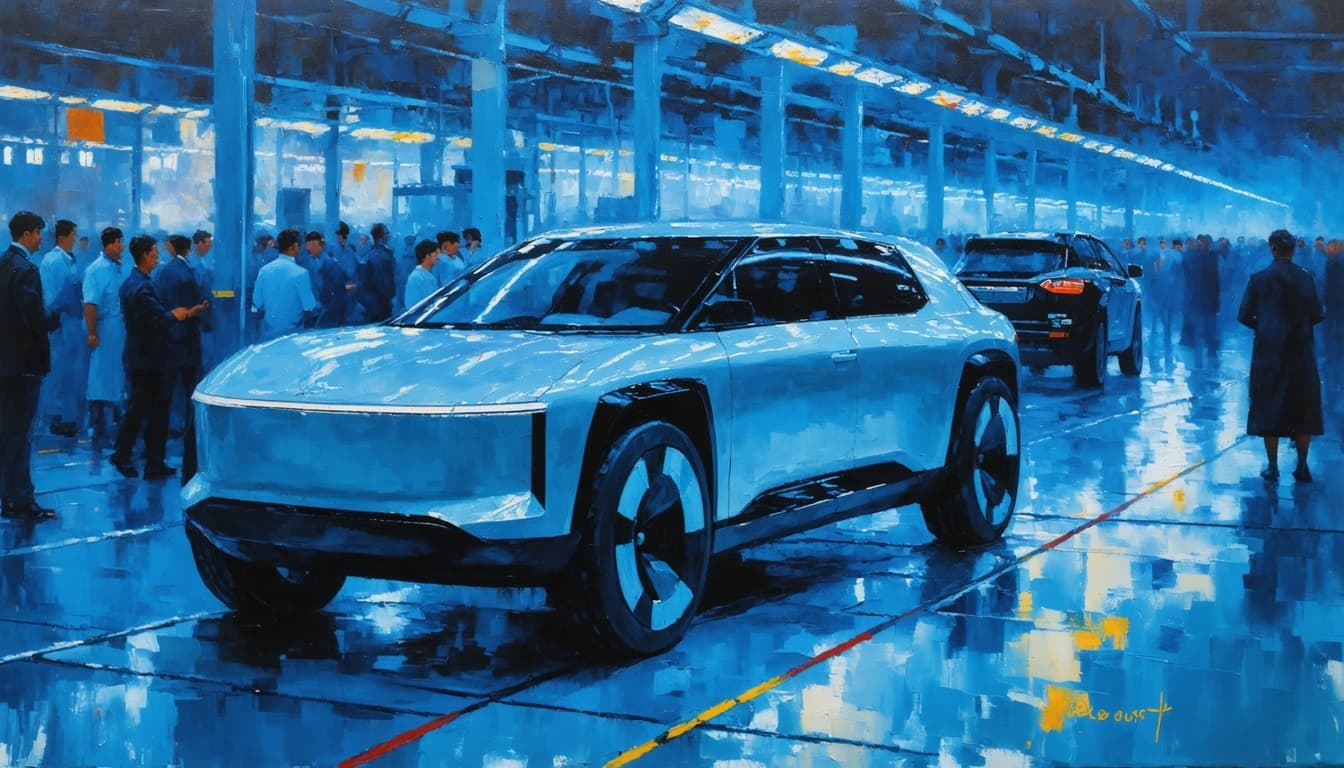
Tata Motors has made a striking strategic shift for its Avinya premium EV programme.
This isn't a minor adjustment—it's a fundamental recalibration driven by hard economics.
The original plan was straightforward: leverage JLR's EMA platform, pay a royalty fee, and gain access to cutting-edge electrical architecture, drive units, and manufacturing know-how. The EMA platform underpins JLR's next-generation pure electric mid-sized SUVs launching from 2025 onwards, representing state-of-the-art engineering. But here's the problem—the economics of adapting EMA for Avinya's intended positioning and volumes became "difficult to justify".
Enter the CJLR Freelander platform.
This ownership structure changes everything. Instead of paying royalties to an external entity, Tata Motors now taps into a platform it partially controls. The Freelander platform provides a proven EV architecture while allowing Tata to focus resources on localization, software, connectivity, and customer experience.
The China-India Fusion
This platform shift enables something unprecedented: the integration of China's electric vehicle development ecosystem with India's manufacturing economics. China today leads the industry in batteries, software integration, supply-chain scale, and development speed. The CJLR platform gives Tata Motors direct access to this ecosystem without starting from scratch.
Tata Technologies' engineering teams are spread across China, India, and the UK, working in concert to adapt the CJLR architecture for Indian market requirements. The teams in China handle platform adaptation, while India and UK teams focus on electronics, software, and vehicle systems rework for local conditions. This global collaboration model accelerates development while ensuring the final product meets Indian expectations.
The closer alignment between Tata Motors and JLR extends beyond platform sharing. Over the past two years, the two companies have expanded cooperation across engineering, sourcing, electrification, and software development. Industry executives believe Balaje Rajan's movement to a larger role in the UK is part of this broader effort to improve alignment across future vehicle programmes and technology initiatives.
The Premium Gap
For context, the Nexon EV sells at ₹18-19 lakh while the Punch EV sits at ₹13-15 lakh. This pricing places Avinya X in direct competition with global luxury EVs like the Kia EV6, BYD Atto 3, and BYD Seal. Transcripts
The CJLR Freelander platform provides significant competitive advantages over developing an indigenous premium EV platform. It offers a proven EV architecture that's already validated, dramatically reducing development risks. Development speed accelerates because the platform exists—Tata Motors can focus on adaptation rather than creation. Supply-chain scale comes built-in through China's massive EV ecosystem, something that would take years to replicate independently.
The platform strategy also creates interesting dynamics with other manufacturers. JSW Motor is adopting a similar approach, partnering with Chery for multiple products including the Jetour T2 PHEV, iCar V23 EV, and Jaecoo J5 EV. If multiple manufacturers use Chery-based platforms, component commonality could improve supplier economics through larger aggregate volumes. Enhanced negotiating power with common suppliers for batteries, motors, and power electronics could drive down costs for everyone. However, this also means reduced differentiation potential—Tata Motors will need to compete harder on software, experience, and brand positioning.
Manufacturing Foundation
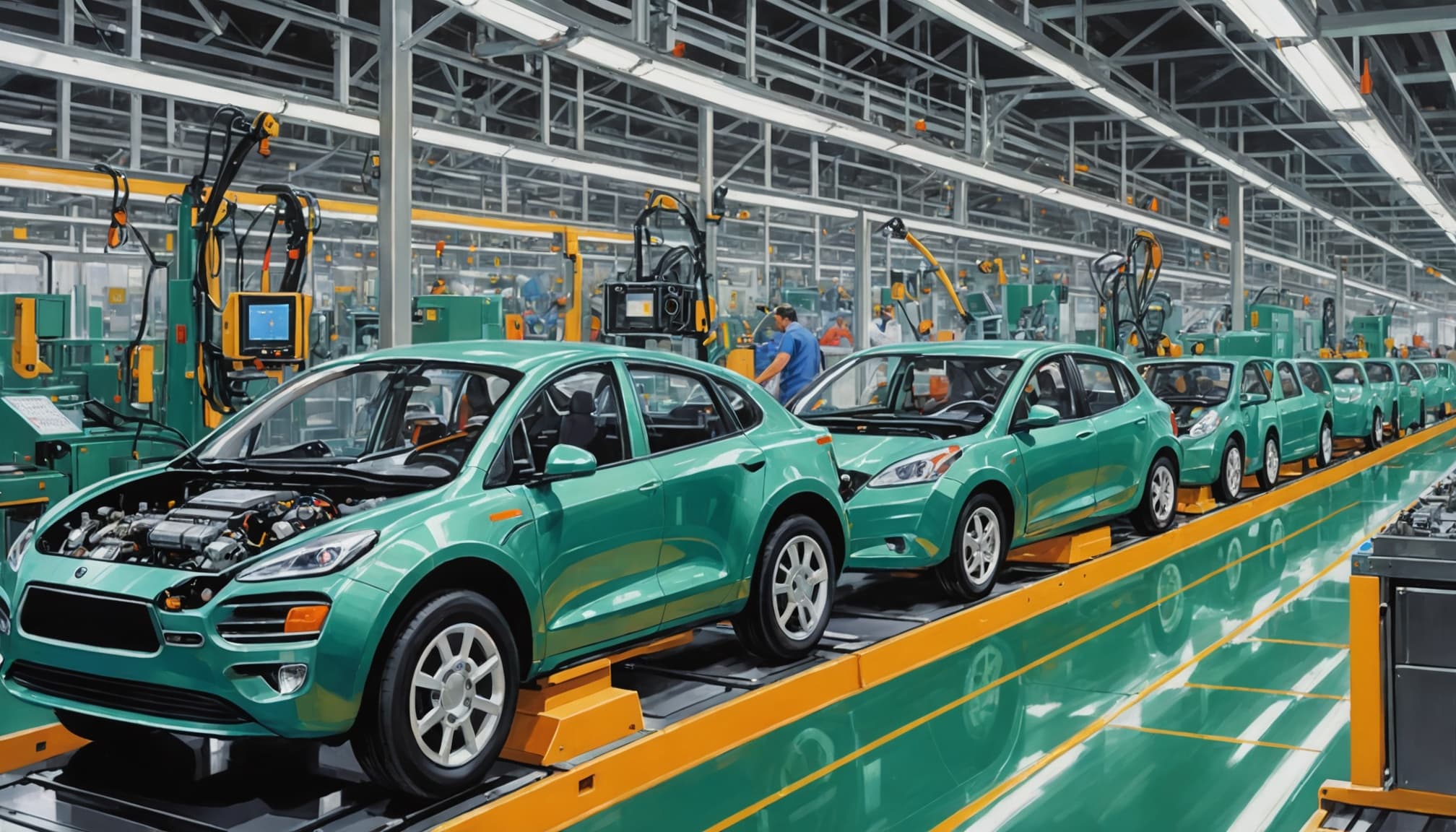
The production story centers on the new TMPV-JLR manufacturing facility in Panapakkam, Tamil Nadu.
The facility has a designed annual capacity of 250,000 vehicles, though production will scale up in phases over 5-7 years. The first Avinya models are expected to be manufactured here, with the facility playing a major role in Tata's premium EV plans.
The Panapakkam plant brings advanced manufacturing capabilities to India. The workforce undergoes rigorous training through the Lakshya programme—"earn while you learn" initiative where technicians complete five months of intensive training at JLR facilities before deployment. This ensures world-class operational proficiency from day one. The facility operates on 100% renewable energy, embodying sustainability-first principles.
The Chennai-Ranipet ecosystem provides established automotive infrastructure for scaling production. Tamil Nadu is recognized as India's leading hub for manufacturing and mobility, with progressive policies and a qualified workforce. The SIPCOT industrial estate in Panapakkam offers an ecosystem capable of delivering quality production with an established supplier base.
However, the initial 30,000-unit annual capacity constraint presents challenges. Limited initial availability could restrict geographic coverage and create waiting periods if demand exceeds supply—similar to the current 4-8 week waits for existing Tata EVs. This controlled launch approach allows quality assurance but may give competitors like JSW Motor an opening if they launch similar products with higher availability. Transcripts
Battery Strategy Evolution
Tata Motors' battery strategy for Avinya models reflects pragmatic interim planning. The company's battery venture, Agratas, remains central to long-term plans. The India plant is expected operational by late 2026, with UK/Europe facilities following soon after. But Agratas is "running against the clock" with a stressed timeline. Transcripts +1
Before Agratas reaches scale, initial Avinya models will likely rely on existing battery ecosystem partners. The first models are expected to feature battery packs in the 65-80 kWh range, balancing range, weight, and affordability. This interim strategy impacts the cost structure—import costs are higher initially, and localization levels start around 60-70% for pack assembly.
The localization trajectory follows a clear three-phase roadmap. Phase 1 (2018-2021) focused on assembly and testing, achieving 60%+ localization for Tiago.ev. Phase 2 (2021-2023) brought PLI compliance with in-house BIW, paint shop, and assembly capabilities. Phase 3 (2023 onwards) targets 85% localization by FY25 at Tier-1 supplier level, with 20+ strategic tie-ups with high-voltage component vendors and 600+ non-EV suppliers engaged. The target is approximately 15% reduction in component costs. InvestorPresentations
Strategic Recalibration
The prioritization of Avinya X (P2 programme) over the earlier P1 programme reflects Tata Motors' strategic recalibration. The original P1, based on the Avinya concept showcased in April 2022, was expected to launch in 2026 with volume potential of ~24,000 units annually. But the shift to CJLR platform changes the product sequence, with P1 taking a back seat as Tata focuses on bringing Avinya X to production.
This recalibration serves clear time-to-market objectives. The CJLR platform provides a proven architecture that accelerates development while improving cost competitiveness. The economics work better for the intended positioning and volumes. Rather than forcing EMA adaptation, Tata Motors now leverages a platform designed for similar market segments.
The broader vision extends beyond a single product. Tata Motors is evaluating a larger three-row premium electric SUV as part of the Avinya family, expected to follow the first model. This vehicle plays a crucial role in establishing Avinya as a standalone premium EV brand rather than a single-product programme. The complete Avinya product family includes five models internally designated P1 through P5, targeting a combined volume potential of around 100,000 units per annum by decade's end.
The Differentiated Value Proposition
The combination of JLR engineering, CJLR platform architecture, and Tata Motors' design and integration capabilities creates a unique market position. JLR contributes advanced E&E architecture capable of L2+ autonomy, sophisticated electrical systems, and global premium standards. The CJLR platform adds proven EV architecture, development speed, and supply-chain scale from China's leading ecosystem. Tata Motors brings design leadership under Martin Uhlarik, empathetic mobility philosophy, and deep localization expertise.
This collaboration enables Tata Motors to enter the high-end EV segment with a globally competitive product that combines JLR's engineering excellence with Tata's market understanding. The result is an "uncompromising vision of electric mobility" with tech-rich products featuring world-class comfort and features. The target includes sophisticated, upscale, and adventurous customer personas representing new segments for EV adoption. InvestorPresentations +2
The Avinya brand represents Tata Motors' most ambitious step yet into the premium electric vehicle space. By leveraging the CJLR Freelander platform, the company gains access to proven technology while maintaining focus on what matters most for the Indian market—localization, software, connectivity, and customer experience. The ₹30-40 lakh price positioning creates a distinct premium segment above existing offerings, competing directly with global luxury EV manufacturers. With the Panapakkam facility providing manufacturing foundation and a clear localization roadmap, Tata Motors is positioning itself to capture the growing premium EV market in India and potentially beyond.