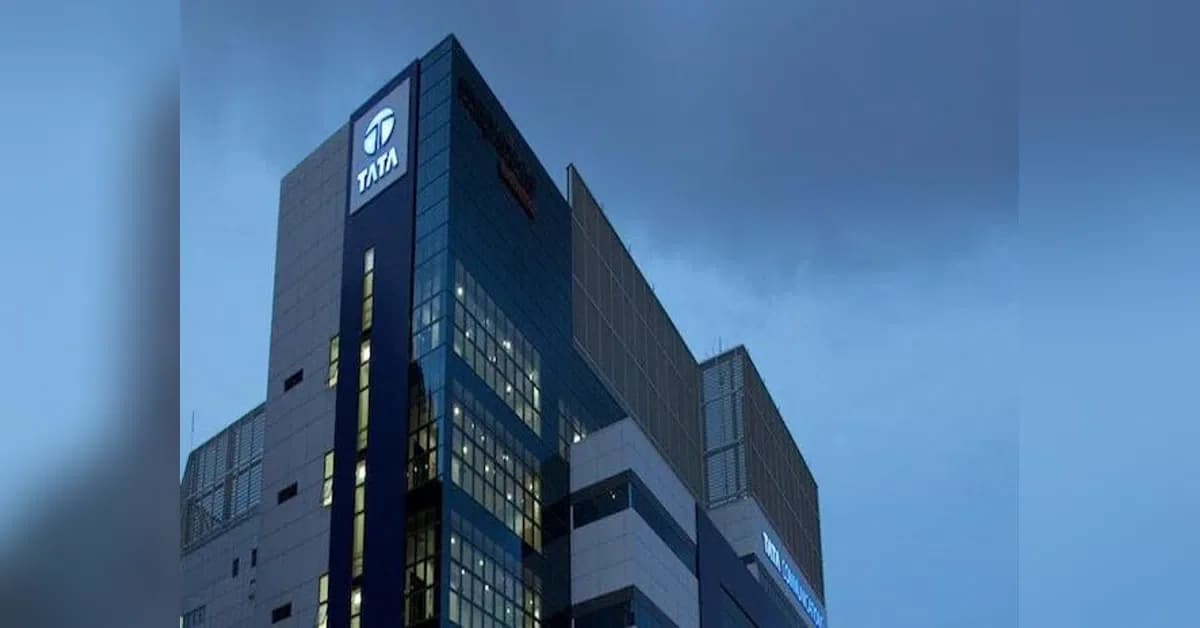
However, this decision triggered a governance dispute with Tata Trusts, which controls approximately 66% of Tata Sons. Tata Trusts Chairman Noel Tata opposed the resolution, describing it as a "legal nullity" and citing provisions requiring unanimous approval under the Tata Sons Articles of Association. This governance uncertainty could impact strategic decision-making across Tata Group stocks, though TCS, TATAINVEST, and TATACONSUM continue to demonstrate strong operational performance. TCS maintains its position as India's most valuable IT company with a market capitalization of ₹7,79,547 crore, while TATAINVEST trades at a premium P/E of 84.40 reflecting its investment company model .
Tata Sons had repaid more than ₹21,000 crore of debt in 2024 to become debt-free and sought to exit the NBFC framework. The RBI's rejection removes the last plausible route around the listing mandate, as Tata Sons' standalone assets exceed ₹2 lakh crore, well above the ₹1 lakh crore threshold for Upper Layer NBFCs. A public listing would mark a fundamental change for the holding company, bringing greater scrutiny of its finances and capital allocation decisions.
In a significant development, Tata Trusts proposed a ₹25,000 crore plan to buy back part of the Shapoorji Pallonji Group's 18.4% stake in Tata Sons through a selective capital reduction process over 18 months. This transaction would provide much-needed liquidity to SP Group, which faces immediate debt repayment obligations of approximately ₹3,500 crore and carries high-cost bonds with an 18.95% coupon. The resolution would significantly improve SP Group's debt servicing capacity and reduce financial pressure on its flagship company, Afcons Infrastructure, which recently completed a ₹7,000 crore IPO to reduce its own debt burden from ₹3,365 crore.
Defense Electronics and Infrastructure Orders
Bharat Electronics secured additional confirmed work orders worth ₹648 crore since August 26, 2026, covering laser-based IR jammers, communication equipment, cyber security solutions, thermal imagers, and AI-based software solutions. This order represents approximately 8.8% of the company's average quarterly revenue of ₹7,322.40 crore and enhances BEL's already strong order book, which stood at ₹73,882 crore as of April 1, 2026. The order book provides 10.1 quarters of revenue visibility, supporting sustained growth. BEL's financial position remains robust with zero debt, an EBITDA margin of 30.58%, and a net profit margin of 20%, positioning it well to execute these orders while maintaining profitability .
GPT Infraprojects received a ₹483.72 crore contract from Rail Vikas Nigam Limited for constructing a major railway bridge over the Mahanadi River in Odisha. The project involves building Important Bridge 544, a 32x65.84-meter open web steel girder bridge, as part of the third and fourth railway lines between the Nergundi-Barang section. This order enhances GPT Infraprojects' outstanding order book to ₹4,992 crore, providing 3.4 years of revenue visibility. However, the company faces working capital challenges with negative working capital of -₹304.63 crore, requiring careful management as it executes this long-term project .
The 1,095-day completion timeline for GPT Infraprojects' bridge project creates a distinctive revenue recognition pattern. Under the percentage of completion method, approximately 25% of revenue would be recognized in Year 1, 50% in Year 2, and 25% in Year 3, creating a bell-shaped revenue curve. This timeline significantly extends the cash flow conversion cycle from 120-180 days to 180-240 days, with peak working capital requirements of approximately ₹261.86 crore in Year 2. The project requires sophisticated working capital management through milestone-based billing, advance mobilization, and strategic supplier credit extension.
Aviation Sector Pricing and Leadership Transitions
IndiGo revised its ancillary service charges, increasing infant travel fees from ₹2,000 to ₹3,000, unaccompanied minor charges from ₹5,000 to ₹5,999 domestically, and excess baggage fees from ₹700 to ₹800 per kg. These targeted increases on optional services are designed to enhance yield per passenger by approximately 1.0-1.2% and expand ancillary revenue contribution from 11.0% to 11.3% of total revenue. The strategy allows IndiGo to navigate rising fuel costs, which have increased 80% year-on-year and now represent 50-60% of operating expenses, while maintaining competitive base fares to protect its 67.4% domestic market share.
The causal factors driving these charge revisions include unprecedented fuel cost inflation, currency depreciation of 11%, and the need to maintain operating margins which currently stand at 5.18%. The pricing strategy leverages IndiGo's market leadership position and the relatively low price elasticity of ancillary services compared to base fares. While base fares remain highly price-sensitive with elasticity of -1.2 to -1.8, ancillary services demonstrate lower elasticity of -0.3 to -0.7, allowing for targeted price increases with minimal volume impact.
In the NBFC sector, the RBI approved Manu Yeshpal Singh's appointment as Managing Director of Aavas Financiers for a five-year term. Singh brings over 25 years of experience from Kotak Mahindra Bank, where he managed a ₹70,000 crore housing finance franchise, and Tata Capital, where he oversaw an ₹8,000 crore loans portfolio. This regulatory approval provides governance stability and strategic clarity for Aavas Financiers as it pursues disciplined growth in the affordable housing finance sector.
NLC India appointed Dr. Prasanna Kumar Acharya as Chairman and Managing Director for a five-year term, resolving the leadership vacuum that existed since July 2026. Acharya, who previously served as Director (Finance), brings nearly three decades of experience across power, mining, and infrastructure sectors. His appointment is expected to enhance operational efficiency through initiatives like AI-enabled systems adoption and centralization of finance functions, while supporting the company's ambitious growth roadmap targeting more than 20 GW of power generation capacity and 100 MTPA of mining capacity by 2030.
Strategic Capital Allocation and Joint Ventures
Bharat Forge opened its Qualified Institutions Placement with a floor price of ₹1,947.70 per share, representing only a 0.87% discount to the current market price of ₹1,964.70. The company aims to raise up to ₹2,000 crore, which would result in equity dilution of 2.15-2.26% depending on final pricing. This capital infusion will strengthen the balance sheet, reducing the debt-equity ratio from 0.74 to 0.63, and provide financial flexibility for strategic expansion into defense and aerospace sectors . Bharat Forge's defense order book stands at ₹10,961 crore, supporting its pivot into high-value platforms.
Petronet LNG approved a 50:50 joint venture with Gruner Renewable Energy to establish 10 compressed biogas plants with a total capital outlay of ₹1,200 crore. Each plant will have a capacity of 18 metric tonnes per day. While the investment may have a marginal negative impact on ROCE in conservative scenarios (-0.18 percentage points), it provides strategic diversification into renewable energy and alignment with national energy transition goals . Petronet's strong free cash flow of ₹2,230.94 crore provides 3.72x coverage for this investment, ensuring minimal financial strain .
These developments across corporate governance, defense procurement, infrastructure development, and strategic capital allocation reflect India's evolving corporate landscape. Companies are navigating regulatory changes while pursuing growth opportunities in defense modernization, infrastructure expansion, and energy transition. The emphasis on governance stability, financial discipline, and strategic positioning suggests a maturing corporate ecosystem focused on sustainable long-term growth.