On November 26, 2026, the Supreme Court delivered a decisive verdict in the case 3S and Our Health Society v. Union of India & Ors. The bench, comprising Justices J.B. Pardiwala and K. Vinod Chandran, directed the Food Safety and Standards Authority of India (FSSAI) to implement a mandatory front-of-package nutrition labelling (FoPNL) regime within approximately four months.
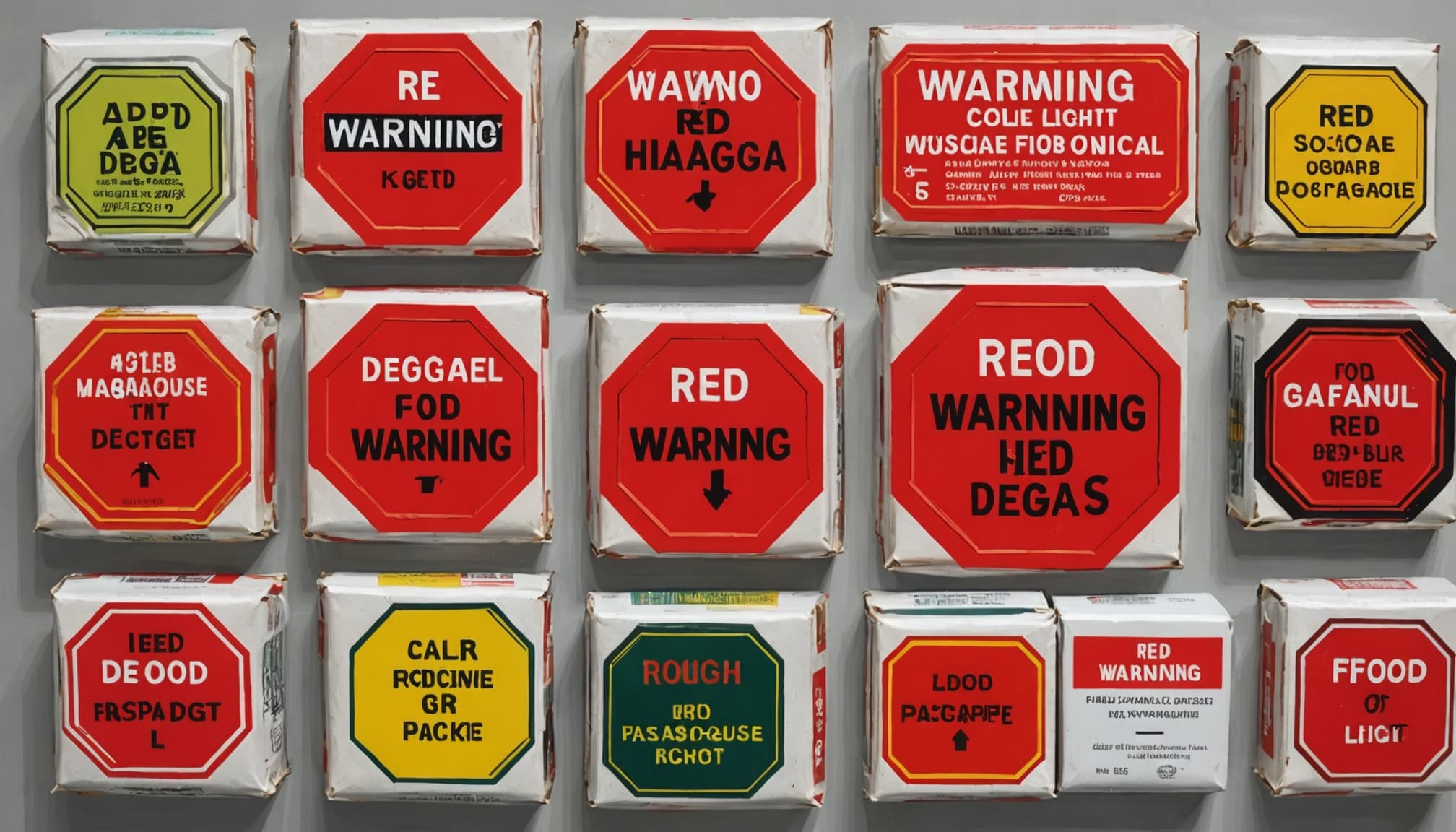
Instead, it mandated separate red hexagonal warning labels for each nutrient of concern—fat, sugar, and salt—that exceeds scientifically determined thresholds. Each hexagon must cover 4% to 5% of the principal display panel and carry standardized pictograms and text such as "HIGH FAT," "HIGH SUGAR," or "HIGH SALT".
Crucially, the court ordered FSSAI to use "total sugars" and "saturated fat" rather than "added sugar" and "added fat" when setting these thresholds. This shift means that naturally occurring sugars in dairy or fruit-based products will also count toward the warning limits, significantly broadening the scope of affected products. The court also suggested a separate symbol set for beverages to avoid consumer confusion.
Compliance Costs and Operational Timelines
The immediate impact on packaged food companies will be operational. Once FSSAI notifies the final regulations, food business operators (FBOs) will have a 365-day transition period to comply. This window is intended to allow companies to use up existing packaging material, but the court explicitly warned against misusing this time to stockpile unlabelled products.
Compliance costs will vary by company size and product portfolio. For large players like Nestle India, Britannia Industries, Hindustan Unilever, and ITC, the direct costs of label redesign may be manageable. However, the broader compliance burden includes product testing, reformulation, packaging redesign, and regulatory review.
Micro, small, and medium enterprises (MSMEs), which often use simple black-and-white packaging, face disproportionate challenges. Introducing multiple colored warning symbols will increase printing and redesign costs, potentially threatening their market access and livelihoods. The All India Consumer Products Distributors' Federation has warned that harsh warning-label requirements could disproportionately affect these smaller players.
There's also a tax angle to consider. Grant Thornton Bharat has noted that material reformulation to address prescribed thresholds may warrant a fresh review of HSN classification and applicable GST rates. The treatment of input tax credit (ITC) on testing, reformulation, and redesign costs becomes an important consideration, adding another layer of complexity to compliance planning.
Packaging Redesign and Supply Chain Modifications
The court's directive effectively ends the era of "double standards" where global food companies could sell different formulations in India compared to their home markets. The judgment stated unequivocally that "a consumer in India is entitled to no less protection, and no less information, than a consumer in the United States or the United Kingdom".
For global food firms, this means aligning Indian packaging and formulations with international standards. While I found no specific investment figures disclosed by companies, the operational requirements are clear. Companies will need to redesign artwork and printing plates across thousands of stock keeping units (SKUs) and pack sizes. This is particularly challenging for small sachets and low-price packs where 4% to 5% of the display panel represents very little space.
Supply chain modifications will extend beyond packaging. Companies may need to reassess product formulations, serving-size strategies, and even ingredient sourcing. The court has directed FSSAI to monitor reformulation closely and amend rules if manufacturers use artificial preservatives or additives to bypass warning labels. This suggests that superficial reformulation efforts may not suffice.
Consumer Behavior and Revenue Impact
The big question is how these warning labels will influence consumer purchasing behavior. There's no India-specific data yet, but evidence from Chile provides valuable insights. A study published in PLOS Medicine found that after Chile implemented warning labels, purchases of "high-in" beverages decreased by 23.7% compared to pre-policy trends.
However, this decline wasn't purely due to consumer behavior change. The study noted that the drop included both reductions from reformulation by industry and changes in purchasing patterns. Companies reduced sugar content or switched to non-nutritive sweeteners to avoid warning labels. Interestingly, overall beverage sweetness didn't change—companies maintained taste profiles by replacing sugar with sweeteners.
In India, the impact will likely be category-specific. Products carrying multiple warnings—such as sweetened beverages, chocolates, and salty snacks—may face greater consumer resistance. An analyst quoted by Financial Express expects pressure on sales of products carrying multiple warnings, though the extent will depend on how much consumers change their habits.
The court itself acknowledged the risk of "label fatigue." If thresholds are set too low, nearly all packaged foods could carry warnings, potentially desensitizing consumers. This uncertainty makes revenue impact difficult to quantify until FSSAI finalizes the thresholds.
Competitive Positioning and Market Share
The elimination of double standards could reshape competitive dynamics in India's packaged food market. Multinational companies lose the ability to treat India as a market with lower regulatory standards. While this removes a potential advantage, their global compliance and reformulation expertise may help them adapt faster.
Domestic and unorganized players face different challenges. Traditional snack makers like Haldiram's and Balaji Wafers, along with regional namkeen producers, will need to navigate the same regulatory requirements but with potentially fewer resources. The ET BrandEquity analysis suggests that companies relying heavily on high sodium, trans fats, and palm oil for shelf stability and flavor face the highest impact.
Companies that have already invested in healthier product lines may gain relative advantage. Britannia's NutriChoice Zero, a no-added-sugar biscuit, is growing at very strong double-digit pace. Hindustan Unilever has launched Horlicks Protein with a "Zero Added Sugar+" positioning. These products, if they clear the new thresholds, could see increased demand as consumers become more label-conscious.
Reformulation Challenges and R&D Strategies
Reformulation is emerging as a critical strategic priority. ET Food reported on November 10, 2026, that large packaged food companies are already adjusting recipes, cutting sugar and salt, and widening health-focused ranges. The central challenge, executives say, is preserving taste while reducing nutrients of concern—especially in low-price packs that drive volume.
Britannia's managing director Rakshit Hargave highlighted the taste challenge explicitly, noting that the company is working to make no-added-sugar products palatable enough for Indian consumers. More variants addressing the health platform are likely soon. Nestle India has already removed refined sugar from baby food products, reducing sugar levels well below legal maximums.
The Chilean experience offers valuable lessons. Within a year of implementing warning labels, the share of products with "high in sugar" warnings fell from 80% to 60%, and "high in sodium" products dropped from 74% to 27%. Companies reduced nutrient levels just enough to fall below regulatory cutoffs, a strategy that may be replicated in India.
However, reformulation isn't without risks. A 2026 study found that most continuing beverage products in Chile were not reformulated, suggesting that companies may have reverted to original formulations if reduced-sugar versions were perceived as less palatable. This highlights the delicate balance companies must strike between health compliance and taste loyalty.
Legal Risks and Enforcement Actions
Non-compliance carries significant legal and financial risks. While the FoPNL regulations themselves haven't been finalized yet, FSSAI would likely enforce them through existing provisions of the Food Safety and Standards Act, 2006.
Section 52 of the Act prescribes penalties up to ₹3 lakh for misbranded food, which could apply to products that fail to carry required warning labels. Section 53 allows penalties up to ₹10 lakh for misleading advertisements. More importantly, Section 64 provides for double punishment plus licence cancellation for subsequent offences.
FSSAI has already demonstrated its enforcement appetite. In October 2026, it issued notices to Nestle India and Hindustan Unilever over misleading claims and non-compliances. More broadly, ET Food reported that FSSAI has sent notices to over 150 packaged food and beverage brands, including PepsiCo, ITC, Mondelez, Red Bull, and Ferrero, over alleged misleading claims.
The Supreme Court has signaled that it will maintain strict oversight. The judgment explicitly stated that "no further extension should ordinarily be granted" and that non-compliant FBOs "must be dealt with strictly in accordance with law". The court also directed FSSAI to prevent companies from printing or distributing large quantities of packaging without warning labels during the transition period.
The Road Ahead
The packaged food industry is heading into a period of significant transformation. FSSAI faces a tight deadline to deliver revised draft regulations by February 4, 2027, with final rules expected around March 2027. Companies then have 365 days to implement the changes, with the court warning against any misuse of this transition period.
For investors and industry observers, the key metrics to watch will be company disclosures on SKU-level exposure to warning labels, reformulation progress, and any guidance on compliance costs. The next earnings calls from major packaged food companies will likely provide more clarity on their strategic responses.
The Supreme Court's intervention represents a fundamental shift in India's food regulatory landscape. By tying warning labels to the fundamental right to health under Article 21, the court has ended years of industry lobbying and set India on a path toward more transparent food packaging. The question now is not whether companies will adapt, but how quickly and effectively they can navigate this new regulatory reality.