Sterlite Technologies has pulled off one of the most dramatic business transformations in recent memory.
This strategic pivot has delivered staggering results: data center revenue surged from just 1% in FY26 to 21% in Q1FY27, while operating EBITDA jumped 184% year-on-year to ₹397 crore. The stock, reflecting this new narrative, has rallied over 1,000% from its January 2026 lows, pushing market capitalization past ₹50,000 crore. Transcript
The Data Center Engine
The math behind Sterlite's turnaround is straightforward but powerful. Data center products command significantly higher margins than traditional optical fiber cables sold to telecom operators. As the revenue mix shifted—with data centers growing from 1% to 21% and telecom declining from 82% to 61%—the company's overall margin profile expanded dramatically. EBITDA margins hit 20.8% in Q1FY27, up from 13.7% a year earlier. Management has been so confident in this trajectory that they upgraded FY27 EBITDA margin guidance to 23% from 20%. Transcript +1
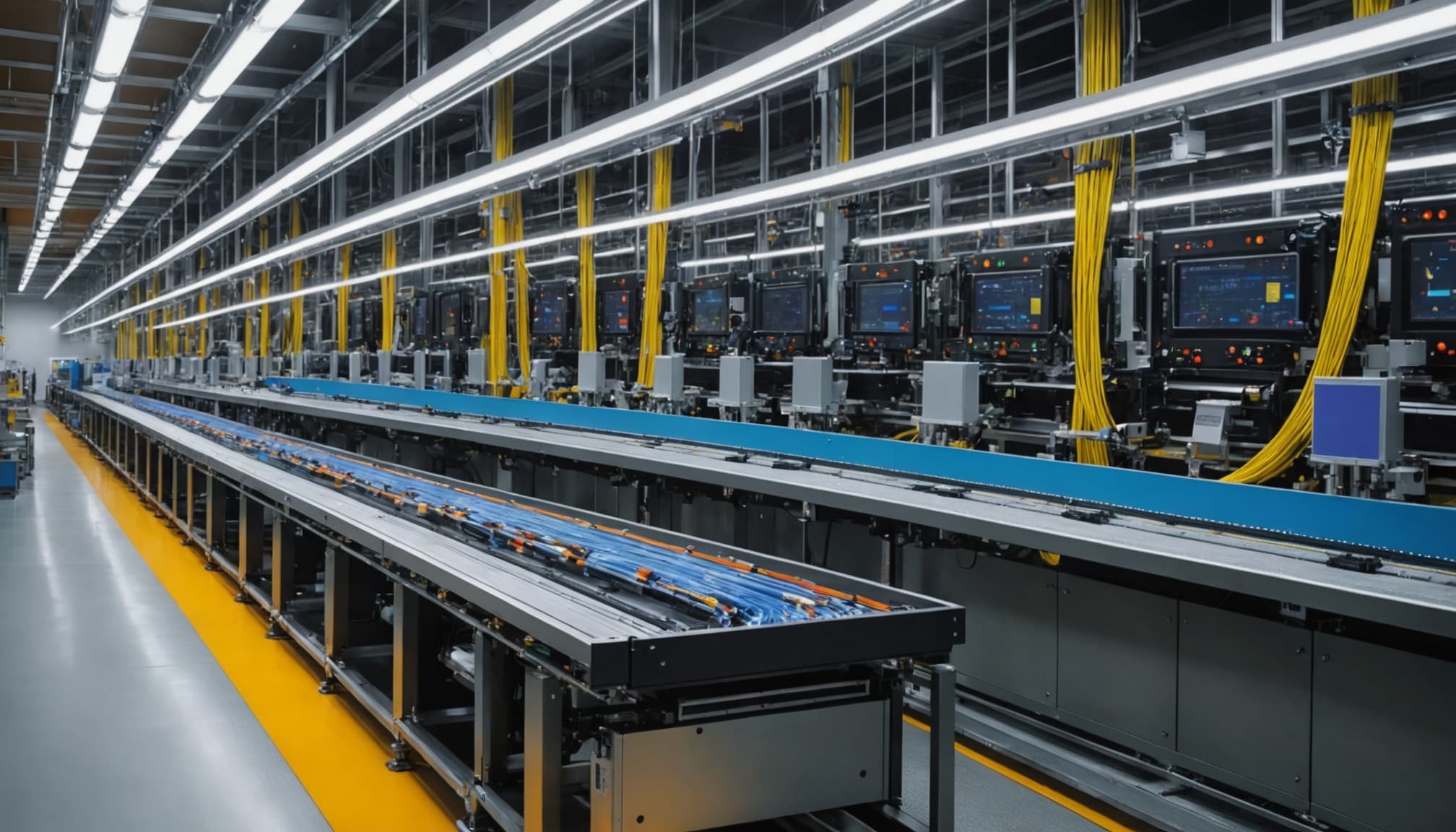
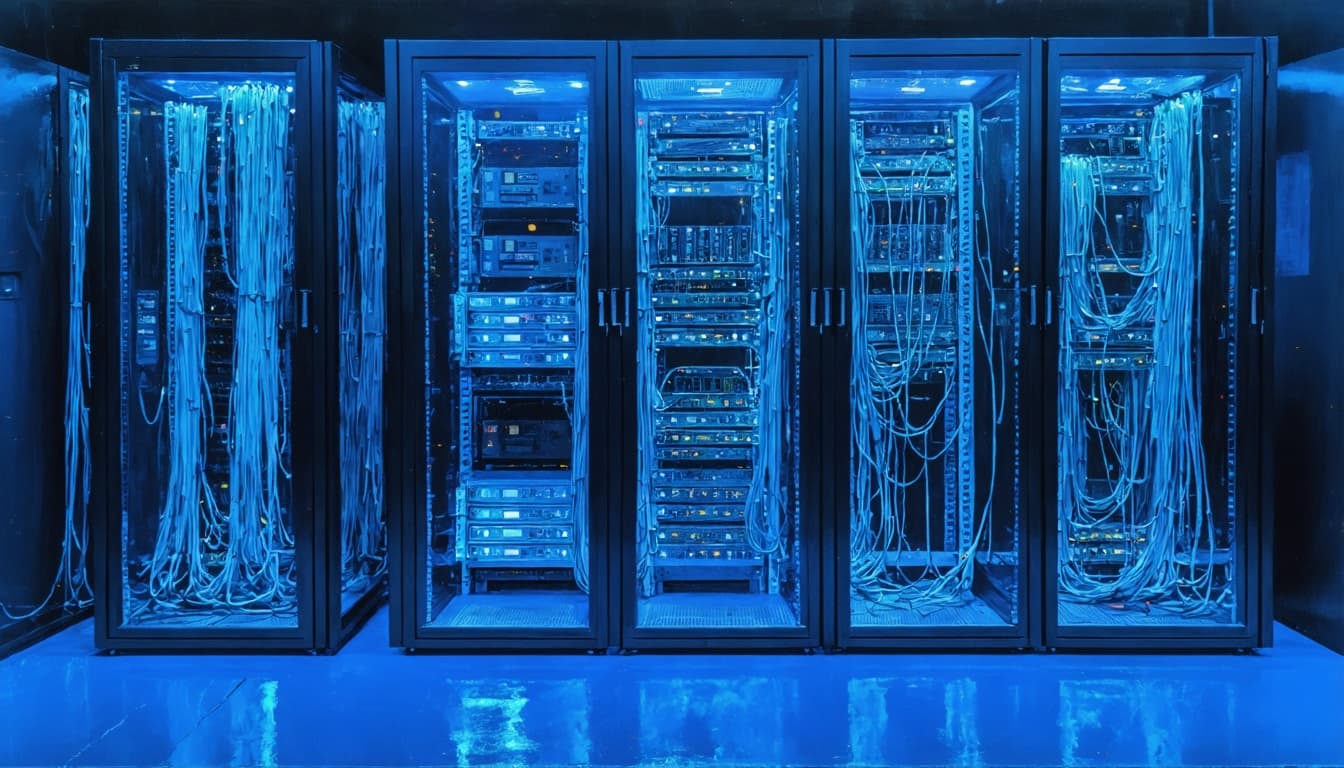
What makes data center products so much more profitable? It comes down to technical complexity and value addition. Sterlite's Neuralis portfolio includes ultra-high-density solutions like Celesta IBR cables with capacity up to 6,912 fibers, designed for 400G and 800G networks. These products require sophisticated manufacturing capabilities—from glass preform to final connectivity—that create substantial barriers to entry. The company holds over 785 patents and has secured elite US Conec certifications that few global competitors can match. This technical moat allows Sterlite to command premium pricing from hyperscalers who need specialized, reliable infrastructure for their AI factories. Investor Presentation +2
The $1.2 Billion Visibility Boost
In October 2026, Sterlite announced a game-changing development: a wholly-owned subsidiary secured a Long-Term Supply Agreement (LTSA) worth approximately $1.2 billion with an international hyperscale partner. The agreement runs through December 2030, with annual product allocations defined for each calendar year from CY26 to CY30.
This structure provides Sterlite with unprecedented revenue visibility. Rather than a lump-sum order, the LTSA releases purchase orders periodically throughout the contract period. This enables Sterlite to forecast quarterly revenue with much greater accuracy, as they know the baseline allocations for each year. The actual revenue realization depends on purchase order releases and prevailing prices at the time of each order, but the framework eliminates much of the demand uncertainty that typically plagues the sector.
Perhaps more importantly, the LTSA includes a reciprocal risk-sharing framework with capped financial liabilities for both parties. If demand falls short or supply capacity fails, both Sterlite and the customer have defined, limited exposure. This structure protects Sterlite's margins against demand fluctuations while giving the customer confidence in supply security. It's a sophisticated arrangement that de-risks what would otherwise be a massive concentration risk.
Geographic and Tariff Tailwinds
Sterlite's profitability surge also benefited from favorable macro developments. US tariffs on fiber optic exports, which had peaked at 50% and crushed margins by 300 basis points in Q2 FY26, moderated significantly following a US-India trade arrangement. By February 2026, tariffs had dropped to 10-15%, providing what management called a "direct and meaningful margin benefit".
This tariff reduction coincided with a geographic shift in Sterlite's business. North America's contribution to revenue expanded from 39% in FY26 to 54% in Q1FY27, driven by robust data center demand. The company's manufacturing footprint—with facilities in South Carolina (US), Italy, and India—gave it the flexibility to serve this growing market while mitigating tariff exposure. The South Carolina plant, in particular, allows Sterlite to bypass US import tariffs entirely and meet "Made in America" procurement mandates that many hyperscalers now require. Transcript +2
The structural growth story extends beyond the US. India's data center capacity is projected to grow nearly sevenfold from 1.6 GW to 10 GW by 2031, while North America's installed capacity is expected to double from 63 GW to 126 GW by 2030. Every dollar of data center capex has a direct multiplier on fiber intensity across data center interconnect, metro, and long-haul networks. Sterlite, already supplying to almost all major hyperscalers globally, is positioned to capture this wave. Transcript +3
Capacity and Execution
Sterlite's operational improvements have been equally impressive. The company is gradually improving capacity utilization across its manufacturing facilities, currently operating at roughly 70% with plans to reach 80%. Better factory utilization directly enhances profitability by spreading fixed costs over larger production bases. This operational leverage, combined with the product mix shift, explains how revenue growth of 87% (to ₹1,910 crore in Q1FY27) translated into EBITDA growth of 184%.
The company is backing this growth with capital. In September 2026, the board approved a ₹3,000 crore capacity expansion program to increase manufacturing capacity by 50% by FY29. This investment spans preform, optical fiber, cable, and higher-value connectivity products. The goal is ambitious: management targets ₹20,000 crore in revenue by FY29 (more than 4x FY26 levels) with EBITDA margins exceeding 27%. Transcript
Rating Upgrade and Investor Frenzy
The transformation hasn't gone unnoticed by credit rating agencies. In September 2026, CRISIL upgraded Sterlite's long-term rating to 'CRISIL AA/Stable' from 'CRISIL AA-/Stable,' citing improved business risk profile and strengthened financial metrics. The company achieved net debt-free status with ₹483 crore in cash following a successful ₹1,500 crore QIP that was oversubscribed 2.5 times. Investor Presentation +1
This validation from CRISIL, combined with record financial performance, fueled investor enthusiasm. The stock rallied over 1,000% from January 2026 lows, with market capitalization crossing ₹50,000 crore by October 2026. The market is no longer valuing Sterlite as a cyclical telecom cable manufacturer—it's pricing the company as an AI infrastructure beneficiary with significant growth potential.
The Risks Ahead
But with great expectations come great risks. The stock now trades at a P/E ratio of 174-211x, far above the sector median of 25.93x. This elevated valuation prices in perfection, and any execution stumble could trigger a sharp multiple contraction.
CRISIL has flagged three key monitorables that could derail the story. First, material tariff increases—if US tariffs reverse from current 10-15% levels back toward 50%, margins could compress by 300-600 basis points. Second, improved global supply conditions could erode pricing power, as current tight supply supports premium valuations that may not persist. Third, slower-than-expected ramp-up of the data center segment could delay the margin expansion trajectory; management expects data center and enterprise to reach 50% of revenues, but this is critical to achieving the 23% EBITDA margin target. Transcript
Other risks include the ₹3,000 crore capex execution, customer qualification cycles that are difficult to predict, and concentration risk given North America's 54% revenue share. The company also faces an unresolved US lawsuit with a $96.5 million verdict under appeal. Transcript
The Bottom Line
Sterlite Technologies has executed a remarkable transformation, leveraging the AI data center boom to reshape its business model and financial profile. The combination of product mix shift, long-term contracts, geographic expansion, and operational improvements has driven explosive growth in revenue, margins, and shareholder value. The $1.2 billion LTSA provides visibility through 2030, while the manufacturing footprint and technical capabilities create sustainable competitive advantages.
However, the stock's 1,000%+ rally has created a high bar for execution. With valuations stretched and risks around tariffs, margins, and data center ramp-up, the coming quarters will be critical. Investors will be watching closely to see if Sterlite can convert its massive order book into high-margin revenue without execution hiccups. The company has proven it can win the business—now it must prove it can deliver at scale while maintaining the profitability that the market has come to expect.